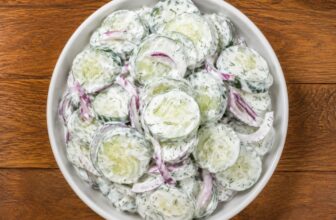
There are salads you make because you feel like you should, and then there are salads you actually want to eat.
This anti inflammatory cucumber and carrot salad is firmly in the second category. It is crisp, bright, a little spicy, slightly tangy, and packed with ingredients that your body genuinely thanks you for.
The best part? It comes together in about 10 minutes, uses pantry staples you probably already have, and tastes like something you would order as a side dish at your favorite Asian inspired restaurant.
This is the kind of recipe that quietly becomes a weekly staple. Once you make it the first time, you will find yourself coming back to it again and again.
Why This Salad Is Worth Making
Before we get into the recipe, let us talk about why this particular combination of ingredients works so well from a health standpoint because this is not just a pretty salad. Every single ingredient has a reason to be here.
Cucumbers are made up of mostly water, making them naturally hydrating and cooling for the body. They contain antioxidants including flavonoids and tannins, which help fight oxidative stress and support overall health.
Carrots are rich in beta carotene, the compound that gives them their deep orange color and converts to vitamin A in the body. Vitamin A supports immune function, skin health, and eye health. Carrots also contain polyacetylenes, compounds with natural anti inflammatory properties.
Garlic is one of the most well-studied anti-inflammatory foods available. Its active compound, allicin, has been shown in multiple studies to reduce inflammatory markers in the body. Raw garlic which is what this recipe calls for is particularly potent.
Sesame seeds are a surprisingly powerful little ingredient. They contain sesamol and sesaminol, two antioxidants that research suggests may help reduce inflammation. They also add a wonderful nutty flavor and a satisfying crunch.
Parsley is far more than a garnish. It is rich in vitamin C, vitamin K, and flavonoids including luteolin and apigenin, both of which have documented anti-inflammatory effects.
Olive oil provides heart healthy monounsaturated fats and oleocanthal, a natural compound that works similarly to ibuprofen in reducing inflammation in the body.
Gochugaru Korean red chili flakes contains capsaicin, the active compound in chili peppers that has been studied for its ability to reduce certain inflammatory markers. It also adds a wonderful warm heat that makes this salad feel exciting rather than plain.
Lemon juice brings brightness and vitamin C, which plays a key role in immune support and acts as an antioxidant in the body.
Put all of these together and you have a salad that genuinely earns the word anti-inflammatory not just as a trend label, but as an accurate description of what is happening nutritionally on your plate.
Ingredients
For the salad:
- 1 large cucumber, julienned or sliced thin
- 2 medium carrots, julienned
- 2 tablespoons sesame seeds
- 2 tablespoons fresh parsley, chopped
- 1 clove garlic, minced
For the dressing:
- 1 tablespoon olive oil
- 1 tablespoon lemon juice
- 1 teaspoon gochugaru (Korean red chili flakes, available at most Asian grocery stores and online)
- 1 teaspoon soy sauce
- ½ teaspoon sugar
How to Make It
Step 1 Prep your vegetables
Julienne the cucumber and carrots into thin, even strips. You can use a sharp knife, a julienne peeler, or a mandoline slicer set to a thin setting.

The goal is long, uniform pieces that look beautiful and pick up the dressing evenly. If you do not want to julienne, thin ribbon slices using a vegetable peeler work just as well and look equally gorgeous.
Step 2 Build the salad
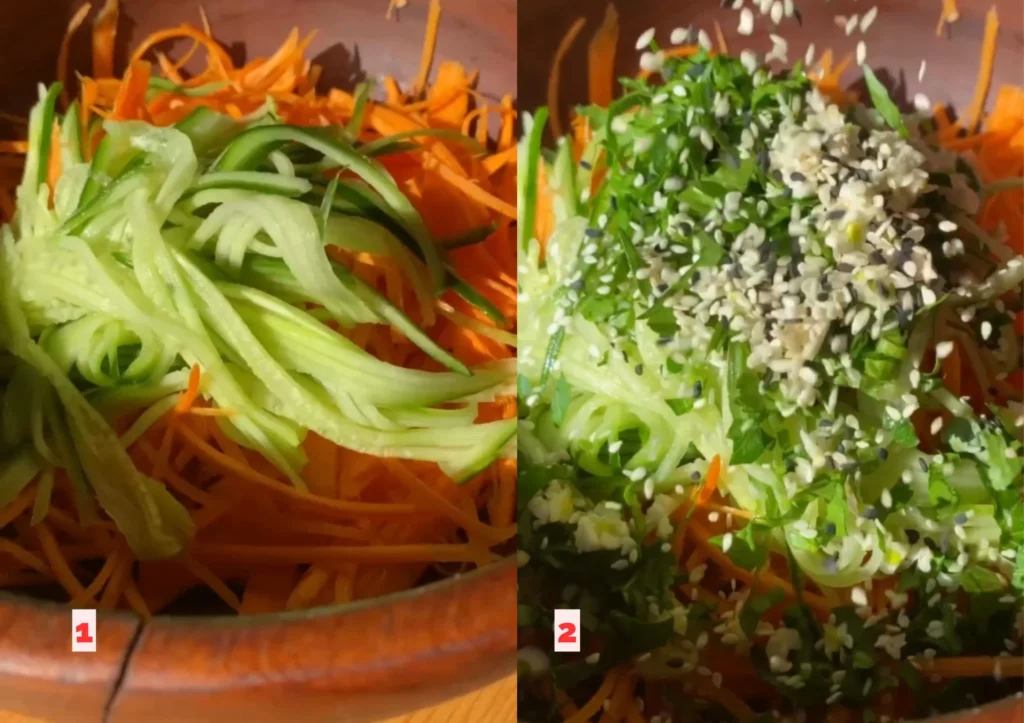
In a large mixing bowl, combine the julienned cucumber, julienned carrots, sesame seeds, chopped fresh parsley, and minced garlic. Give everything a gentle toss to mix the ingredients together loosely.
Step 3 Add the dressing
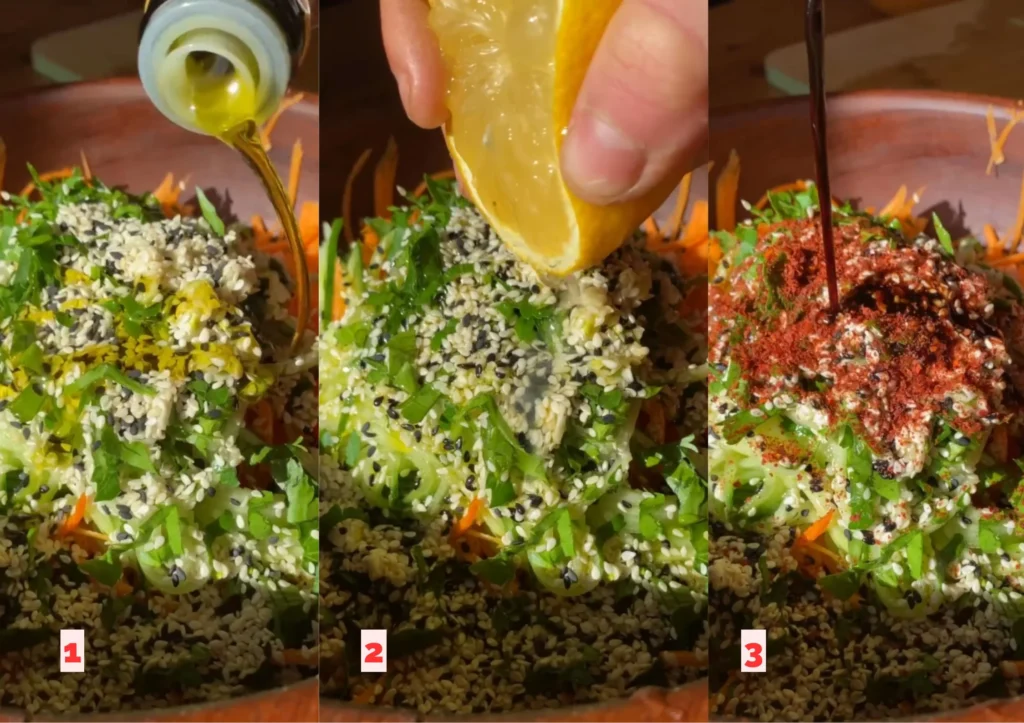
Add the olive oil, lemon juice, gochugaru, soy sauce, and sugar directly to the bowl with the vegetables. There is no need to make the dressing separately adding it straight to the bowl means fewer dishes and equally great results.
Step 4 Toss and coat
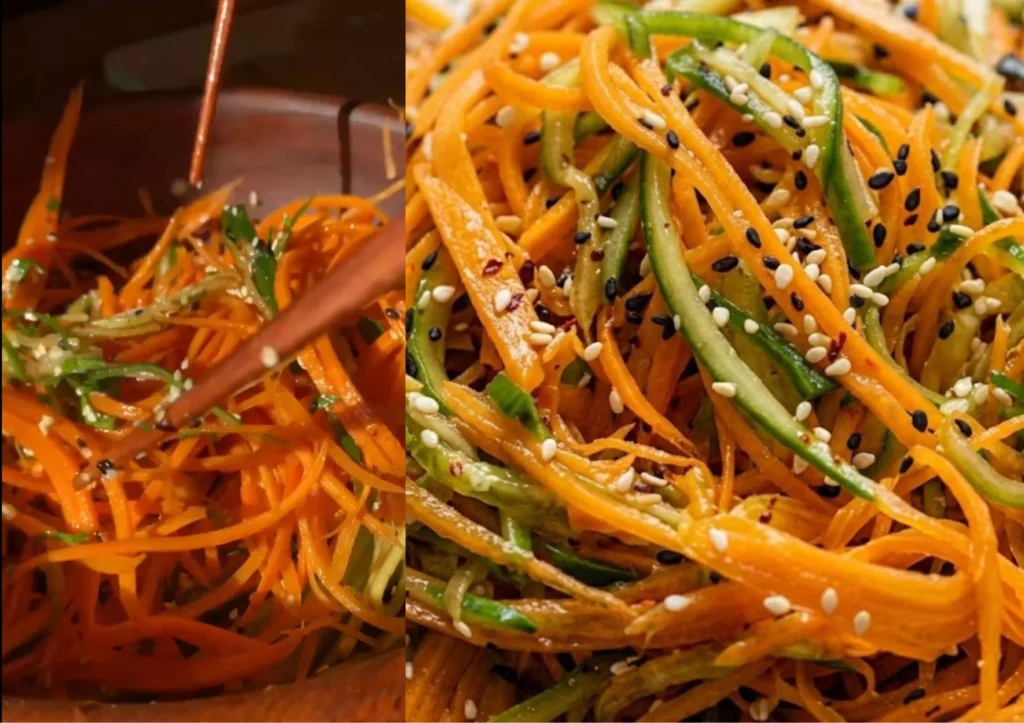
Toss everything together thoroughly until every piece of cucumber and carrot is evenly coated in the dressing. Take your time here you want the sesame seeds and parsley to be distributed all the way through, and the garlic to touch every strand.
Step 5 Let it rest
This step makes a real difference. Let the salad sit for 5 to 10 minutes before eating. During this time, the lemon juice begins to very lightly soften the vegetables, the garlic mellows slightly, and all the flavors come together into something more unified and delicious than the individual parts suggest.
Step 6 Serve
Serve chilled, straight from the bowl, or portion it into individual servings. It is equally good as a light lunch on its own, a side dish alongside grilled chicken or fish, or an afternoon snack straight from the refrigerator.
Tips for Getting It Right Every Time
Cut your vegetables consistently. The more uniform your julienne cuts, the better the salad looks and the more evenly the dressing coats everything. A julienne peeler available at most kitchen stores for under $10 makes this fast and easy.
Use fresh lemon juice. Bottled lemon juice works in a pinch, but fresh lemon juice is noticeably brighter and more vibrant. Squeeze it fresh right before you toss the salad.
Do not skip the resting time. Five to ten minutes feels like nothing when you are hungry, but it genuinely changes the texture and flavor of the finished salad. The vegetables soften slightly and the dressing absorbs into every strand.
Toast your sesame seeds for extra flavor. This is optional but highly recommended. Place the sesame seeds in a dry skillet over medium heat and stir for two to three minutes until golden and fragrant. The toasted flavor adds a warm, nutty depth that raw sesame seeds do not have.
Adjust the heat to your taste. One teaspoon of gochugaru gives a warm, pleasant heat that most people find very approachable. If you prefer more spice, add another half teaspoon. If you are sensitive to heat, start with half a teaspoon and taste before adding more.
Ways to Change It Up
This salad is wonderful as written, but it is also very easy to make your own.
Add thinly sliced red onion for extra sharpness and color. Throw in a handful of shredded purple cabbage for crunch and an additional dose of antioxidants.
Replace the parsley with fresh cilantro if you prefer that flavor profile. Add a drizzle of toasted sesame oil along with the olive oil for a deeper, nuttier dressing. Toss in some edamame or sliced avocado to make the salad more filling as a standalone meal.
How to Store It
This salad is best eaten the day it is made, when the vegetables are still crisp and the dressing is fresh. However, it will keep in an airtight container in the refrigerator for up to 24 hours. After that, the cucumber releases water and the texture softens significantly.
If you want to meal prep this recipe, julienne the vegetables and store them dry in a container, then add the dressing and toss just before eating. This way the salad stays crisp for up to three days in the fridge.
Serving Suggestions
This salad is incredibly versatile as a side dish. It pairs naturally with grilled salmon, teriyaki chicken, pan-seared tofu, rice bowls, or noodle dishes. It also works beautifully tucked into lettuce wraps or served alongside dumplings as a fresh, cooling counterpoint to richer flavors.
As a standalone snack or light lunch, serve it with a side of rice crackers or a slice of whole grain bread. It is satisfying without being heavy, which makes it perfect for warm days when a big cooked meal feels like too much.
Gochugaru is a Korean red chili powder made from sun-dried red peppers. It has a mild to medium heat level with a slightly sweet, smoky flavor that is different from regular chili flakes or cayenne. You can find it at most Asian grocery stores, Korean markets, Whole Foods, and online retailers including Amazon. It is widely available and reasonably priced. A bag lasts for months stored in a cool, dry place.
Yes. If you cannot find gochugaru, you can use regular red chili flakes as a substitute, though the flavor will be slightly different a little less sweet and more straight-forward in heat. Gochugaru has a unique mild fruitiness that regular flakes do not fully replicate, but the salad will still taste great. Start with half a teaspoon of regular chili flakes since they can be hotter.
Yes, based on the current understanding of nutrition science. Every ingredient in this recipe cucumber, carrot, garlic, parsley, sesame seeds, olive oil, lemon juice, and gochugaru contains compounds that research has linked to reduced inflammation in the body. This is not a medical treatment, but it is a genuinely nutritious combination of whole foods that supports overall health as part of a balanced diet.
It already is. Every ingredient in this recipe including the soy sauce and sugar is plant-based. No substitutions needed.
Yes. Avocado oil is the closest substitute and has a mild flavor that works well here. Toasted sesame oil is also excellent and adds a deeper nutty flavor use just half a tablespoon since it is more intense. Avoid strongly flavored oils like coconut oil, which would change the flavor profile significantly.
With one teaspoon of gochugaru, the heat level is mild to moderate warm and pleasant rather than burning. Most people, including those who are moderately sensitive to spice, find it very manageable. If you are spice-sensitive, start with half a teaspoon and taste before adding more.
Absolutely. Grilled chicken strips, shrimp, pan-seared tofu, or even a soft-boiled egg on the side turn this into a light but complete meal. Edamame tossed directly into the salad adds plant-based protein without changing the flavor much.
Cucumber naturally releases water, especially after the dressing is added and it sits for more than a few hours. If your salad gets watery, simply drain off the excess liquid before serving. You can also salt the julienned cucumber lightly, let it sit for 10 minutes, then pat it dry before adding it to the bowl this draws out moisture in advance and keeps the salad crisper for longer.
Final Thoughts
This anti-inflammatory cucumber and carrot salad is exactly the kind of recipe that proves healthy eating does not have to be complicated, expensive, or boring. Ten minutes of prep, a handful of fresh vegetables, a punchy little dressing, and you have something genuinely delicious that also does good things for your body.
Make it once and see how quickly it becomes a regular in your kitchen.
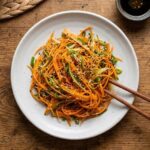
The Anti Inflammatory Salad That Takes 10 Minutes and Tastes Like a Restaurant Side Dish
Ingredients
- 1 large cucumber julienned
- 2 medium carrots julienned
- 2 tablespoons sesame seeds
- 2 tablespoons fresh parsley chopped
- 1 garlic clove minced
- 1 tablespoons olive oil
- 1 tablespoons lemon juice freshly squeezed
- 1 teaspoons gochugaru Korean red chili flakes
- 1 teaspoons soy sauce
- 0.5 teaspoons sugar
Instructions
- Prep vegetables: Julienne 1 large cucumber, julienned and 2 medium carrots, julienned into thin, even strips using a knife, julienne peeler, or mandoline.
- Combine salad: In a large bowl, toss together the julienned vegetables, 2 tablespoons sesame seeds, 2 tablespoons fresh parsley, chopped, and 1 garlic clove, minced.
- Add dressing: Add 1 tablespoons olive oil, 1 tablespoons lemon juice, freshly squeezed, 1 teaspoons gochugaru (Korean red chili flakes), 1 teaspoons soy sauce, and 0.5 teaspoons sugar directly into the bowl. No need to mix separately.
- Toss to coat: Toss everything thoroughly until all vegetables are evenly coated and sesame seeds and parsley are well distributed.
- Rest: Let the salad rest for 5–10 minutes
- so flavours meld and vegetables lightly soften.
- Serve: Serve chilled as a side, light lunch, or snack straight from the fridge.