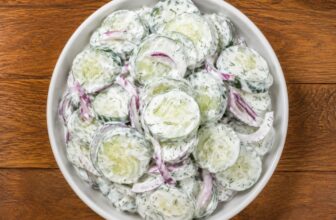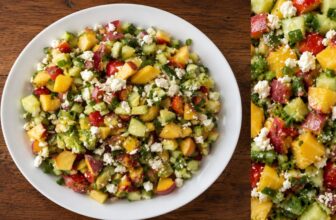
When the weather heats up and heavy meals lose their appeal, this cucumber radish salad emerges as the perfect solution.
Light yet satisfying, crisp yet creamy, this dish brings together simple vegetables with a tangy garlic yogurt base that transforms ordinary ingredients into something memorable. Whether you’re looking for a quick lunch, a side dish for grilled meats, or a healthy snack, this salad delivers fresh flavors without weighing you down.
Why This Salad Works
The genius of this recipe lies in its contrasts. Crisp, water rich vegetables meet creamy, tangy yogurt. Peppery radishes balance mild cucumbers.
Sharp red onion gets mellowed by lemon juice. Fresh parsley adds an herbal note that ties everything together, while garlic infused yogurt provides a savory foundation that makes this salad genuinely satisfying rather than just rabbit food.
This isn’t your typical tossed salad. The presentation matters here spreading the yogurt across a flat plate and piling the vegetables on top creates visual appeal and allows each person to get their preferred ratio of vegetables to creamy yogurt.
It’s a technique borrowed from Mediterranean cuisine, where yogurt-based dishes often serve as both a base and a sauce.
From a nutritional standpoint, this salad hits multiple marks. Cucumbers provide hydration and contain antioxidants. Radishes offer vitamin C, fiber, and compounds that support digestive health.
Greek yogurt delivers protein and probiotics for gut health. Olive oil contributes heart healthy monounsaturated fats. Together, these ingredients create a dish that’s as nourishing as it is delicious.
Understanding the Ingredients
Cucumber Selection The recipe calls for one medium cucumber, approximately 200 grams. English cucumbers work beautifully because they have thin, edible skin and fewer seeds than standard cucumbers. Persian cucumbers are another excellent choice.
If using regular garden cucumbers, consider peeling them if the skin is thick or waxy, and scoop out the seeds if they’re large and watery.
Radishes Add Bite Five to six radishes (about 100 grams) provide the peppery crunch that makes this salad interesting. Red radishes are most common, but you can experiment with watermelon radishes, French breakfast radishes, or even daikon for different flavors and colors. Look for firm radishes with fresh greens still attached these are the freshest.
Red Onion’s Role Half a red onion (roughly 50 grams) adds sharpness and complexity. Red onions are milder than white or yellow varieties and add beautiful color. The key is slicing them thinly and letting them marinate in lemon juice, which softens their bite considerably.
Greek Yogurt Quality Matters Fifty grams of thick Greek yogurt creates the creamy base. Choose full-fat Greek yogurt for the richest flavor and smoothest texture. The thickness is important regular yogurt is too thin and will create a watery base. If your Greek yogurt seems thin, strain it through cheesecloth for 30 minutes to thicken it further.
Fresh Parsley’s Brightness Ten grams of fresh flat leaf parsley (also called Italian parsley) adds color and an herbal freshness that curly parsley can’t match. Flat leaf parsley has a cleaner, less bitter flavor that works better in raw applications like this salad.
Quality Olive Oil Three tablespoons of olive oil might seem generous, but it’s essential for flavor and mouthfeel. Use good extra virgin olive oil this isn’t the place for cooking grade oil. The olive oil gets drizzled twice: once mixed into the vegetables and again as a final flourish over the plated dish.
Step by Step Preparation
Preparing the Vegetables
Start by chopping your cucumber into bite sized pieces. The recipe suggests roughly cutting them so shapes vary, with pieces around 1-2 centimeters.
This irregular cutting creates visual interest and gives you different textures in each bite. Some pieces will have more skin, others more flesh, and the variety makes the salad more engaging to eat.
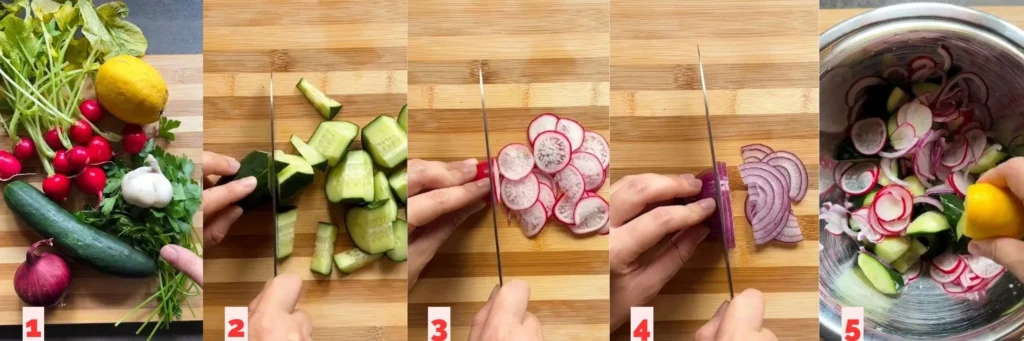
Slice your radishes thinly. A mandoline makes quick work of this, but a sharp knife works perfectly well. Thin slices mean more surface area to absorb the dressing and a more delicate texture in the finished dish.
Slice your red onion thinly as well. If you’re particularly sensitive to raw onion, you can soak the slices in cold water for 10 minutes before adding them to the salad this removes some of the harsh sulfur compounds while maintaining the onion’s sweet crunch.
Mince the fresh parsley finely. The smaller the pieces, the more evenly the herb flavor distributes throughout the salad. Remove the thick stems first, as they’re tough and bitter.
Combine all these prepared vegetables in a large bowl. Add a generous pinch of salt and mix. The salt serves multiple purposes: it seasons the vegetables, helps draw out excess moisture, and begins to soften the onions.
Squeeze one lemon wedge over the vegetables and mix again. This initial acidic hit starts breaking down the onion’s sharpness and brightens all the flavors. Set this bowl aside to let the vegetables macerate slightly while you prepare the yogurt.
Creating the Yogurt Base
Mince your garlic clove very finely. The smaller you mince it, the more evenly it distributes through the yogurt and the less likely anyone is to bite into a chunk of raw garlic which can be overwhelming.
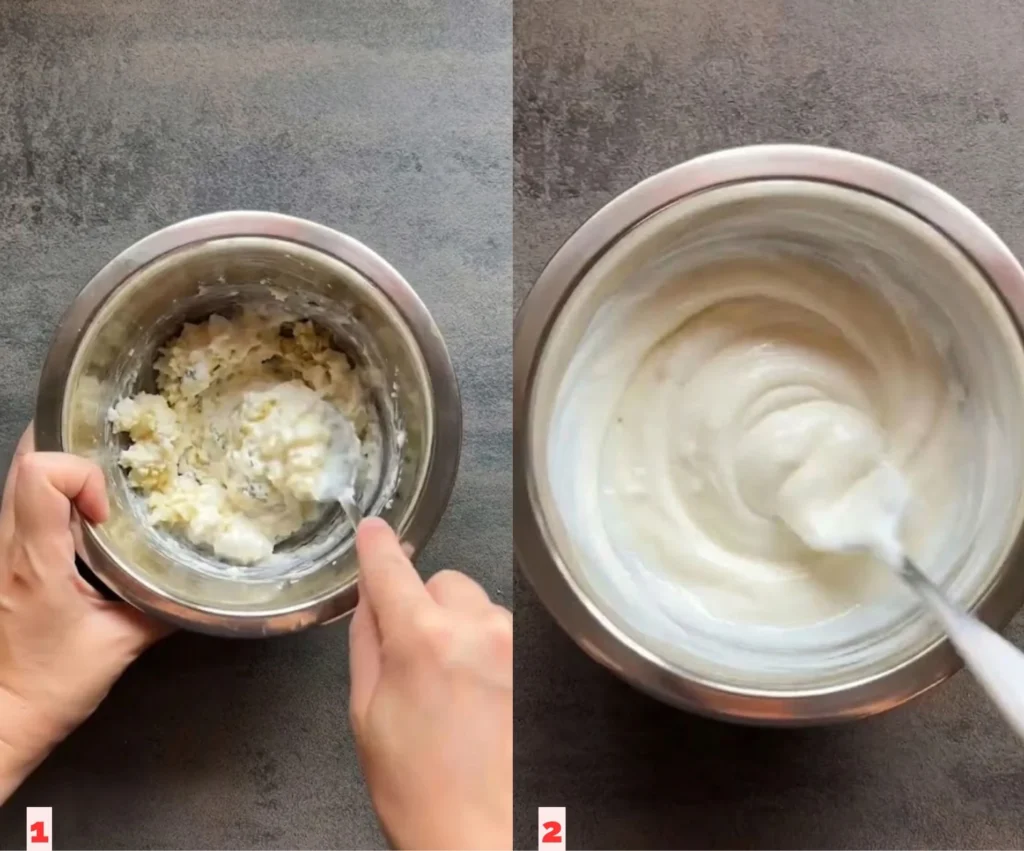
In a smaller bowl, combine the Greek yogurt, minced garlic, the juice from another lemon wedge, and a pinch of salt. Mix thoroughly until the garlic is evenly distributed throughout the yogurt. Taste it the yogurt should be tangy, garlicky, and well-seasoned. Adjust with more lemon or salt as needed.
At this point, if you’re not serving immediately, both bowls can go into the refrigerator. In fact, letting them chill for 30 minutes to an hour can improve the flavors as the vegetables marinate and the garlic mellows slightly in the yogurt.
Assembly and Final Touches
Just before serving, spread the yogurt mixture across a large flat plate. Use the back of a spoon to create an even layer with some texture swoops and swirls in the yogurt look attractive and create little valleys for the vegetables to nestle into.
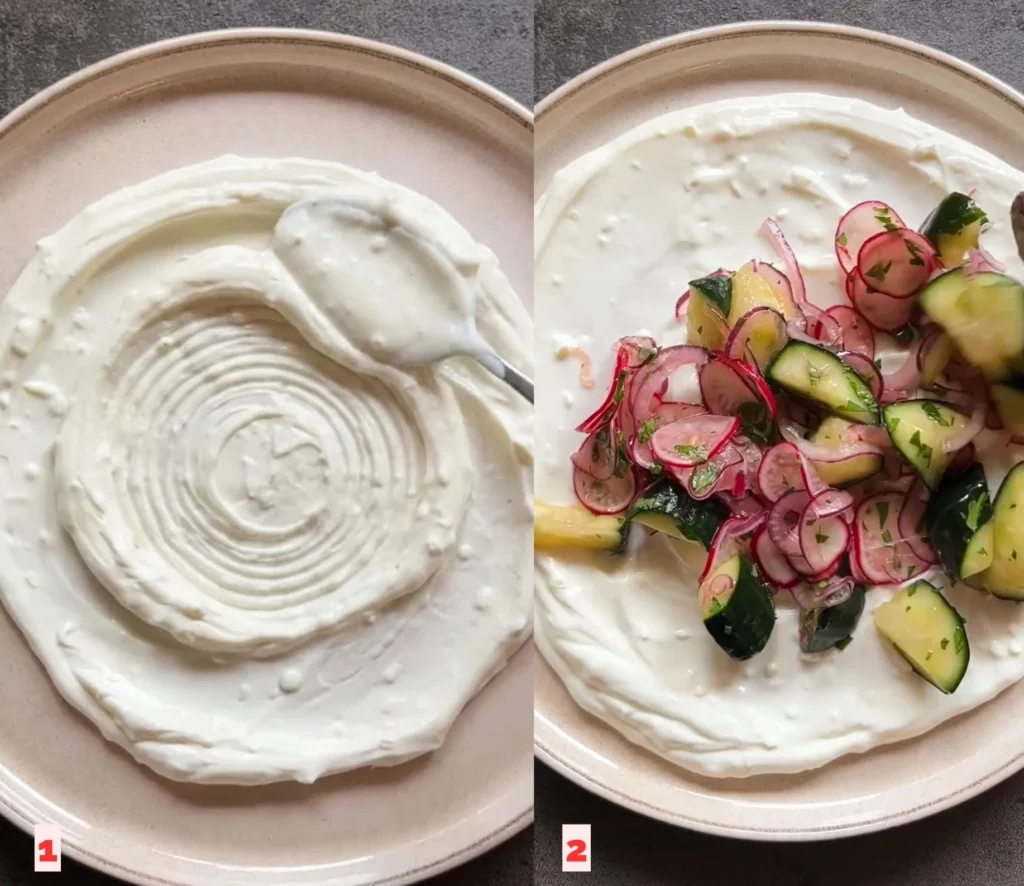
Check your vegetable bowl. You’ll likely see some liquid collected at the bottom this is water released from the cucumbers and radishes by the salt. Carefully tip out this excess liquid. If you leave it in, your beautiful salad will become watery within minutes of serving.
Drizzle the vegetables with olive oil and mix. Taste at this point and adjust seasoning. Add more salt if needed, or another squeeze of lemon if the flavors seem flat.
Spoon the seasoned vegetables on top of the yogurt plate, distributing them evenly. Don’t just dump them in the center spread them out so the presentation is appealing and everyone can access both vegetables and yogurt easily.
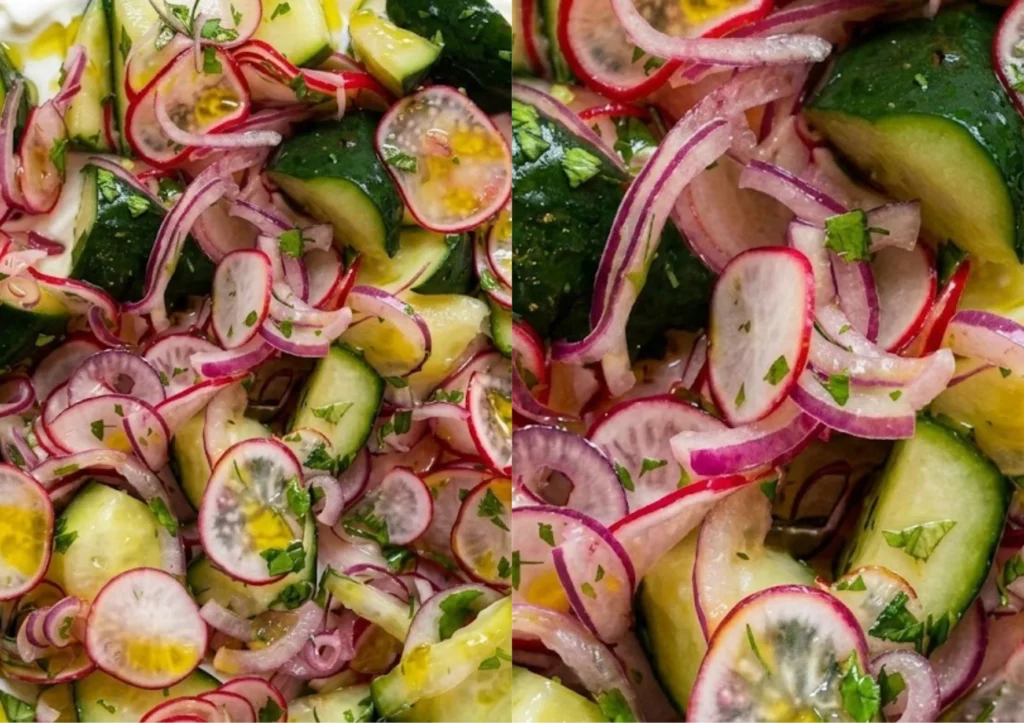
Finish with a final drizzle of olive oil over everything. This last bit of oil adds richness, makes the vegetables glisten beautifully, and carries aromatic compounds that boost the overall flavor.
Serving Suggestions
This salad works in numerous contexts:
As a Side Dish: Pair it with grilled chicken, lamb kebabs, fish, or steak. The cool, creamy salad balances rich, charred meats perfectly.
Light Lunch: Serve it with warm pita bread or crusty artisan bread. The combination is satisfying enough for a meal while remaining light and refreshing.
Part of a Mezze Spread: Include it alongside hummus, baba ganoush, olives, stuffed grape leaves, and other Mediterranean small plates.
Grain Bowl Component: Spoon it over quinoa, farro, or rice for a complete vegetarian meal.
The salad should be served immediately after assembly. Once the vegetables hit the yogurt, they’ll start releasing moisture, and the crisp textures will soften. For best results, prepare components ahead but combine them just before serving.
Tips for Success
Salt Your Vegetables Early Salting the vegetables and letting them sit for even 10-15 minutes improves the final dish. The salt draws out moisture, concentrates flavors, and softens the raw onion’s harshness.
Don’t Skip Draining That excess liquid at the bottom of the vegetable bowl must go. If you leave it, it will make your yogurt base watery and dilute all the carefully balanced flavors.
Quality Ingredients Matter With so few components, each one needs to shine. Fresh vegetables, real Greek yogurt, good olive oil, and fresh lemon juice make all the difference between a mediocre salad and an outstanding one.
Adjust the Garlic If you’re serving this to garlic-sensitive guests, use half a clove instead of a full one. Conversely, garlic lovers can add an extra clove to the yogurt.
You can prepare the vegetables and yogurt separately several hours ahead and refrigerate them. However, don’t combine them until just before serving. Once assembled, the salad starts releasing moisture and loses its crisp texture within 30 minutes.
While Greek yogurt is traditional, you could substitute labneh (Middle Eastern strained yogurt) for an even thicker, tangier base. Sour cream works in a pinch but changes the flavor profile significantly. For dairy-free versions, try coconut yogurt, though the taste will be quite different.
Fresh parsley is really important here. Dried parsley lacks the brightness and color that fresh brings. If you can’t find flat-leaf parsley, fresh cilantro or mint would be better substitutions than dried herbs.
Leftovers will be soggy rather than crisp, but they’re still edible for up to 24 hours refrigerated. The flavors actually improve as they meld, even though the texture suffers. Drain any accumulated liquid before serving leftovers.
Absolutely! Cherry tomatoes (halved), diced bell peppers, thinly sliced fennel, or chopped celery all work well. Just maintain the overall proportions so you don’t overwhelm the yogurt base.
As written, it’s best as a side dish or light lunch. To make it more substantial, add protein like grilled chicken, chickpeas, white beans, or hard-boiled eggs. Serve with whole grain bread or over grains.
Any fresh lemon works. Meyer lemons, if available, provide a slightly sweeter, more complex flavor. Just avoid bottled lemon juice fresh squeezed makes a noticeable difference in this simple recipe.
Cucumber Radish Salad A Crisp, Refreshing Mediterranean Inspired Dish
Ingredients
- For the Salad:
- 1 medium cucumber approximately 200g
- 5-6 radishes approximately 100g
- 1/2 red onion approximately 50g
- 10 g fresh flat-leaf parsley about 2 tablespoons chopped
- Salt
- 2 + fresh lemon wedges
- 3 tablespoons olive oil
- For the Yogurt Base:
- 50 g thick Greek yogurt about 1/4 cup
- 1 clove garlic
- 1 lemon wedge
- Pinch of salt
Instructions
- Prepare the Vegetables:
- Chop the cucumber into bite-sized pieces, roughly 1-2cm in size with varying shapes
- Slice the radishes thinly
- Slice the red onion thinly
- Mince the fresh flat-leaf parsley finely
- Add all vegetables to a large bowl
- Season the Vegetables:
- Add a generous pinch of salt to the vegetable bowl and mix well
- Squeeze one lemon wedge over the vegetables
- Mix again and set aside to rest
- Make the Yogurt Base:
- Mince the garlic clove very finely
- In a smaller bowl, combine Greek yogurt, minced garlic, juice from another lemon wedge, and a pinch of salt
- Mix thoroughly until well combined
- Chill (Optional):
- If not serving immediately, refrigerate both bowls to let flavors develop
- Assemble Just Before Serving:
- Spread the yogurt mixture evenly across a large flat plate
- Tip out any excess liquid that has collected at the bottom of the vegetable bowl
- Drizzle the vegetables with olive oil and mix
- Taste and add salt or lemon juice if needed
- Final Presentation:
- Spoon the seasoned vegetables on top of the yogurt-covered plate
- Drizzle with additional olive oil over everything
- Serve immediately and enjoy
- Storage Tip: Vegetables and yogurt can be prepared up to 4 hours ahead and stored separately in the refrigerator. Combine just before serving for best texture.