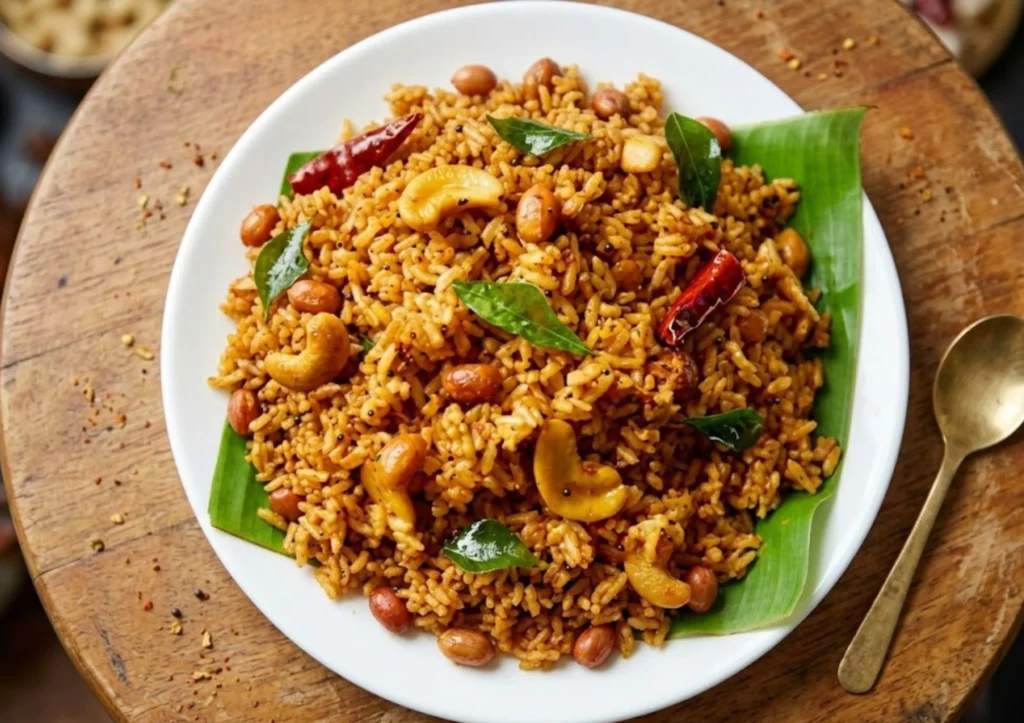
In the vast and colorful landscape of Indian cuisine, few dishes possess the spiritual and culinary depth of Tamarind Rice. Known in the southern regions as Puliyogare where “Puli” means tangy/sour and “Ogre” refers to tempered rice
This dish is more than just a meal; it is a devotional experience. Often served as Prasadam (sacred food offering) in ancient temples, its unique profile of tartness, spice, and nutty crunch has made it a favorite across the globe.
The demand for authentic, “clean-label” comfort food has never been higher. This specific version, inspired by the legendary temple traditions of Karnataka, strikes a perfect balance: it’s tangy, slightly sweet from jaggery, and layered with a complex, homemade spice blend.
Whether you’re looking for a vibrant lunch box staple or a comforting weekend dinner, this guide will walk you through the three part process of creating authentic Tamarind Rice in your own kitchen.
Why You’ll Love This Tamarind Rice
The “Temple” Flavor: Unlike standard restaurant versions, this recipe utilizes a slow-cooked paste that mimics the deep, rich flavors found in historic sacred kitchens.
Complex Flavor Profile: It hits every taste bud sour tamarind, sweet jaggery, spicy chilies, and savory lentils.
Travel-Friendly: Traditionally, this rice was a traveler’s best friend. The oil and tamarind act as natural preservatives, making it perfect for road trips or picnics.
Nutty Crunch: Every bite is punctuated by the satisfying snap of toasted peanuts, cashews, and lentils.
Pantry Ready: Once you make the spice mix and the paste, the actual rice assembly takes only minutes.
Part 1: The Soul of the Dish The Homemade Spice Mix
To get that authentic aroma, you must toast and grind your own spices. This isn’t just a seasoning; it’s the “Puri” that defines the dish’s character.
Ingredients for the Spice Mix
1/2 tsp Peanut Oil: To help the spices toast evenly.
1/2 tsp Whole Black Peppercorns: For a subtle, lingering heat.
1/2 tsp Mustard Seeds: To provide a nutty, earthy depth.
2 tsp Cumin Seeds: The aromatic foundation.
4 tsp Whole Coriander Seeds: For a citrusy, floral top note.
1/2 tsp Fenugreek Seeds : Just enough for a hint of bitterness.
8-9 Dried Red Chilies (Byadagi style for color): Provides a vibrant red hue without extreme heat.
2-3 Dried Red Chilies (Spicy/Guntur style): For the actual “kick.”
10 Fresh Curry Leaves: To add a herbal, woodland aroma.
1/4 tsp Turmeric Powder: For color and health benefits.
1/4 tsp Asafoetida (Hing): Essential for that savory, “umami” temple flavor.
The Method
Heat the peanut oil in a small pan over low flame.
Add the peppercorns, mustard, cumin, coriander, and fenugreek. Toast gently until fragrant but not burnt.
Add the dried chilies and curry leaves. Sauté for 2-3 minutes until the chilies become crisp.
Stir in the turmeric and asafoetida. Turn off the heat immediately the residual heat will finish them.
Once cooled, grind into a fine powder using a spice grinder.
Part 2: The Concentrated Paste – The Gojju
This is the most critical stage. We are creating a concentrated, sweet-and-sour paste that can be stored for weeks if needed.
Ingredients for the Paste
1 oz (25g) Tamarind Pulp: Soaked in hot water and strained to remove seeds and fibers.
2-3 tbsp Peanut Oil: This helps preserve the paste and creates a silky texture.
1/4 cup Jaggery (Brown Sugar or Palm Sugar): To balance the intense sourness of the tamarind.
Kosher Salt: To taste (traditionally, coarse rock salt is used).
The Method
Heat the peanut oil in a pan and add the strained tamarind pulp.
Cook on medium heat until the raw smell of the tamarind disappears and it reduces slightly.
Stir in the jaggery and salt. Continue cooking until the jaggery melts and the mixture turns into a thick, dark, glossy paste.
Turn off the heat. While the paste is still warm, fold in your Homemade Spice Mix.
You will notice the oil separating from the sides this is a good sign! It means the paste is ready and well-preserved.
Part 3: The Fluffy Canvas – The Rice
For this recipe, we want a rice that is firm and separate, not mushy.
Ingredients
1 cup Short-Grain Rice (e.g., Sona Masuri or Jasmine): These varieties absorb the sauce perfectly while maintaining their shape.
2 cups Water: For the absorption method.
A pinch of Salt.
The Method
Wash the rice 3-4 times until the water runs clear. Soak for 15 minutes.
Bring 2 cups of water to a boil, add the rice and salt.
Cover and cook on low heat for 10 minutes.
Once the water is absorbed, turn off the heat and let it rest, covered, for 5-7 minutes.
Gently fluff the rice with a fork or spatula. It should be light and airy.
Part 4: The Final Tempering
This final step adds the “Ogre” (the tempering) that brings the crunch and final aromatic punch.
Ingredients
1 tbsp Peanut Oil.
2 tsp Split Chickpeas (Chana Dal) & 2 tsp Split Black Gram (Urad Dal).
8 Cashews & 3 tbsp Peanuts.
1 tsp Mustard Seeds.
1 Dried Red Chili (broken).
1/4 tsp Asafoetida & 1/4 tsp Turmeric.
2 tbsp Shredded Dry Coconut: For a subtle, sweet nuttiness.
10-12 Fresh Curry Leaves.
The Assembly
Heat oil, add the lentils (dals) first as they take longer to toast.
Add the cashews and peanuts. Sauté on low heat until they turn a beautiful golden brown.
Add mustard seeds, red chili, asafoetida, turmeric, dry coconut, and curry leaves. Sauté for 30 seconds until the coconut is lightly toasted.
Pour this sizzling tempering directly over your fluffy rice.
Add your Tamarind Paste (Gojju) to the rice.
The Secret Technique: Traditionally, you mix this with clean, bare hands to ensure every grain of rice is evenly coated without breaking the grains. If using a spatula, be very gentle.
Serving & Storage Tips
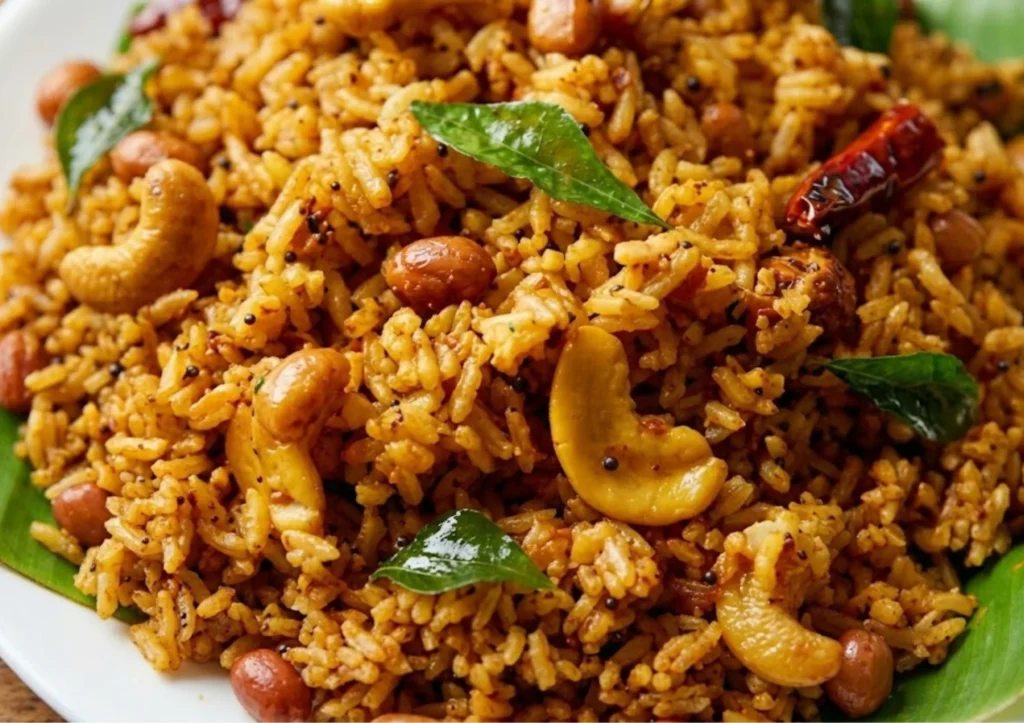
Serving: Tamarind Rice is best served at room temperature. The flavors actually “mature” and get better if the rice sits for an hour before eating.
Storage: Because of the tamarind and oil, the paste can be stored in an airtight jar in the fridge for up to a month. The assembled rice will stay fresh for 2 days at room temperature or 4 days in the fridge.
Travel Tip: This is the ultimate road-trip food. Pack it in an insulated container, and it will remain delicious throughout the day.

Mastering Authentic “Temple Style” Tamarind Rice
Ingredients
- For the Spice Powder Puri:
- 1/2 tsp Peanut oil
- 1/2 tsp Whole black peppercorns
- 1/2 tsp Mustard seeds
- 2 tsp Cumin seeds
- 4 tsp Whole coriander seeds
- 1/2 tsp Fenugreek seeds
- 10-12 Dried red chilies mix of mild for color and spicy for heat
- 10 Fresh curry leaves
- 1/4 tsp Turmeric powder
- 1/4 tsp Asafoetida Hing
- For the Tamarind Paste Gojju:
- 1 oz 25g Tamarind pulp (soaked in hot water and strained)
- 3 tbsp Peanut oil
- 1/4 cup Jaggery or dark brown sugar
- Kosher salt to taste
- For the Rice & Tempering:
- 1 cup Short-grain rice Sona Masuri or Jasmine
- 2 cups Water
- 1 tbsp Peanut oil
- 2 tsp Split chickpeas Chana Dal
- 2 tsp Split black gram Urad Dal
- 8 Whole cashews
- 3 tbsp Raw peanuts
- 1 tsp Mustard seeds
- 2 tbsp Shredded dry coconut
- 12 Fresh curry leaves
Instructions
- Toast the Spices: Heat oil in a pan over low heat. Add peppercorns, mustard, cumin, coriander, and fenugreek. Toast until fragrant. Add dried chilies and curry leaves; sauté until crisp. Stir in turmeric and asafoetida, then remove from heat.
- Grind to Powder: Once cooled, grind the toasted spices into a fine powder using a spice grinder or high-speed blender.
- Cook the Tamarind: Heat 3 tbsp oil in a pan. Add the strained tamarind pulp and simmer until the raw aroma disappears.
- Thicken the Paste: Add jaggery and salt. Continue cooking until the mixture becomes thick and glossy. Fold in the prepared spice powder, mix well, and set aside.
- Prepare the Rice: Rinse rice until water runs clear. Boil 2 cups of water, add rice and a pinch of salt. Cover and simmer on low for 10 minutes. Let it rest for 5 minutes, then fluff gently with a fork.
- Prepare the Tempering: Heat 1 tbsp oil in a small skillet. Add chickpeas and black gram; sauté until golden. Add peanuts and cashews, toasting until brown.
- Final Aromatics: Stir in mustard seeds, dry coconut, and curry leaves. Sauté for 30 seconds until the coconut is lightly toasted.
- Assemble: Pour the hot tempering over the fluffed rice. Add the tamarind paste.
- Gentle Mix: Using a spatula (or clean hands), gently fold the paste and tempering into the rice until every grain is evenly coated and vibrant orange-brown. Serve at room temperature for the best flavor.
For the USA audience, a combination of Dried Ancho or Guajillo chilies (for color) and Arbol chilies (for heat) works beautifully as a substitute.
You can, but ensure it is 100% tamarind with no added sugar or preservatives. Freshly soaked pulp provides a much brighter, more authentic tang.
Usually, this is due to using too much water or over-stirring while the rice is hot. Ensure you let the rice rest for at least 5 minutes after cooking before you fluff or mix it.
Yes! However, you will need to adjust the water ratio and cooking time for the brown rice. The bold flavors of the tamarind go exceptionally well with the nuttiness of brown rice.
Final Thoughts
Tamarind Rice is a dish that celebrates patience and precision. By making your own spice mix and slow-cooking the paste, you aren’t just making dinner you’re recreating a centuries old tradition.