There is a category of food that exists at the perfect intersection of genuinely healthy, genuinely beautiful, and genuinely delicious and it is a smaller category than most people realize.
These Vegan Summer Rolls live at that intersection permanently. Translucent rice paper wrappers packed with creamy avocado, crisp colorful bell pepper, shredded carrot, vibrant purple cabbage, fresh lettuce, bright mint, and optional crispy tofu all served alongside a rich, savory peanut dipping sauce that ties every single element together into one of the most satisfying, most crave worthy, and most visually stunning lunches you can make in your own kitchen in under 20 minutes with zero cooking required.
If you have never made fresh summer rolls at home before, prepare for a revelation. If you have made them before and found the rice paper frustrating or the rolling process intimidating, the single tip in this recipe five seconds in hot water, then roll immediately is about to change everything for you.
These are not complicated. They are not time consuming. They are not precious or difficult or requiring of any special skill.
They are simply, beautifully, wonderfully good and once you make them once, you will make them every week for the rest of the summer without question.
Why These Summer Rolls Are the Perfect Summer Meal
The beauty of a fresh summer roll as opposed to a fried spring roll is the complete absence of heat in the preparation.
On a hot summer day when the last thing you want to do is stand over a hot stove or turn on the oven, summer rolls are the answer.
Everything is raw or room temperature, the assembly takes minutes, and the result is a meal that is cool, fresh, hydrating, and deeply satisfying in a way that feels genuinely nourishing rather than heavy or uncomfortable.
The rainbow of colors visible through the translucent rice paper is also a genuine source of joy there is something about seeing the vivid orange of the shredded carrot, the deep purple of the cabbage, the green of the avocado and lettuce, and the bright colors of the bell pepper through that delicate, slightly shimmery wrapper that makes these rolls feel like a celebration of produce at its peak. Eating them feels like eating summer itself.
And then there is the peanut sauce. Rich, creamy, savory, with depth from soy and warmth from ginger the dipping sauce is not an afterthought in this recipe.
It is the flavor anchor that transforms fresh, mild vegetables into a genuinely crave-worthy dish. Every bite of summer roll dipped generously into that peanut sauce is a complete flavor experience, and it is one you will find yourself thinking about on days when you make something else for lunch and realize you made the wrong choice.
Ingredients
For the Summer Rolls:
- Rice paper wrappers (available in the Asian foods aisle of most major supermarkets, Asian grocery stores, Whole Foods, or Amazon — look for round, 8 to 10 inch diameter wrappers)
- 1 ripe avocado, sliced into thin strips
- 1 large bell pepper, any color, thinly sliced into matchsticks (red and yellow produce the most vibrant color through the rice paper)
- 1 cup shredded carrots (pre-shredded bagged carrots from any supermarket save significant prep time)
- ½ small head purple cabbage, very thinly sliced or shredded
- Fresh romaine, butter, or green leaf lettuce, leaves torn into roll-sized pieces
- Fresh mint leaves (a generous handful — mint is a key flavor element, not just a garnish)
- Optional protein: extra firm tofu, pressed and either pan-fried until golden, baked until crispy, or used raw for a completely no-cook version
For the Peanut Dipping Sauce:
- 3 tablespoons creamy peanut butter (natural peanut butter with no added sugar works best)
- 2 tablespoons soy sauce or tamari for gluten-free
- 1 tablespoon rice vinegar
- 1 tablespoon lime juice
- 1 teaspoon sesame oil
- 1 teaspoon fresh ginger, finely grated or ½ teaspoon ground ginger
- 1 teaspoon maple syrup or honey
- 2 to 4 tablespoons warm water to thin to desired consistency
- Optional: a drizzle of sriracha for heat
The One Tip That Makes Rice Paper Easy
Before we get into the full instructions, here is the single most important piece of knowledge for working with rice paper wrappers successfully: rinse the wrapper in hot water for exactly 5 seconds, then roll immediately.
That is it. That is the tip. And it changes everything.
Most people either under soak their rice paper leaving it too stiff and cracking during rolling or over soak it making it so soft and sticky that it tears, sticks to everything, and becomes impossible to work with.
The five second hot water rinse is the sweet spot. The wrapper will still feel slightly stiff when you lay it on your surface and that is exactly right.
It continues to soften and become pliable as you work with it, and by the time you have placed your fillings and started to roll, it is at the perfect texture pliable, slightly tacky, and strong enough to hold everything in a tight, clean roll without tearing.
Use warm to hot water from the tap no need to boil anything. A wide, shallow bowl or plate works perfectly for dipping the wrapper. And work on a clean, slightly damp surface or a silicone cutting board to prevent the softening wrapper from sticking to your prep area.
Step by Step Instructions
Step 1 Prepare all your fillings
Before you begin rolling, prepare and arrange all your fillings in an organized station. Slice the avocado into thin strips.
Thinly slice the bell pepper into matchsticks. Shred the cabbage or use pre shredded. Prepare the shredded carrots.
Tear the lettuce into manageable pieces. Wash and dry the fresh mint leaves. If using tofu, press it dry and either pan fry in a small amount of oil over medium high heat for 3 to 4 minutes per side until golden, or use raw.
Having everything prepped and within arm’s reach before you start rolling is the key to a smooth, stress-free assembly process.
Step 2 Make the peanut dipping sauce
In a small bowl, whisk together the peanut butter, soy sauce, rice vinegar, lime juice, sesame oil, ginger, and maple syrup until smooth and combined.
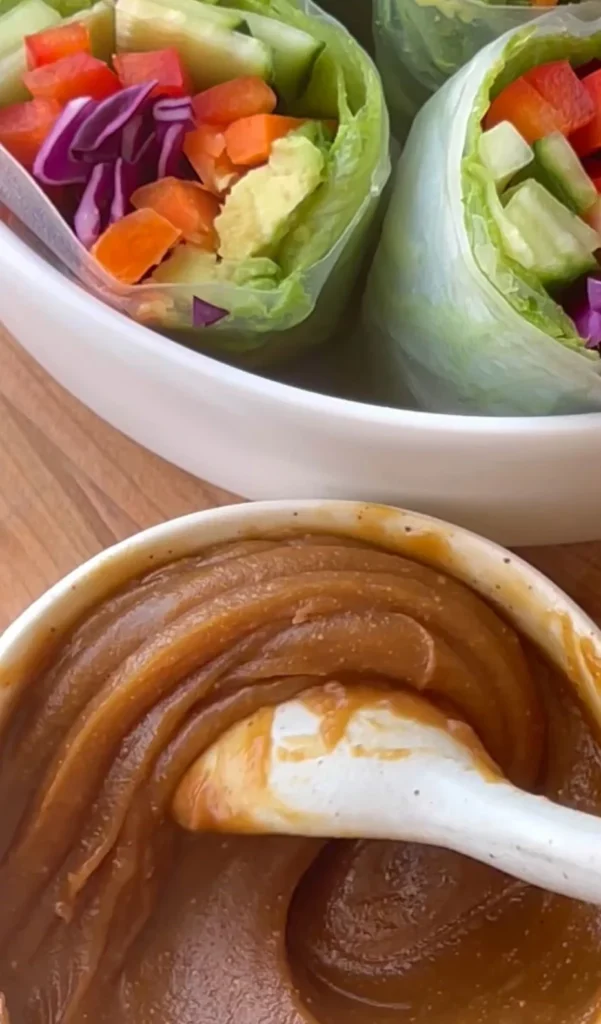
Add warm water one tablespoon at a time, whisking between additions, until the sauce reaches a smooth, pourable consistency that coats a spoon and drips off slowly similar to a thick salad dressing.
Taste and adjust add more lime for brightness, more soy for saltiness, more maple syrup for sweetness, or a drizzle of sriracha for heat. Set aside.
Step 3 Soak the rice paper
Fill a wide, shallow bowl or a large plate with warm to hot tap water. Take one rice paper wrapper and submerge it in the water completely for exactly 5 seconds count it out.
Remove it from the water it will still feel slightly stiff and almost leathery and lay it flat on a clean, slightly damp surface or silicone cutting board. Do not wait for it to feel fully soft before removing from water. It will continue to soften as you work.
Step 4 Load the fillings
Working quickly but calmly, place your fillings in the lower third of the rice paper wrapper this is the section you will roll up from.
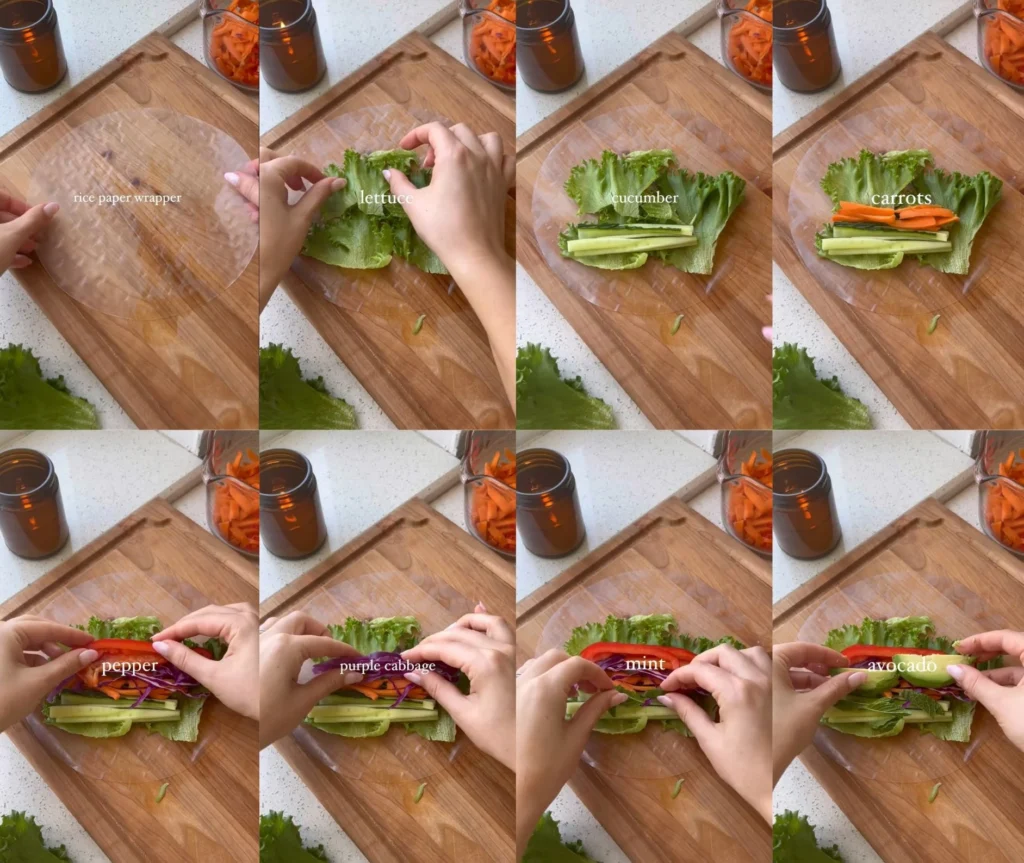
Start with a leaf of lettuce as a base layer it helps keep the other fillings organized and prevents wet ingredients like avocado from sticking directly to the rice paper.
Layer on a few strips of avocado, a small handful of shredded carrot, a few strips of bell pepper, a small portion of shredded purple cabbage, a few slices of tofu if using, and 3 to 4 fresh mint leaves. Keep the portion modest overfilling is the most common rolling mistake and results in tears and bursting seams.
Step 5 Roll tightly
Fold the bottom of the rice paper up and over the fillings, tucking it snugly underneath. Fold both side edges in toward the center similar to folding a burrito.
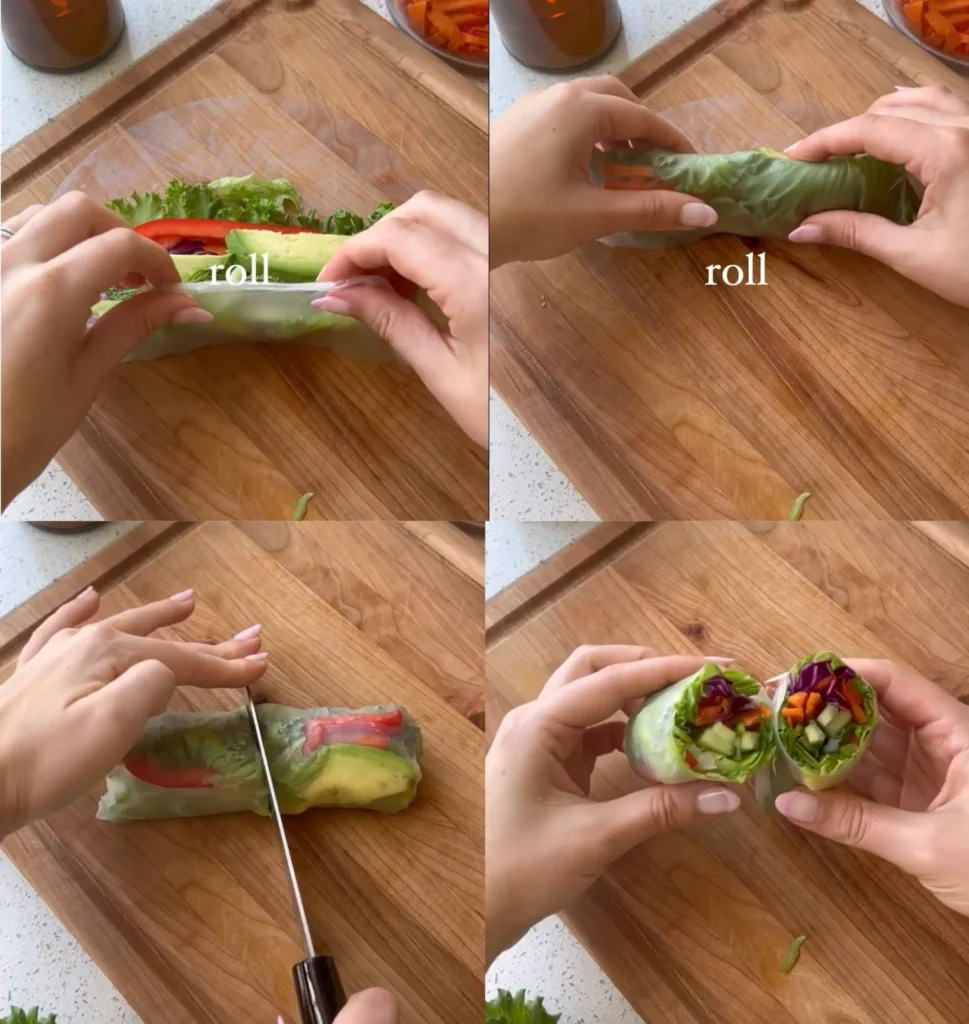
Then roll forward firmly and evenly until you reach the top edge of the wrapper. The rice paper will seal itself it is tacky enough to adhere to itself without any additional moisture or sealing agent needed. Place seam-side down on a serving plate. Repeat with remaining wrappers and fillings.
Step 6 Serve with peanut sauce
Arrange the finished rolls on a serving plate or cutting board. Serve alongside the peanut dipping sauce in a small bowl.
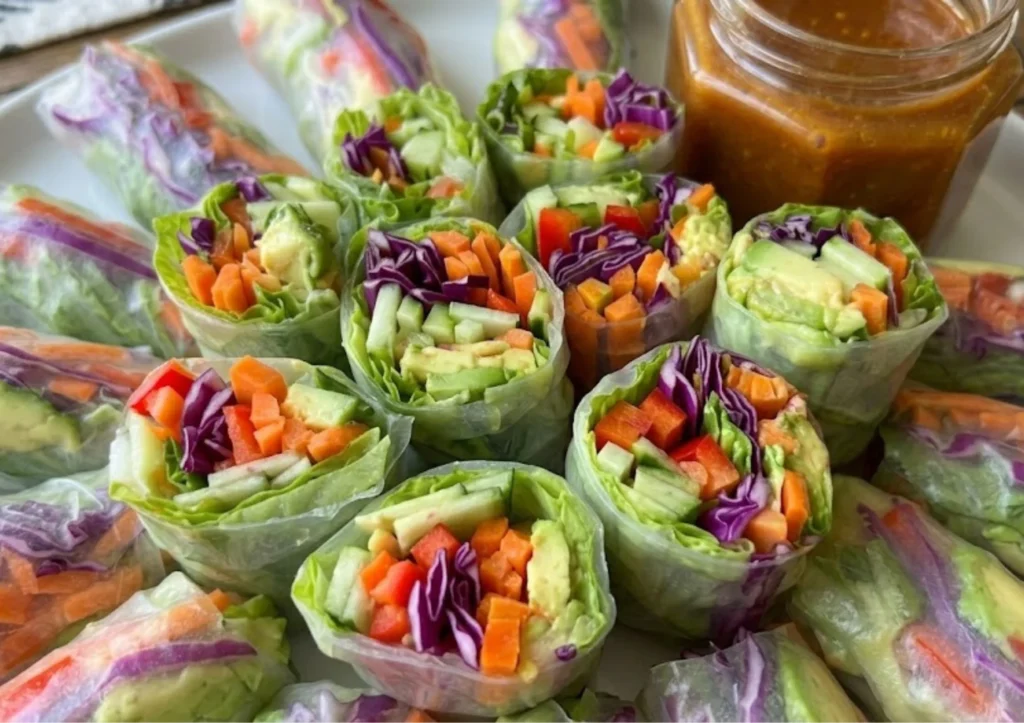
For a more elegant presentation, slice each roll in half diagonally to reveal the colorful cross section of fillings inside the rainbow of colors visible in each cut roll is genuinely stunning. Serve immediately for the best texture and freshest flavor.
Tips for Perfect Summer Rolls Every Time
Prep all fillings before you begin rolling — once the rice paper is soaked there is no time to stop and slice vegetables.
Never over-soak the rice paper — five seconds in hot water is the number — soft and tacky is perfect, fully limp is too far.
Work on a slightly damp surface to prevent the softening wrapper from sticking.
Keep fillings modest — a lighter fill rolls more cleanly and holds its shape better than an overstuffed roll.
Roll as tightly as possible from the first fold — a loose initial tuck results in a loose, saggy roll that falls apart when dipped.
Serve immediately for the freshest texture — rice paper tightens and becomes slightly chewy if the rolls sit too long before eating.
If making ahead, cover tightly with a damp paper towel and wrap in plastic wrap to prevent drying out — consume within 2 to 3 hours.
Serving Ideas
Serve these summer rolls as a light weeknight dinner with extra peanut sauce alongside. Pack individually wrapped in plastic wrap for a gorgeous, healthy packed lunch.
Arrange on a large platter with the peanut sauce and additional dipping sauces sweet chili sauce and hoisin sauce both pair beautifully for a party appetizer spread.
Set up a build your own summer roll station at a casual dinner party and let guests assemble their own rolls it is one of the most interactive, most fun, most universally enjoyed party food setups imaginable.
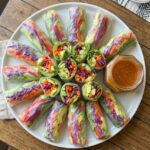
Vegan Summer Rolls The Fresh, No-Cook, Rainbow-Colored Lunch
Ingredients
- For the Summer Rolls:
- 8 –10 rice paper wrappers round 8–10 inch diameter available in Asian foods aisle of most major supermarkets, Asian grocery stores, Whole Foods, or Amazon — Three Ladies or Rose brand recommended
- 1 ripe avocado sliced into thin strips toss in lime juice to prevent browning
- 1 large bell pepper any color thinly sliced into matchsticks red or yellow produce most vibrant color through rice paper
- 1 cup shredded carrots pre-shredded bagged carrots save prep time
- ½ small head purple cabbage very thinly sliced or shredded
- Fresh romaine butter, or green leaf lettuce leaves torn into roll-sized pieces
- Fresh mint leaves — generous handful key flavor element not just garnish
- Optional protein: extra firm tofu pressed dry and pan-fried until golden or baked until crispy or used raw for completely no-cook version
- For the Peanut Dipping Sauce:
- 3 tablespoons creamy natural peanut butter no added sugar
- 2 tablespoons soy sauce or tamari for gluten-free version
- 1 tablespoon rice vinegar
- 1 tablespoon fresh lime juice
- 1 teaspoon sesame oil
- 1 teaspoon fresh ginger finely grated or ½ teaspoon ground ginger
- 1 teaspoon maple syrup or honey
- 2 –4 tablespoons warm water to thin to desired consistency
- Optional: drizzle of sriracha for heat
Instructions
- Prepare and arrange all fillings in an organized station before beginning to roll — slice avocado into thin strips and toss in lime juice, thinly slice bell pepper into matchsticks, prepare shredded carrots, thinly slice or shred purple cabbage, tear lettuce into manageable pieces, wash and dry fresh mint leaves.
- If using tofu press dry thoroughly then pan-fry in small amount of oil over medium-high heat 3–4 minutes per side until golden — or use raw for completely no-cook version — set aside.
- Make peanut dipping sauce — whisk together peanut butter, soy sauce, rice vinegar, lime juice, sesame oil, ginger, and maple syrup until smooth and combined.
- Add warm water one tablespoon at a time whisking between additions until sauce reaches smooth pourable consistency that coats a spoon and drips off slowly — similar to thick salad dressing consistency.
- Taste peanut sauce and adjust — add more lime for brightness, more soy for saltiness, more maple syrup for sweetness, or sriracha for heat — set aside.
- Fill a wide shallow bowl or large plate with warm to hot tap water.
- Submerge one rice paper wrapper completely in hot water for exactly 5 seconds — count it out — no more no less.
- Remove wrapper from water — it will still feel slightly stiff and almost leathery which is correct — lay flat immediately on a clean slightly damp surface or silicone cutting board.
- Do not wait for wrapper to feel fully soft before removing from water — it continues to soften as you work and will be perfectly pliable by the time fillings are placed and rolling begins.
- Place fillings in the lower third of the rice paper wrapper — start with a leaf of lettuce as a base layer to keep fillings organized and prevent wet ingredients from sticking directly to wrapper.
- Layer on a few strips of avocado, small handful of shredded carrot, a few strips of bell pepper, small portion of shredded purple cabbage, tofu slices if using, and 3–4 fresh mint leaves — keep portions modest and do not overfill.
- Fold the bottom of the rice paper up and over the fillings tucking it snugly underneath.
- Fold both side edges in toward the center — similar to folding a burrito.
- Roll forward firmly and evenly until reaching the top edge of the wrapper — the rice paper seals itself as it is tacky enough to adhere without any additional moisture needed.
- Place finished roll seam-side down on a serving plate and repeat with remaining wrappers and fillings.
- For elegant presentation slice each roll in half diagonally to reveal colorful cross-section of fillings inside before serving.
- Serve immediately alongside peanut dipping sauce.
Notes
THE KEY TIP: Rinse rice paper in hot water for exactly 5 seconds then roll immediately — this is the single most important technique for successful rice paper rolling — never over-soak.
Prep all fillings completely before beginning to roll — once rice paper is soaked there is no time to stop and slice vegetables.
Work on a slightly damp surface to prevent softening wrapper from sticking to prep area.
Keep fillings modest — a lighter fill rolls more cleanly and holds shape better than an overstuffed roll.
Roll as tightly as possible from the first fold — a loose initial tuck results in a loose saggy roll that falls apart when dipped.
Serve immediately for freshest texture — rice paper tightens and becomes slightly chewy if rolls sit too long before eating.
To make ahead wrap each roll individually in plastic wrap and refrigerate for up to 3–4 hours maximum — do not store overnight as rice paper becomes tough and rubbery.
Toss avocado slices in lime juice before adding to filling station to slow browning significantly.
Peanut sauce keeps in airtight container in refrigerator for up to 5 days and improves with time as flavors develop.
For nut-free version substitute peanut butter in dipping sauce with sunflower seed butter or tahini.
For completely gluten-free version substitute soy sauce with tamari or coconut aminos in peanut sauce.
Rice paper wrappers are naturally gluten-free — made from rice flour and water only.
Other great filling additions: thinly sliced cucumber, mango strips, bean sprouts, edamame, fresh basil, fresh cilantro, vermicelli rice noodles, cooked shrimp, or smoked salmon.
Additional dipping sauce options alongside peanut sauce: sweet chili sauce and hoisin sauce both pair beautifully.
For a party set up a build-your-own summer roll station with all fillings arranged separately and let guests assemble their own rolls.
Summer rolls are best eaten fresh immediately or within 1 to 2 hours of making. If you need to make them ahead, wrap each roll individually in plastic wrap and store in the refrigerator for up to 3 to 4 hours. Do not store overnight the rice paper becomes tough and rubbery. The peanut sauce, however, keeps beautifully in the refrigerator for up to 5 days and actually improves with time as the flavors develop.
Round rice paper wrappers in 8 to 10 inch diameter are the most commonly available and easiest to work with for standard-sized summer rolls. Three Ladies and Rose brands are widely available and both work very well. Thinner rice paper produces a more delicate, restaurant-quality result thicker paper is more forgiving for beginners but produces a slightly chewier exterior.
Absolutely the beauty of summer rolls is their complete customizability. Thinly sliced cucumber, mango strips, bean sprouts, edamame, shredded romaine, fresh basil, fresh cilantro, vermicelli rice noodles, cooked shrimp, or smoked salmon all work beautifully. The fillings listed in this recipe are a starting framework make them your own.
Yes sunflower seed butter is an excellent nut-free substitute for peanut butter in the dipping sauce and produces a very similar flavor and texture. Tahini also works well and produces a slightly more savory, less sweet sauce with a wonderful sesame depth that pairs beautifully with the fresh vegetable fillings.
Rice paper wrappers are naturally gluten-free they are made from rice flour and water only. To make the entire recipe gluten-free, substitute the soy sauce in the peanut dipping sauce with tamari or coconut aminos. All other ingredients in this recipe are naturally gluten-free.
Toss the avocado slices in a small amount of fresh lime juice before adding to your filling station the acidity slows the browning process significantly. Assemble rolls with avocado last among the fillings, and serve or eat as quickly as possible after assembly for the greenest, freshest avocado color.