There are recipes that are good. There are recipes that are great. And then rarely, beautifully, unexpectedly there are recipes that genuinely change the way you think about food.
These Rice Paper Sushi Rolls fall into that third category, and they do it by taking the two most beloved elements of two already wonderful dishes and combining them into something that is greater than either one alone.
On one side: rice paper rolls fresh, light, translucent, crispy when pan fried, endlessly customizable, and satisfying in a way that feels clean and vibrant.
On the other side: sushi rolls seasoned rice, nori, beautiful fillings, that signature combination of umami and freshness that makes sushi one of the most crave worthy foods on the planet.
This recipe takes the best of both the golden, shatteringly crispy exterior of a pan fried rice paper roll and the seasoned sushi rice, nori, and carefully arranged fillings of a traditional maki and fuses them into one roll that delivers an experience no single dish could achieve on its own.
The filling is extraordinary: teriyaki-glazed extra firm tofu with a sticky, caramelized exterior and tender interior, creamy homemade silken tofu mayo, julienned carrot, cool crisp Japanese cucumber, and buttery ripe avocado all wrapped in nori and seasoned sushi rice, encased in rice paper, and pan fried until the outside is a deep, audibly crackling golden crisp.
Served with soy sauce and wasabi, these rolls are a complete sensory experience from the first bite to the last.
Why This Recipe Is Genuinely Life Changing
The concept sounds unusual on paper wrapping a sushi roll in rice paper and frying it. But the moment you understand what that rice paper does during cooking, the genius of the idea becomes immediately clear.
Raw rice paper is soft, pliable, and translucent. When it hits a hot, oiled pan, something remarkable happens: it crisps up within minutes into a golden, blistered, almost crackling shell that is thin enough to shatter with a gentle bite but sturdy enough to hold the entire roll intact.
This outer shell transforms the texture experience of the roll completely instead of a soft exterior giving way to rice and fillings, you get a dramatic contrast between the crispy rice paper shell and the soft, creamy, umami-loaded interior.
The teriyaki tofu glaze made with rice vinegar, soy sauce, coconut aminos, brown sugar, and ginger powder creates a deeply flavored, sticky coating on the tofu that caramelizes beautifully during cooking, delivering the rich, savory sweet umami punch that makes every bite feel genuinely satisfying.
Coconut aminos add a subtle sweetness and depth that standard soy sauce alone cannot achieve.
The homemade silken tofu mayo is the creamy binder that holds the entire flavor profile together providing richness and a neutral, creamy counterpoint to the bold teriyaki glaze and the sharp bite of wasabi.
Ingredients
For the Rice Paper Sushi Rolls:
- 8 rice paper wrappers (available in the Asian foods aisle of most major supermarkets, Asian grocery stores, Whole Foods, or Amazon)
- 3 to 4 sheets roasted nori (dried seaweed sheets — available at most major grocery stores, Trader Joe’s, or Asian grocery stores)
- 14 oz extra firm tofu, pressed and cut into thick planks
- 1 large carrot, peeled and julienned into thin matchsticks
- 2 Japanese cucumbers (also called Persian cucumbers — available at most major supermarkets), julienned or thinly sliced lengthwise
- 1 ripe avocado, sliced
- 2 cups cooked sushi rice (short-grain Japanese sushi rice, cooked according to package directions)
- 1 tablespoon rice vinegar (for seasoning the sushi rice)
- Homemade vegan silken tofu mayo (see below)
- Neutral cooking oil for pan frying (vegetable oil or avocado oil)
- White sesame seeds for garnish
- Soy sauce and wasabi for serving
For the Teriyaki Tofu Glaze:
- 1 tablespoon rice vinegar
- 2 tablespoons soy sauce
- 2 tablespoons coconut aminos (available at Whole Foods, Trader Joe’s, Sprouts, Target, or Amazon)
- ½ teaspoon brown sugar
- ¼ teaspoon ground ginger powder
For the Homemade Vegan Silken Tofu Mayo:
- Silken tofu, blended with a small amount of rice vinegar, neutral oil, salt, and a pinch of sugar until completely smooth and creamy (standard vegan mayo from the store Hellmann’s Vegan, Just Mayo, or Sir Kensington’s Fabanaise can be substituted if preferred)
A Note on Key Ingredients
Coconut aminos: This is a soy free, slightly sweeter alternative to soy sauce made from coconut blossom nectar.
It adds a depth and subtle sweetness to the tofu glaze that distinguishes it from standard teriyaki sauce. Find it at Whole Foods, Trader Joe’s, Target, Sprouts, or Amazon. If unavailable, substitute with an additional tablespoon of soy sauce plus a small extra pinch of brown sugar.
Japanese or Persian cucumbers: These are smaller, thinner-skinned, and less watery than standard American cucumbers making them ideal for sushi rolls where excess moisture can make the rice soggy.
Find them labeled as Persian cucumbers at most major supermarkets. Standard English cucumbers with the seeds scooped out work as a substitute.
Sushi rice: Short grain Japanese sushi rice is essential for the sticky, slightly chewy texture that holds the roll together.
Season the cooked rice with rice vinegar while still warm and allow to cool to room temperature before rolling.
Step by Step Instructions
Step 1 Cook and season the sushi rice
Cook 2 cups of sushi rice according to package directions. While still warm, transfer to a large bowl and sprinkle with 1 tablespoon of rice vinegar.
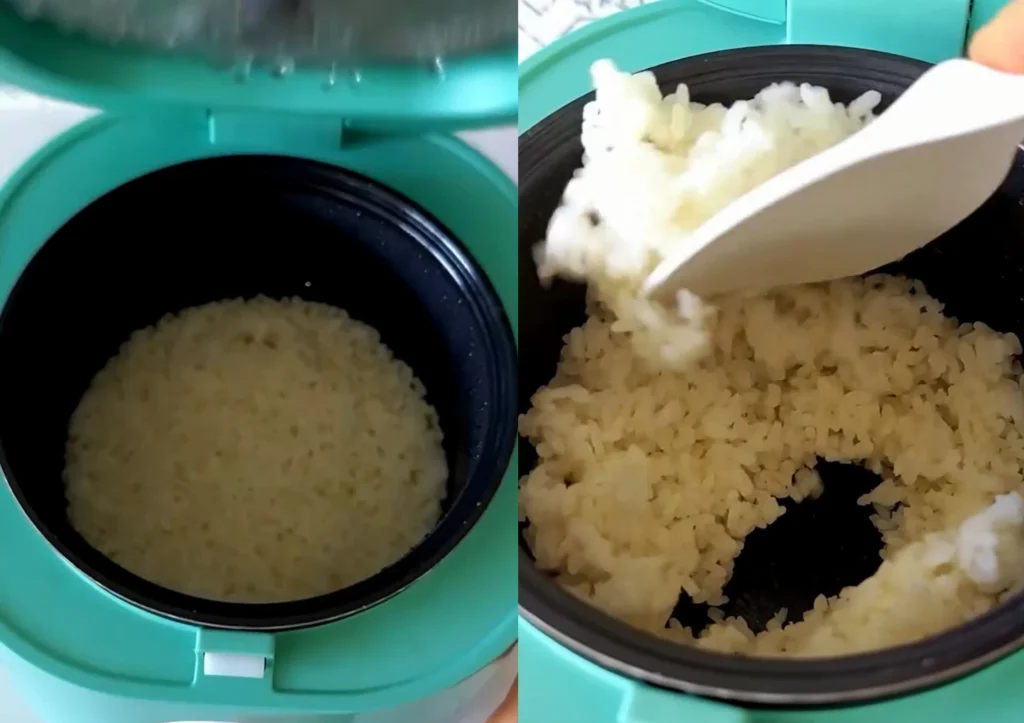
Fold gently with a rice paddle or spatula until the vinegar is evenly distributed. Fan the rice while folding to cool it quickly and give it a slight glossy sheen.
Allow to cool completely to room temperature before rolling warm rice makes the nori soggy and the roll difficult to handle.
Step 2 Press and prepare the tofu
Press the extra firm tofu for at least 15 to 20 minutes wrap in a clean kitchen towel or paper towels and place a heavy pan on top.
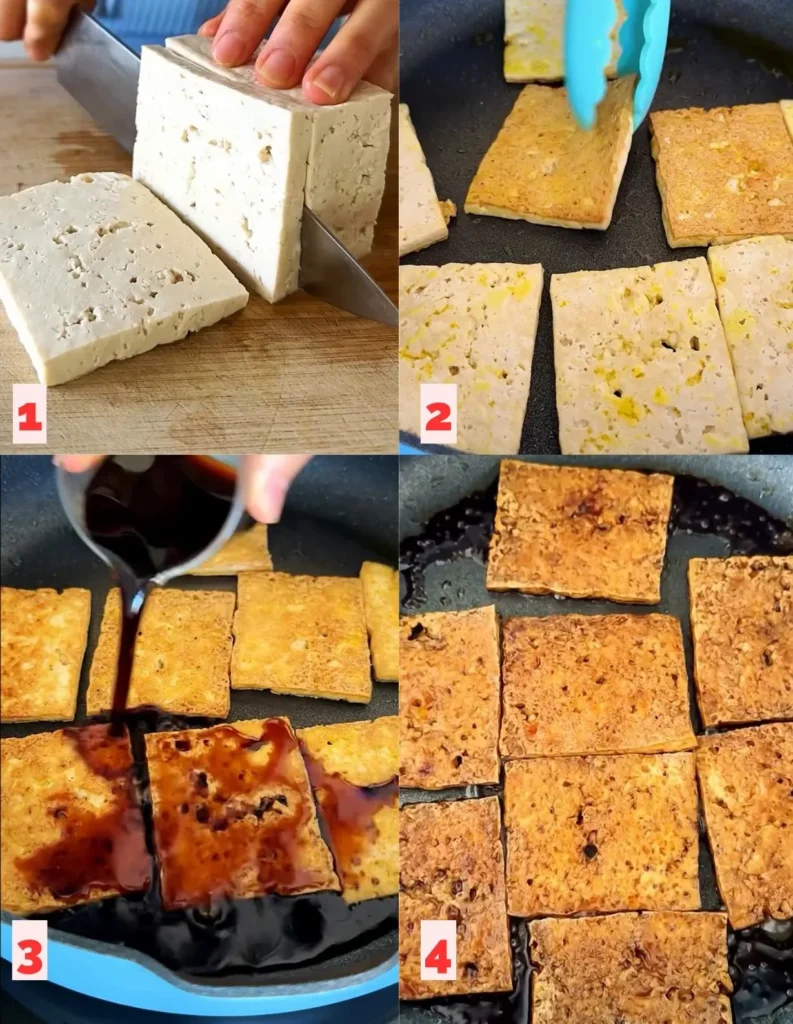
After pressing, cut into thick planks or rectangular pieces sized to fit the width of your nori sheets. In a small bowl, whisk together all the tofu glaze ingredients rice vinegar, soy sauce, coconut aminos, brown sugar, and ginger powder until the sugar is fully dissolved. Pour over the tofu pieces and allow to marinate for at least 10 minutes, turning once.
Step 3 Cook the glazed tofu
Heat a thin layer of neutral oil in a non stick skillet over medium high heat. Add the marinated tofu planks and cook for 3 to 4 minutes per side until deeply caramelized and golden.
Add any remaining marinade to the pan in the final minute of cooking and let it reduce and coat the tofu in a sticky, glossy glaze. Remove and allow to cool slightly before rolling.
Step 4 Make the silken tofu mayo
If making from scratch, blend silken tofu with rice vinegar, a small drizzle of neutral oil, salt, and a pinch of sugar until completely smooth and creamy the consistency should be similar to standard mayonnaise, thick enough to spread. Taste and adjust seasoning. Alternatively, use store-bought vegan mayo directly.
Step 5 Prepare all fillings
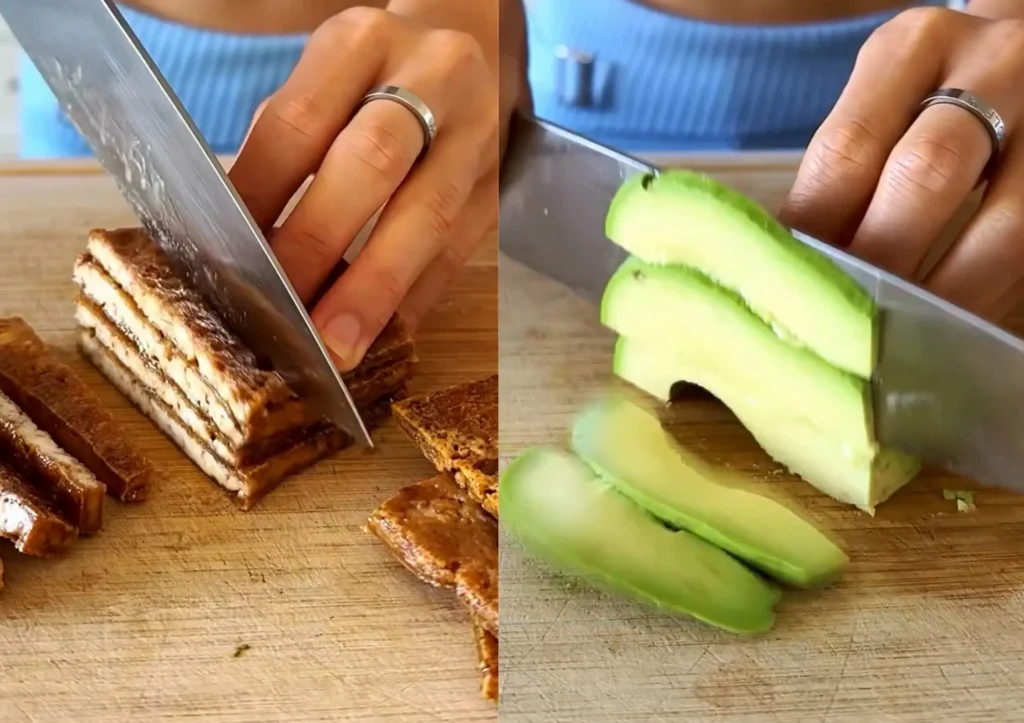
Julienne the carrot into thin matchsticks. Slice the Japanese cucumbers lengthwise into thin strips. Slice the avocado. Lay all fillings out in an organized station before beginning to roll having everything ready and within reach makes the rolling process significantly smoother.
Step 6 Assemble the sushi rolls
Lay a sheet of nori on a clean, dry surface or bamboo rolling mat. Spread a thin, even layer of cooled sushi rice over the nori, leaving a half-inch border at the top edge.
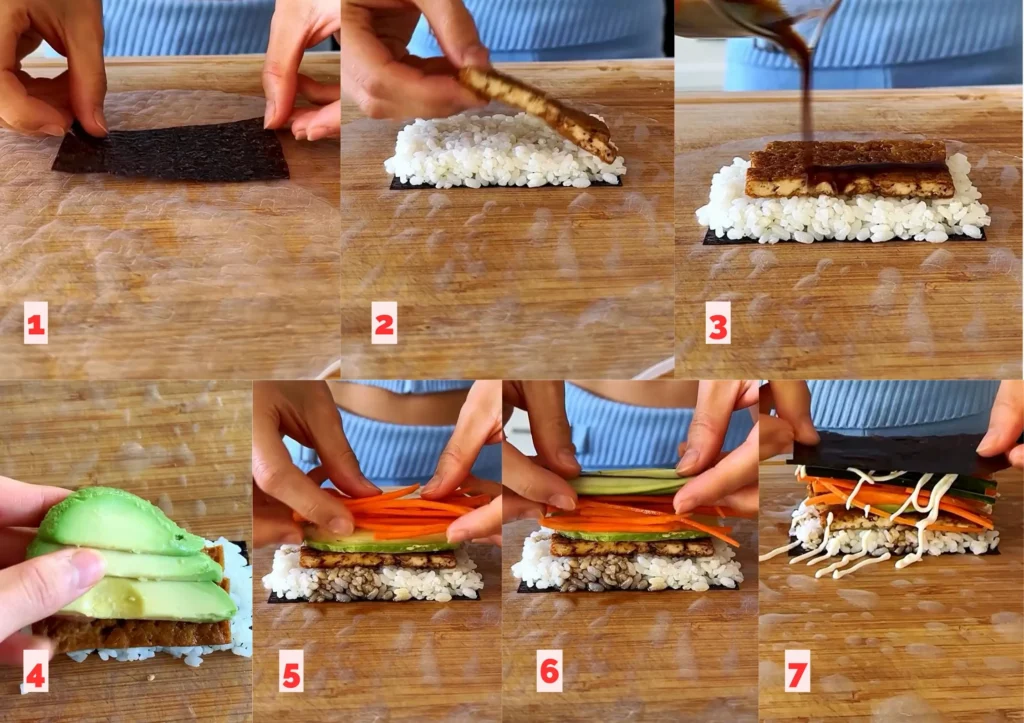
Spread a thin line of silken tofu mayo across the center of the rice. Arrange the glazed tofu, julienned carrot, cucumber strips, and avocado slices in a neat line across the center.
Roll tightly from the bottom using the mat or your hands, applying gentle but firm pressure. Seal the top edge with a small amount of water. You should have a firm, compact sushi roll at this stage.
Step 7 Wrap in rice paper
Briefly dip a rice paper wrapper in warm water for 3 to 5 seconds just long enough to make it pliable but not fully softened.
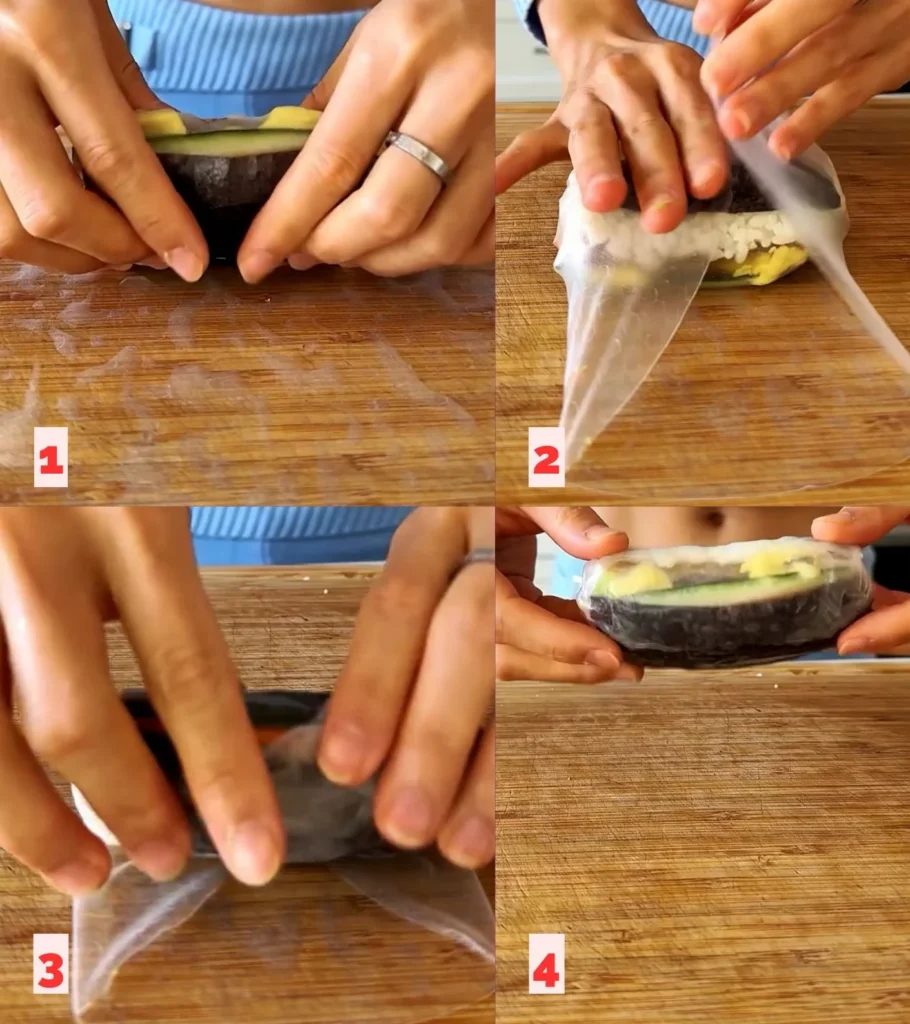
Lay it flat on a clean surface. Place the assembled sushi roll at the bottom of the rice paper and roll upward tightly, tucking in the sides as you go, similar to wrapping a burrito. The rice paper should wrap snugly around the entire sushi roll with no gaps or tears.
Step 8 Pan fry to golden crispy perfection
Heat a generous layer of neutral cooking oil in a wide non stick skillet over medium high heat. When the oil is shimmering and hot, carefully place the rice paper wrapped rolls seam side down.
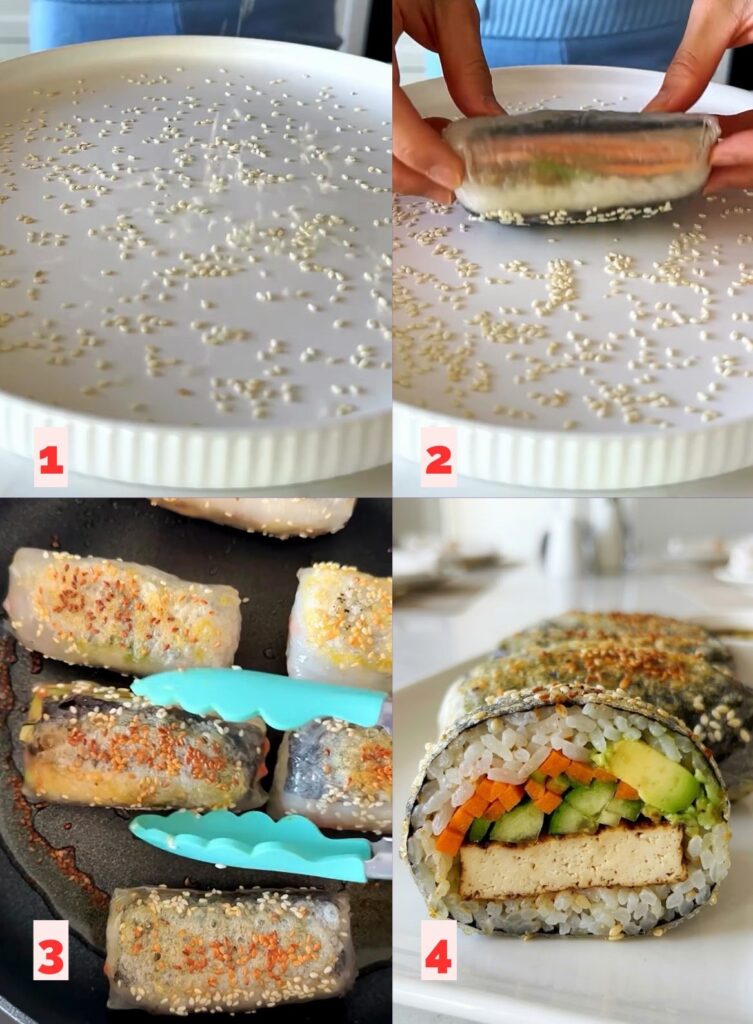
Fry for 2 to 3 minutes per side, turning carefully, until the rice paper is deeply golden, blistered, and audibly crispy on all sides. The transformation is rapid watch closely and adjust heat if the rice paper is browning too quickly.
Step 9 Slice and serve
Remove from the pan and allow to rest for 1 minute. Using a sharp, clean knife wiped between each cut slice each roll into even pieces. Sprinkle white sesame seeds over the cut surfaces. Serve immediately alongside soy sauce and wasabi for dipping.
Tips for Perfect Rice Paper Sushi Rolls Every Time
Cool sushi rice completely before rolling — warm rice makes nori limp and the roll impossible to handle cleanly.
Press tofu thoroughly before marinating — dry tofu absorbs the glaze dramatically better than unpressed tofu.
Soak rice paper for only 3 to 5 seconds — over-soaked rice paper tears during rolling and doesn’t crisp properly during frying.
Roll the sushi roll as tightly as possible before wrapping in rice paper — a loose roll falls apart when sliced.
Use a generous amount of oil for pan frying — insufficient oil produces uneven, patchy crisping rather than an all-over golden exterior.
Fry over medium-high heat and watch constantly — rice paper goes from perfectly golden to burned very quickly.
Use a very sharp knife and wipe between cuts for clean, beautiful slices that show off the colorful fillings.
Serve immediately after slicing — rice paper loses its crispiness within minutes as it absorbs moisture from the fillings.
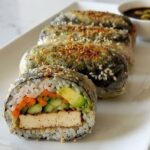
Rice Paper Sushi Rolls The Crispy, Creamy, Life Changing Fusion Roll
Ingredients
- For the Rice Paper Sushi Rolls:
- 8 rice paper wrappers available in Asian foods aisle of most major supermarkets, Asian grocery stores, Whole Foods, or Amazon
- 3 –4 sheets roasted nori dried seaweed sheets — available at most major grocery stores, Trader Joe’s, or Asian grocery stores
- 14 oz extra firm tofu pressed thoroughly dry
- 1 large carrot peeled and julienned into thin matchsticks
- 2 Japanese or Persian cucumbers julienned or thinly sliced lengthwise
- 1 ripe avocado sliced
- 2 cups cooked sushi rice short-grain Japanese sushi rice cooked according to package directions
- 1 tablespoon rice vinegar for seasoning sushi rice
- Homemade vegan silken tofu mayo or store-bought vegan mayo Hellmann’s Vegan, Just Mayo, or Sir Kensington’s Fabanaise
- Neutral cooking oil for pan frying vegetable oil or avocado oil
- White sesame seeds for garnish
- Soy sauce and wasabi for serving
- For the Teriyaki Tofu Glaze:
- 1 tablespoon rice vinegar
- 2 tablespoons soy sauce
- 2 tablespoons coconut aminos available at Whole Foods, Trader Joe’s, Sprouts, Target, or Amazon — substitute with equal amount soy sauce plus small extra pinch brown sugar if unavailable
- ½ teaspoon brown sugar
- ¼ teaspoon ground ginger powder
Instructions
- Cook sushi rice according to package directions then transfer to a large bowl while still warm and sprinkle with 1 tablespoon rice vinegar — fold gently with rice paddle or spatula until vinegar is evenly distributed and fan while folding to cool quickly.
- Allow sushi rice to cool completely to room temperature before rolling — warm rice makes nori soggy and roll difficult to handle.
- Press extra firm tofu for minimum 15–20 minutes — wrap in clean kitchen towel or paper towels and place heavy pan on top to remove as much moisture as possible.
- After pressing cut tofu into thick planks or rectangular pieces sized to fit width of nori sheets.
- In a small bowl whisk together rice vinegar, soy sauce, coconut aminos, brown sugar, and ginger powder until sugar is fully dissolved.
- Pour glaze over tofu pieces and marinate for minimum 10 minutes turning once to coat all surfaces.
- Heat thin layer of neutral oil in non-stick skillet over medium-high heat and cook marinated tofu planks for 3–4 minutes per side until deeply caramelized and golden.
- Add any remaining marinade to pan in final minute and let reduce and coat tofu in sticky glossy glaze — remove and cool slightly before rolling.
- If making silken tofu mayo from scratch blend silken tofu with rice vinegar, small drizzle neutral oil, salt, and pinch of sugar until completely smooth and creamy to mayonnaise consistency — alternatively use store-bought vegan mayo directly.
- Julienne carrot into thin matchsticks, slice Japanese cucumbers lengthwise into thin strips, and slice avocado — lay all fillings out in organized station before beginning to roll.
- Lay one sheet of nori on clean dry surface or bamboo rolling mat.
- Spread thin even layer of cooled sushi rice over nori leaving a half-inch border at top edge.
- Spread thin line of silken tofu mayo across the center of the rice.
- Arrange glazed tofu, julienned carrot, cucumber strips, and avocado slices in a neat line across the center.
- Roll tightly from bottom using mat or hands applying gentle but firm pressure — seal top edge with small amount of water — roll should be firm and compact.
- Briefly dip one rice paper wrapper in warm water for exactly 3–5 seconds only — just long enough to make pliable but not fully softened — do not over-soak.
- Lay softened rice paper flat on clean surface and place assembled sushi roll at the bottom.
- Roll upward tightly tucking in sides as you go — rice paper should wrap snugly around entire sushi roll with no gaps or tears.
- Heat generous layer of neutral cooking oil in wide non-stick skillet over medium-high heat until shimmering and hot.
- Carefully place rice paper wrapped rolls seam side down and fry for 2–3 minutes per side turning carefully until rice paper is deeply golden blistered and audibly crispy on all sides — watch closely and adjust heat if browning too quickly.
- Remove from pan and rest for 1 minute.
- Using a sharp clean knife wiped between each cut slice each roll into even pieces.
- Sprinkle white sesame seeds over cut surfaces and serve immediately alongside soy sauce and wasabi.
Notes
Cool sushi rice completely before rolling — warm rice makes nori limp and roll impossible to handle cleanly.
Press tofu thoroughly before marinating — dry tofu absorbs glaze dramatically better than unpressed tofu.
Soak rice paper for only 3–5 seconds exactly — over-soaked rice paper tears during rolling and does not crisp properly during frying.
Roll the sushi roll as tightly as possible before wrapping in rice paper — a loose roll falls apart when sliced.
Use generous amount of oil for pan frying — at least quarter inch up sides of pan — insufficient oil produces uneven patchy crisping rather than all-over golden exterior.
Fry over medium-high heat and watch constantly — rice paper goes from perfectly golden to burned very quickly.
Use a very sharp knife and wipe between every cut for clean beautiful slices that show off colorful fillings.
Serve immediately after slicing — rice paper loses crispiness within minutes as it absorbs moisture from fillings.
Coconut aminos substitute if unavailable: equal amount soy sauce plus small extra pinch of brown sugar.
For non-vegan version substitute glazed tofu with smoked salmon, real or imitation crab, shrimp tempura, or spicy tuna — substitute silken tofu mayo with regular mayo.
Sushi rice, glazed tofu, and all vegetable fillings can be prepared up to 24 hours ahead and stored separately in airtight containers in refrigerator.
Assemble sushi rolls up to a few hours before serving and refrigerate wrapped tightly in plastic wrap — wrap in rice paper and pan fry only immediately before serving.
Never make crispy rice paper exterior ahead of time — must be served fresh from the pan for peak crunch.
Extra firm tofu is non-negotiable — regular firm tofu contains too much moisture and falls apart during cooking.
Extra firm tofu is strongly recommended for this recipe — it holds its shape during marinating and pan frying, develops better caramelization, and produces a more satisfying, meaty texture inside the roll. Regular firm tofu contains more moisture and can fall apart during cooking. If only firm tofu is available, press it for an additional 10 minutes beyond the standard pressing time.
Coconut aminos are available at Whole Foods, Trader Joe’s, Target, Sprouts, Kroger, and on Amazon. They have become mainstream enough to find in most well-stocked supermarkets. If completely unavailable, substitute with an equal amount of additional soy sauce plus a small extra pinch of brown sugar to approximate the subtle sweetness coconut aminos contribute.
The key is the soaking time — 3 to 5 seconds in warm water makes the rice paper pliable enough to roll without tearing but firm enough to hold its shape. Over-soaked rice paper becomes limp, sticks to everything, and tears easily. Work quickly after soaking and roll with gentle but firm, consistent pressure.
The sushi rice, glazed tofu, and all vegetable fillings can be prepared up to 24 hours ahead and stored separately in airtight containers in the refrigerator. Assemble the sushi rolls up to a few hours before serving and refrigerate wrapped tightly in plastic wrap. Wrap in rice paper and pan fry only immediately before serving — the crispy rice paper exterior cannot be made ahead and must be served fresh from the pan.
Absolutely — the rice paper sushi roll technique works beautifully with any standard sushi filling. Smoked salmon, real crab or imitation crab, shrimp tempura, or spicy tuna all work well. The tofu glaze and silken tofu mayo are specifically designed for the vegan version — substitute with regular mayo and your preferred protein for a non-vegan variation that is equally delicious.
The two most common causes are insufficient oil and too-low heat. The oil needs to be genuinely hot and shimmering before the roll goes in — not just warm. Use enough oil to come at least a quarter inch up the sides of the pan. Also make sure the rice paper is not over-soaked before rolling — excess moisture prevents proper crisping and produces a soft, chewy exterior rather than a golden, crackling one.