
Let’s talk about cauliflower for a moment specifically, what happens to cauliflower when you stop steaming it into submission and start roasting it at high heat until the edges caramelize, the florets turn golden and slightly charred, and the entire vegetable transforms into something so deeply savory and satisfying that people who claim they don’t like vegetables find themselves reaching for seconds.
Roasting is the single greatest thing you can do to cauliflower, and this recipe takes that already winning technique and elevates it with a creamy, vibrant, herb packed lemon sauce that drizzled over those golden florets makes the whole dish feel restaurant worthy with almost zero effort.
This is the kind of recipe that earns a permanent spot in your weekly dinner rotation not because it’s trendy or because someone told you it was healthy but because it genuinely, consistently tastes incredible and takes less than 35 minutes from start to plate.
The cauliflower does its thing in the oven. The sauce comes together in a food processor in under two minutes.
You toss them together and serve. That’s the whole recipe. And the result is a side dish so good it regularly upstages whatever main course it’s sitting next to.
What Makes This Recipe Special
Two things make this roasted cauliflower recipe stand out from every other version you’ve tried or scrolled past.
The first is the roasting temperature. This recipe calls for 410°F significantly hotter than most vegetable roasting recipes suggest.
That high heat is intentional and important. At lower temperatures, cauliflower steams in its own moisture and turns soft without developing color.
At 410°F, the moisture evaporates rapidly, and the natural sugars in the cauliflower caramelize against the hot pan, creating deeply golden, slightly charred edges that are the entire point.
Those caramelized edges are where all the flavor lives nutty, slightly sweet, complex in a way that plain steamed cauliflower could never be.
The second is the lemon herb sauce. Green onions, fresh flat-leaf parsley, green chili, fresh lemon zest, fresh lemon juice, salt, and extra virgin olive oil blitzed together in a food processor into a thick, vibrant, intensely flavored green sauce that is bright, herby, slightly spicy, and creamy all at once.
This sauce isn’t a garnish or an afterthought. It is the flavor partner that takes the roasted cauliflower from delicious to extraordinary.
The lemon cuts through the richness of the olive oil and the caramelized edges of the florets. The parsley brings freshness.
The green chili adds a gentle, building heat. The green onion adds a mild allium bite. Together with the roasted cauliflower, it’s a combination that is genuinely hard to stop eating.
Ingredients
For the roasted cauliflower:
- 1 medium head of cauliflower, cut into florets (about 4 to 5 cups of florets)
- 1 tablespoon extra virgin olive oil
- ½ teaspoon salt, or to taste
- Black pepper, freshly ground, to taste
For the lemon herb sauce:
- 2 green onions (scallions), roughly chopped
- 1 bunch fresh flat-leaf parsley (approximately 1 cup loosely packed)
- ½ teaspoon salt
- 2 slices fresh green chili (serrano or jalapeño work great — add more slices for extra heat)
- Zest from 1 large lemon
- Juice from half a lemon (approximately 1.5 to 2 tablespoons)
- 3 tablespoons extra virgin olive oil
Why These Ingredients Work Together
Cauliflower: A medium head gives you the perfect amount for 4 side dish servings. Cut the florets into similar sizes so they roast evenly pieces that are too large will be undercooked in the center while smaller pieces burn, and pieces that are too small will over-caramelize before the inside is tender.
Extra virgin olive oil: Used in both the cauliflower toss and the sauce, olive oil is the flavor backbone of this dish. Don’t substitute with vegetable or canola oil for the sauce the fruity, slightly peppery flavor of a good extra virgin olive oil is a key flavor component that cheaper neutral oils simply cannot replicate.
Fresh parsley: Flat leaf Italian parsley is strongly preferred over curly parsley for this sauce it has a more robust, less bitter flavor and blends more smoothly in the food processor. One full bunch gives the sauce its characteristic vibrant green color and fresh herby flavor.
Lemon zest and juice: The zest is where the most intense lemon flavor lives it contains the essential oils of the lemon skin, which are far more aromatic and complex than the juice alone. Using both zest and juice gives the sauce a layered lemon flavor that is bright without being sour.
Green chili: Two slices of serrano or jalapeño add a gentle, building heat that you notice at the back of the bite rather than the front warming rather than sharp. Add more slices if you prefer a spicier sauce, or remove the seeds from the chili slices for milder heat.
Step by Step Instructions
Step 1 Preheat your oven to 410°F
Set your oven to 410°F (210°C) and allow it to fully preheat before the cauliflower goes in. The high temperature is essential putting the cauliflower in before the oven is fully preheated results in steaming rather than caramelizing.
Step 2 Prep and season the cauliflower
Cut the cauliflower into evenly sized florets aim for pieces roughly 1.5 to 2 inches across. Place them in a large bowl.
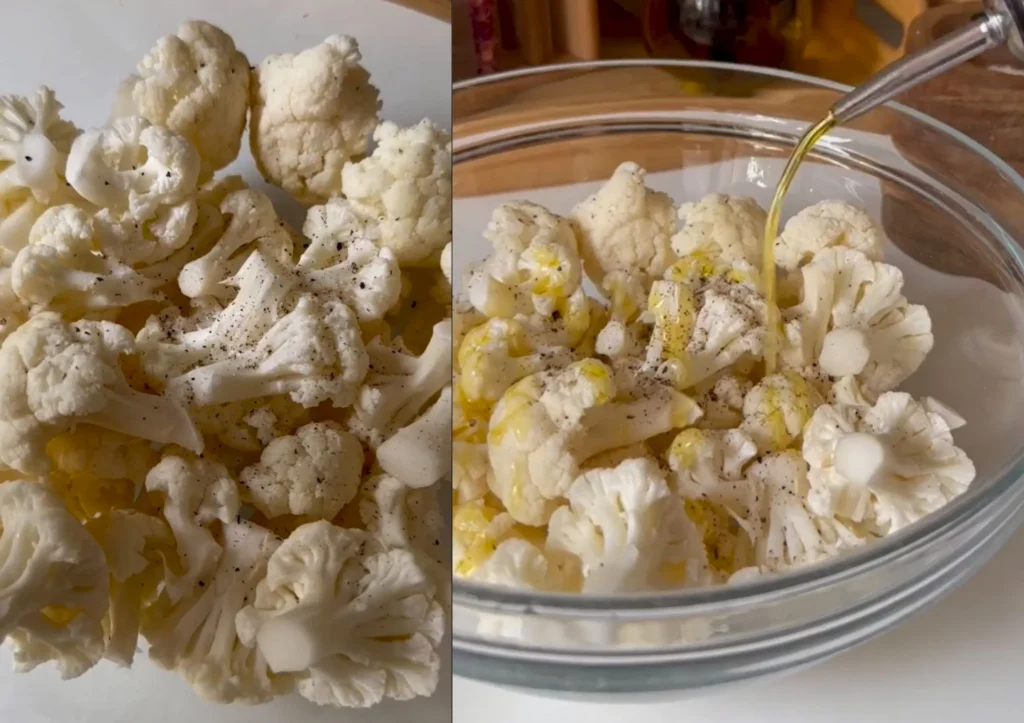
Drizzle with 1 tablespoon of extra virgin olive oil, add ½ teaspoon of salt and a generous amount of freshly ground black pepper.
Toss well until every floret is evenly coated in oil and seasoning use your hands for the most thorough and even coating.
Step 3 Arrange on a lined baking sheet and roast
Line a large baking sheet with parchment paper. Spread the seasoned cauliflower florets out in a single, even layer this is critical.
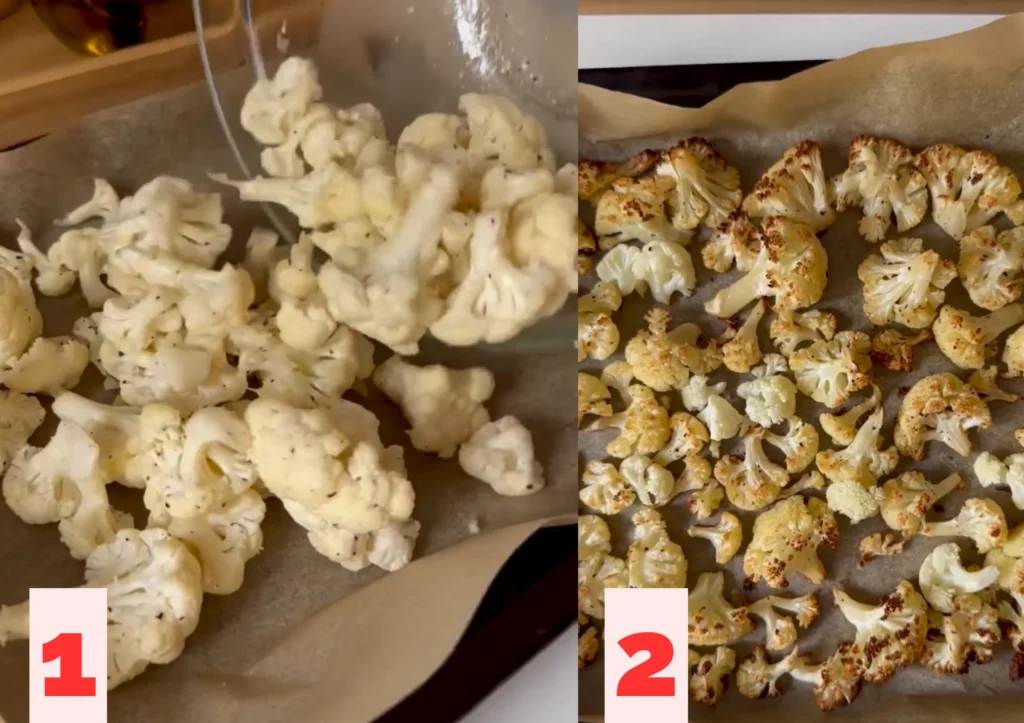
Overcrowding the pan causes the florets to steam rather than roast, which means no caramelization and no golden edges.
If your cauliflower doesn’t fit in a single layer with space between each piece, use two baking sheets. Roast on the center rack at 410°F for 20 to 25 minutes until the edges are deeply golden brown and caramelized.
Do not stir during roasting letting the florets sit undisturbed against the hot pan is what creates those caramelized contact points.
Step 4 Make the lemon herb sauce
While the cauliflower roasts, make the sauce. Add the roughly chopped green onions, fresh parsley, salt, green chili slices, lemon zest, lemon juice, and extra virgin olive oil to a food processor.
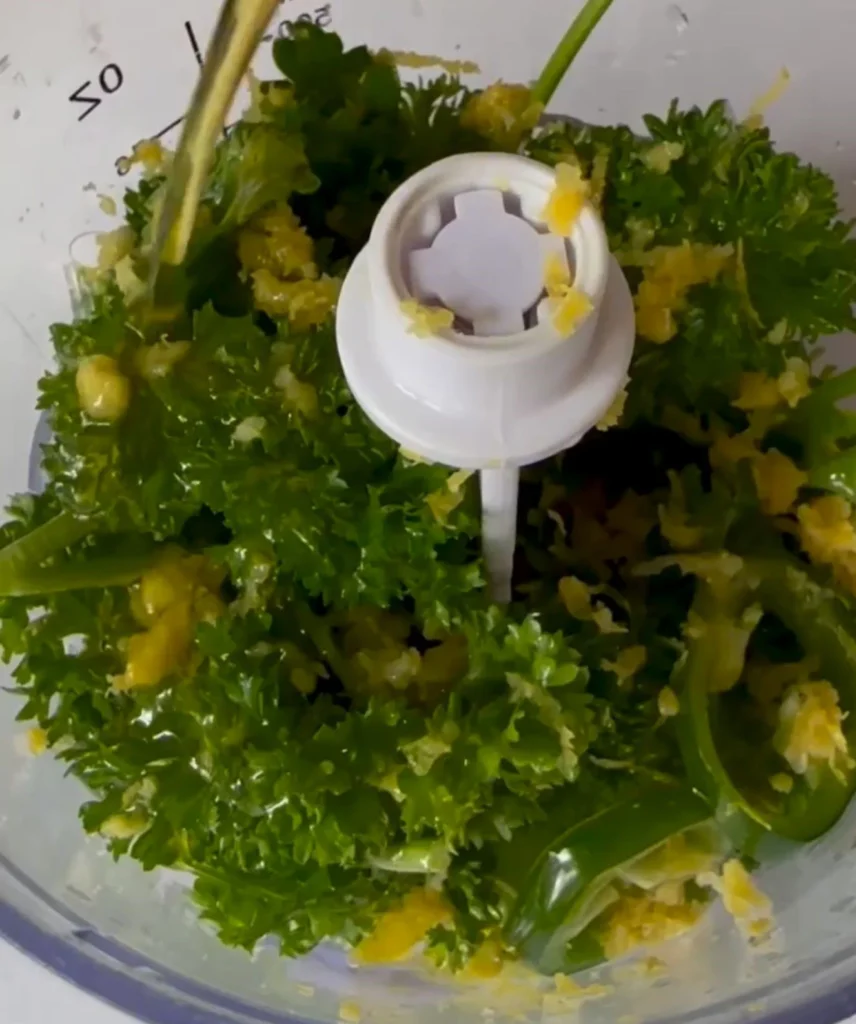
Blitz until a thick, textured sauce forms it should be cohesive and scoopable but not completely smooth. A little texture in the sauce adds interest. Taste and adjust seasoning add more salt, more lemon juice, or more chili slices according to your preference.
Step 5 Toss and serve
Remove the roasted cauliflower from the oven. Transfer to a large bowl or serving platter. Spoon or pour the lemon herb sauce over the hot florets and toss gently to coat every piece.
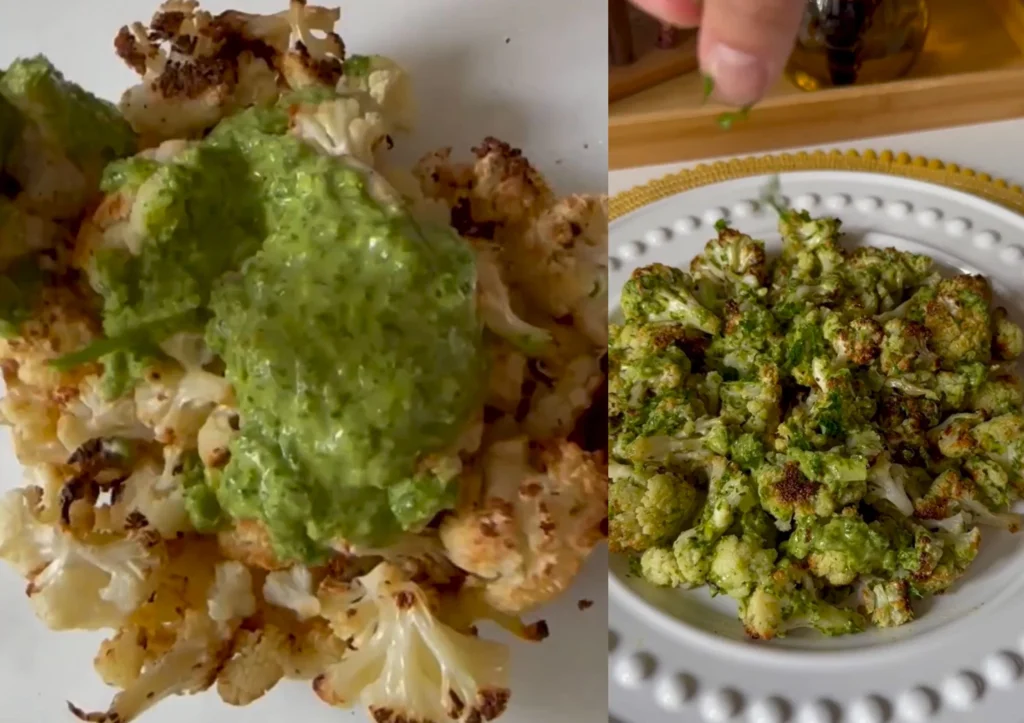
The heat from the cauliflower will warm the sauce slightly and help it cling to all the caramelized edges. Serve immediately while hot and enjoy.
Tips for Perfect Roasted Cauliflower Every Time
Cut florets into similar sizes for even, consistent roasting — uneven pieces mean some will be overcooked while others are still raw.
Do not overcrowd the baking sheet — single layer with space between each floret is non-negotiable for caramelization rather than steaming.
Do not stir the cauliflower during roasting — letting it sit undisturbed creates the caramelized contact surface you’re aiming for.
Make the sauce while the cauliflower roasts so everything is ready to toss together the moment it comes out of the oven.
Taste the sauce before serving and adjust — lemon juice, salt, and chili heat are all easy to increase to match your personal preference.
For extra depth of flavor, add a pinch of cumin or smoked paprika to the cauliflower toss before roasting.
This dish is best served immediately after tossing with the sauce — the cauliflower maintains its caramelized texture best when fresh from the oven.
Serving Ideas
This roasted cauliflower works beautifully as a side dish alongside grilled chicken, pan-seared salmon, or roasted lamb chops.
Serve it over a bed of cooked couscous or quinoa with extra sauce drizzled on top for a complete vegetarian main.
Pile it into warm pita bread with hummus and sliced cucumbers for an incredible vegetarian wrap. Add it to a grain bowl with chickpeas, roasted red peppers, and a dollop of plain Greek yogurt.
Or serve it simply on its own as an appetizer with toothpicks and extra sauce on the side for dipping it disappears just as fast in any format.

Oven Roasted Cauliflower That Is So Easy to Make
Ingredients
- For the Roasted Cauliflower:
- 1 medium head cauliflower cut into evenly sized florets approximately 4–5 cups
- 1 tablespoon extra virgin olive oil
- ½ teaspoon salt or to taste
- Black pepper freshly ground to taste
- For the Lemon Herb Sauce:
- 2 green onions scallions roughly chopped
- 1 bunch fresh flat-leaf parsley approximately 1 cup loosely packed
- ½ teaspoon salt
- 2 slices fresh green chili serrano or jalapeño — add more slices for extra heat
- Zest from 1 large lemon
- Juice from half a lemon approximately 1.5–2 tablespoons
- 3 tablespoons extra virgin olive oil
Instructions
- Preheat oven to 410°F (210°C) and allow to fully preheat before cauliflower goes in — full preheat is essential for caramelization.
- Cut cauliflower into evenly sized florets approximately 1.5–2 inches across for consistent roasting.
- Place florets in a large bowl, drizzle with 1 tablespoon extra virgin olive oil, add salt and freshly ground black pepper, and toss well until every floret is evenly coated — use hands for most thorough coating.
- Line a large baking sheet with parchment paper and spread seasoned florets in a single even layer with space between each piece — do not overcrowd.
- Roast on center rack at 410°F for 20–25 minutes until edges are deeply golden brown and caramelized — do not stir during roasting.
- While cauliflower roasts make the sauce — add green onions, fresh parsley, salt, green chili slices, lemon zest, lemon juice, and extra virgin olive oil to a food processor.
- Blitz until a thick cohesive textured sauce forms — not completely smooth, some texture is desirable.
- Taste sauce and adjust seasoning — add more salt, lemon juice, or chili slices to preference.
- Remove roasted cauliflower from oven and transfer to a large bowl or serving platter.
- Spoon or pour lemon herb sauce over hot florets and toss gently to coat every piece evenly.
- Serve immediately while hot.
Notes
Always cut florets into similar sizes — uneven pieces mean some overcook while others remain undercooked.
Never overcrowd the baking sheet — single layer with space between florets is non-negotiable for caramelization — use two baking sheets if needed.
Do not stir cauliflower during roasting — undisturbed contact with the hot pan creates the caramelized edges.
Make sauce while cauliflower roasts so everything is ready to toss together immediately when it comes out of the oven.
Serve immediately after tossing with sauce for best caramelized texture.
For extra depth add a pinch of cumin or smoked paprika to the cauliflower toss before roasting.
Fresh flat-leaf parsley is strongly recommended over curly parsley — more robust flavor and smoother blending.
Fresh cauliflower is strongly recommended over frozen — frozen contains excess moisture that prevents caramelization.
Sauce can be made up to 24 hours ahead and refrigerated in an airtight container — stir well and add a fresh squeeze of lemon before using.
Store leftover cauliflower and sauce separately in airtight containers in the refrigerator for up to 3 days.
Reheat cauliflower in oven at 400°F for 8–10 minutes or air fryer at 375°F for 4–5 minutes — add fresh sauce after reheating.
This recipe is naturally vegan and gluten-free as written.
Yes the lemon herb sauce can be made up to 24 hours ahead and stored in an airtight container in the refrigerator. The flavor actually deepens slightly overnight as the ingredients meld. Give it a good stir before using and add an extra squeeze of lemon juice to brighten it back up if needed.
Fresh cauliflower is strongly recommended for this recipe. Frozen cauliflower contains significantly more moisture than fresh, which causes it to steam and turn soft in the oven rather than caramelize. If frozen is your only option, thaw completely, pat each floret as dry as possible with paper towels, and roast at the same temperature the result will be softer and less caramelized but still flavorful.
Store leftover roasted cauliflower and sauce separately in airtight containers in the refrigerator for up to 3 days. Reheat the cauliflower in a 400°F oven for 8 to 10 minutes or in an air fryer at 375°F for 4 to 5 minutes to restore some of its roasted texture. Add fresh sauce after reheating rather than before to keep the herb flavor bright. Avoid microwaving it makes the florets soft and removes all the caramelized texture.
This recipe is already completely vegan as written. Both the cauliflower and the sauce use only plant-based ingredients no dairy, no eggs, no animal products of any kind. It is also naturally gluten-free, making it an excellent choice for guests with dietary restrictions.
Fresh flat-leaf parsley is ideal and strongly recommended, but fresh cilantro makes an excellent and equally delicious substitute that gives the sauce a completely different but equally vibrant flavor profile. Fresh basil is another option that leans more Italian in flavor. Avoid dried herbs for the sauce the sauce depends on the fresh, green, moisture-rich nature of fresh herbs for its texture and color.
Absolutely. This seasoning and sauce combination works beautifully with broccoli florets, halved Brussels sprouts, sliced zucchini, or cubed butternut squash roasted alongside the cauliflower. Cut all vegetables to similar sizes and ensure the pan isn’t overcrowded use multiple baking sheets if necessary. Adjust roasting time based on the additional vegetables as some may cook faster or slower than cauliflower.
Yes a standard blender works well for the sauce. Add the olive oil last to help emulsify the sauce into a slightly smoother consistency than the food processor version. A immersion blender also works directly in a jar or tall container. The sauce can also be made by finely hand-chopping all the ingredients and whisking together with the olive oil and lemon juice the texture will be chunkier but the flavor will be equally delicious.


