There are soups that comfort you. There are soups that warm you up on cold evenings.
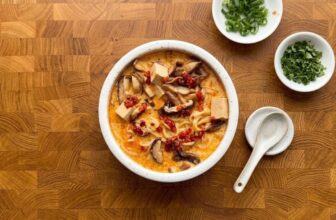
And then there is Tom Kha a soup that does both of those things and also manages to be one of the most complex, most fragrant, most genuinely transportive bowls of food you can make in a home kitchen.
The moment lemongrass, galangal, and kaffir lime leaves hit hot liquid, your kitchen fills with an aroma so distinctively beautiful that it announces itself clearly and confidently this is something worth paying attention to.
And the soup that follows delivers on every promise that aroma makes.
Tom Kha Soup is a traditional Thai soup built on a coconut milk and mushroom broth infused with the three defining aromatics of Thai cuisine lemongrass for its citrusy,
Floral, slightly herbal quality, galangal for its sharp, piney, slightly medicinal warmth that is genuinely distinct from ginger, and kaffir lime leaves for their intensely aromatic, floral, double-leaf citrus fragrance.
These three aromatics together create a broth so complex and so fragrant that it tastes like it required a professional kitchen and hours of work but the reality is that the infusion process takes approximately 20 minutes and the entire soup comes together in well under half an hour.
This version uses shiitake mushrooms and a combination of button or cremini mushrooms for a mushroom forward broth that is hearty, deeply flavored, and satisfying enough to serve as a complete meal without any additional protein.
The balance of fish sauce and light soy sauce provides the seasoning depth. Fresh lemon juice provides the brightness.
A small amount of sugar balances the sour and salty. And a generous pour of thick, full fat coconut milk provides the creamy, slightly sweet richness that is the defining textural characteristic of Tom Kha.
Why the Three Aromatics Are Everything
Tom Kha is one of the few soups in any culinary tradition where specific aromatic ingredients are genuinely irreplaceable not in the sense of flavor preference,
But in the sense that removing or substituting any one of the three primary aromatics produces a meaningfully different and less distinctive soup.
Lemongrass brings a citrusy, slightly floral, clean aromatic quality that is unlike lemon juice, unlike lemon zest, and unlike any other citrus ingredient.
When crushed and simmered in liquid, it releases essential oils that perfume the broth with a specific quality that is immediately recognizable to anyone who has eaten Thai food.
The bottom stalks the white and pale yellow lower portions contain the highest concentration of essential oils and are the right part to use for this recipe.
The upper green portions are more fibrous and have less flavor.
Galangal is related to ginger but is a distinct ingredient with a distinctly different flavor profile. Where ginger is warm and slightly spicy with a sweet finish, galangal is sharper, more pine like, slightly medicinal, and much more assertive.
It does not work as a spice in the background it is a primary flavor in Thai soups.
Fresh galangal is available at Asian grocery stores across the U.S. If completely unavailable, fresh ginger is the specified substitute in this recipe it will produce a different but still very good soup.
Dried galangal is a distant third option that produces a noticeably less vibrant result.
Kaffir lime leaves also sold in some markets as makrut lime leaves have a unique double leaf structure and an intensely aromatic citrus fragrance that is floral, bright, and complex.
There is no true substitute. Fresh or frozen kaffir lime leaves are available at Asian grocery stores and are worth seeking out for this recipe.
The recipe specifies ½ teaspoon of lemon zest as a substitute if kaffir lime leaves are completely unavailable it provides some citrus fragrance but produces a noticeably different result.
Ingredients
For the Tom Kha Soup:
- 4 dried or fresh shiitake mushrooms (dried shiitake should be soaked in warm water for 20 minutes before using — the soaking liquid can be strained and added to the soup for extra mushroom depth)
- 1 cup additional fresh mushrooms, halved — button mushrooms, cremini, or oyster mushrooms all work well
- 3 cups water, divided (used in stages during cooking)
- 1 cup thick full-fat coconut milk (Thai Kitchen, Chaokoh, or Aroy-D are widely available American brands — shake the can well before opening — use the thick, creamy portion)
- ½ teaspoon salt
- 4 bottom stalks of fresh lemongrass, outer leaves removed and stalks crushed with the flat side of a knife (available at Asian grocery stores, Whole Foods, and some major supermarkets — lemongrass paste in a tube substitutes in a pinch)
- 2 inches fresh galangal, thinly sliced (available at Asian grocery stores — substitute with 2 inches of fresh ginger if galangal is unavailable)
- 20 fresh or frozen kaffir lime leaves (makrut lime leaves — available at Asian grocery stores — substitute with ½ teaspoon fresh lemon zest if completely unavailable)
- 1 teaspoon granulated white sugar
- Juice of 1 fresh lemon (approximately 3 tablespoons)
- 2 teaspoons fish sauce (Red Boat or Tiparos are widely available American brands — available in the Asian foods aisle of most major supermarkets)
- 2 teaspoons light soy sauce (Kikkoman or Pearl River Bridge light soy sauce)
Step by Step Instructions
Step 1 Prepare the shiitake mushrooms
If using dried shiitake mushrooms, place them in a bowl and cover with warm water.
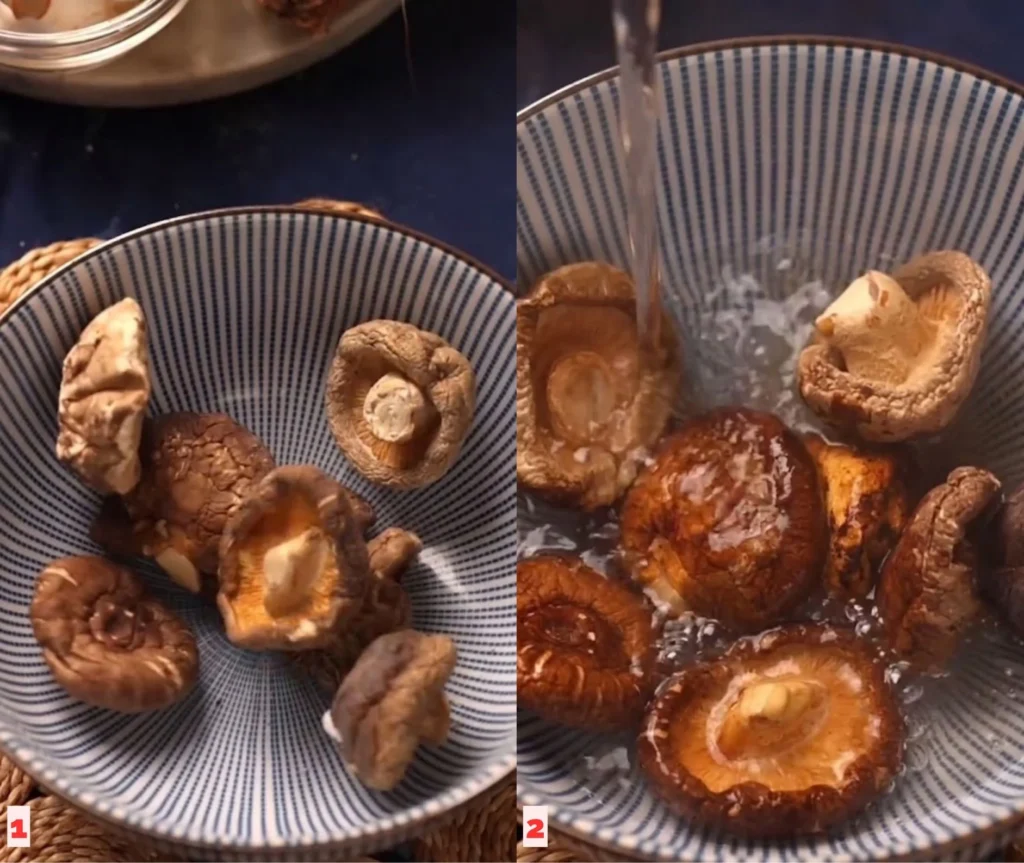
Allow to soak for 20 minutes until fully rehydrated and tender.
Remove the mushrooms, gently squeeze out excess liquid, and slice or halve them. Strain the soaking liquid through a fine mesh strainer and set aside this liquid is deeply flavored with mushroom umami and can be added to the soup in place of some of the plain water.
Step 2 Crush and prepare the aromatics
Prepare all three aromatics before beginning the cooking process.
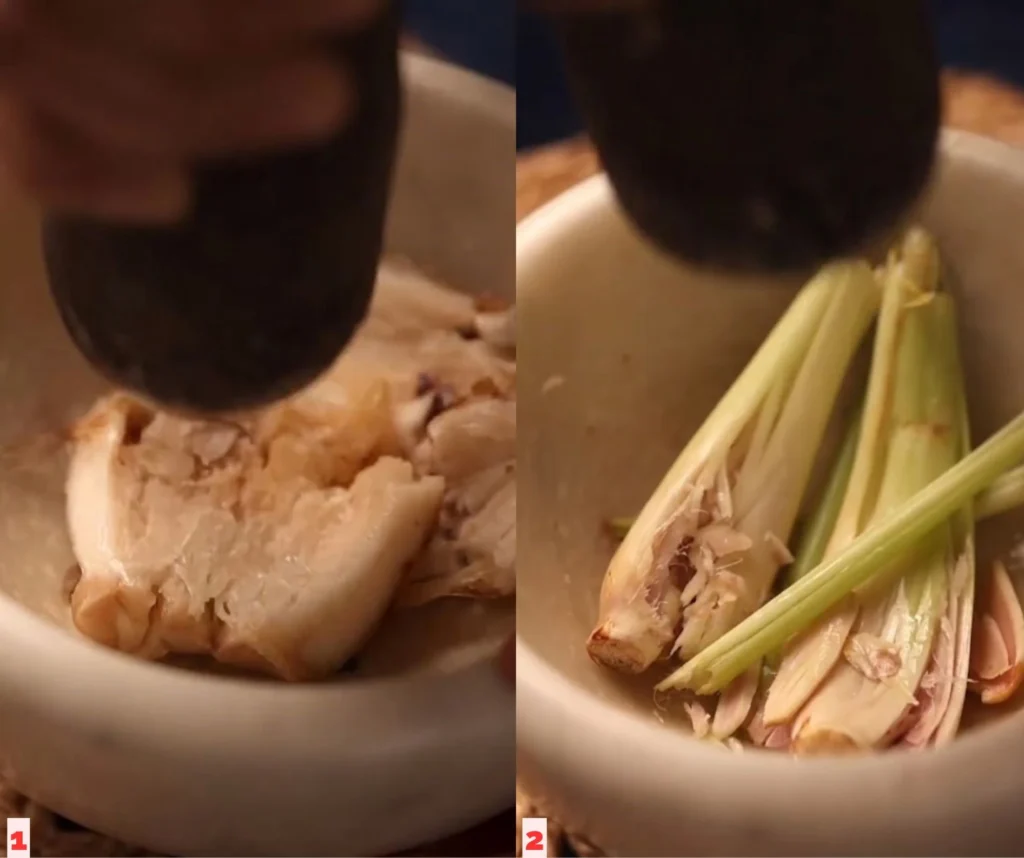
Crush the lemongrass stalks by laying them on a cutting board and pressing firmly down the length of each stalk with the flat side of a heavy knife or a meat mallet this breaks the outer fibers and allows the essential oils to release more freely into the broth.
Thinly slice the galangal into rounds no need to peel if the skin is smooth and clean. If using fresh kaffir lime leaves, tear each leaf slightly along the central rib to help release the aromatic oils during cooking.
Step 3 Begin the broth
Pour 2 cups of the water into a medium to large saucepan.
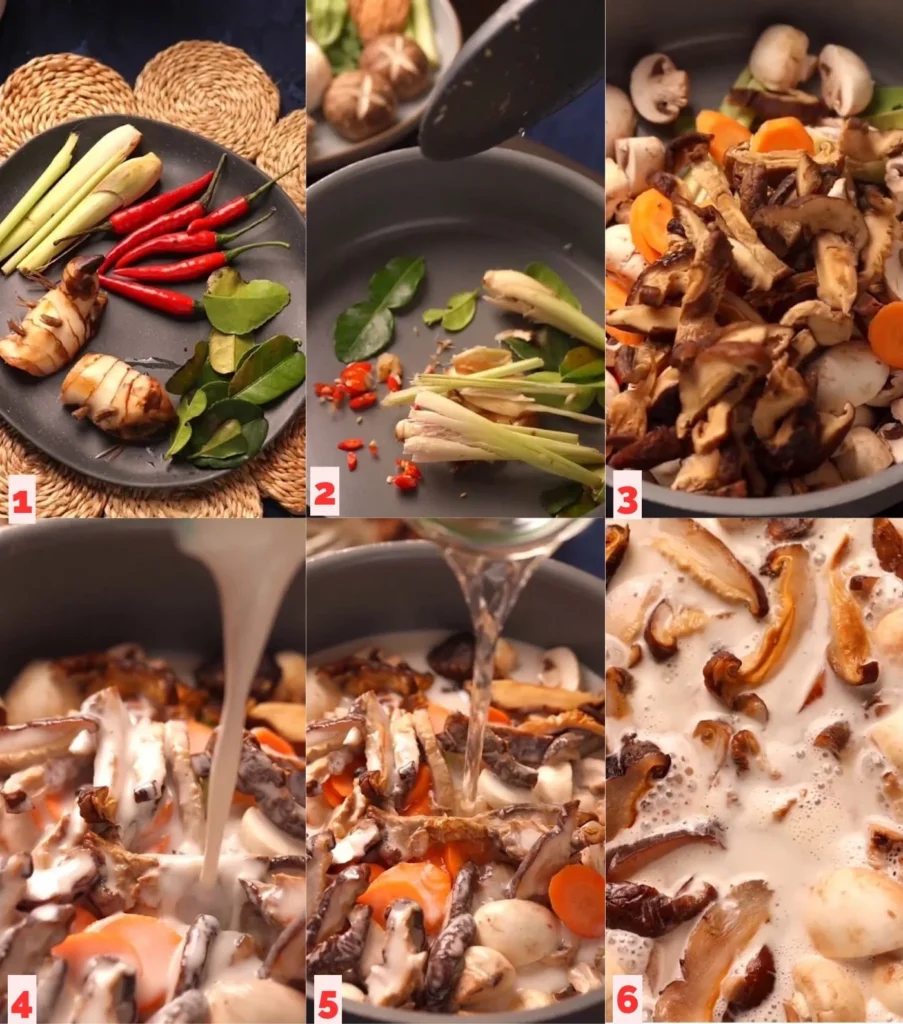
Add the crushed lemongrass stalks, sliced galangal, and kaffir lime leaves or lemon zest. Bring to a boil over medium high heat, then reduce to a simmer.
Allow the aromatics to steep and infuse the water for 10 to 15 minutes the water should become fragrant and take on a slightly golden color from the lemongrass and galangal.
Step 4 Add mushrooms and remaining water
Add the prepared shiitake mushrooms and the halved fresh mushrooms to the infused broth.
Add the remaining 1 cup of water (or use the reserved shiitake soaking liquid for extra depth).
Simmer for 5 to 7 minutes until the mushrooms are tender and have released their flavor into the broth.
Step 5 Add coconut milk and seasonings
Reduce the heat to low. Pour in the full cup of thick coconut milk and stir gently to combine. Add the salt, sugar, fish sauce, and light soy sauce.
Stir until the seasonings are evenly distributed through the broth.
Allow the soup to heat through gently for 2 to 3 minutes avoid boiling after the coconut milk has been added, as vigorous boiling can cause the coconut milk to separate and turn grainy rather than remaining creamy and smooth.
Step 6 Add lemon juice and taste
Remove the pot from heat completely. Add the juice of one fresh lemon and stir to incorporate.
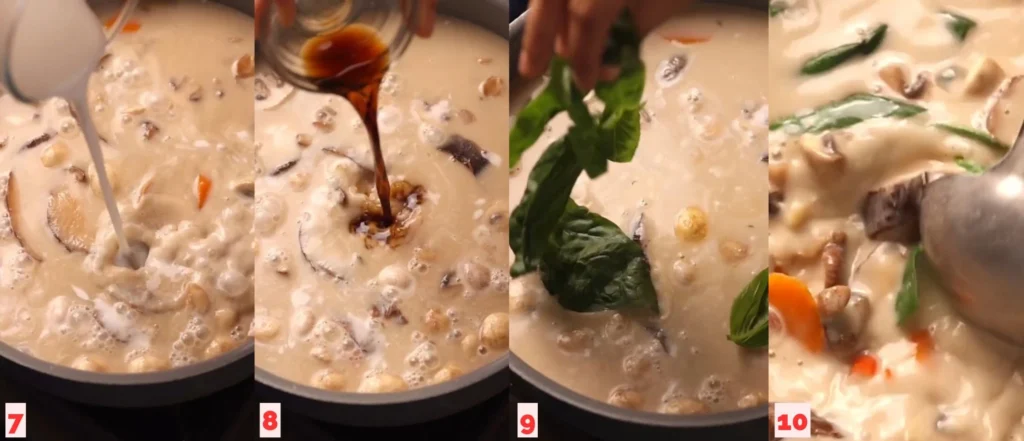
The lemon juice is added off the heat to preserve its fresh, bright citrus quality heat destroys the aromatic citrus compounds quickly.
Taste the soup and adjust seasoning add more fish sauce for saltiness and umami, more soy sauce for additional depth, more sugar if the soup tastes too sour, or more lemon juice if it needs more brightness.
Step 7 Remove aromatics and serve
Using tongs or a slotted spoon, locate and remove the lemongrass stalks and galangal slices from the soup before serving these ingredients have done their job and are not pleasant to bite into.
The kaffir lime leaves can be left in the soup for presentation they are edible but most people prefer not to eat them. Ladle into bowls and serve immediately.
Tips for Perfect Tom Kha Soup Every Time
Crush the lemongrass thoroughly before adding — the crushing breaks the fibrous outer structure and allows the essential oils to infuse the broth much more effectively than whole or simply sliced stalks would.
Never boil the soup after adding the coconut milk — a gentle simmer is all that is needed. Vigorous boiling causes the coconut milk to break and produces a grainy, separated broth rather than the smooth, creamy one this soup is known for.
Add the lemon juice completely off the heat — lemon juice’s aromatic freshness dissipates rapidly in heat and off-heat addition preserves the bright, balanced citrus note that finishes the soup perfectly.
Use full-fat coconut milk specifically — light coconut milk produces a noticeably thinner, less rich, less satisfying broth.
Taste and adjust after adding all seasonings — the right balance of salt, sweet, and sour varies based on the specific brands of fish sauce and soy sauce used and personal preference.
The mushroom soaking liquid from dried shiitake adds significant depth — strain and use it in place of some of the plain water for a more intensely flavored broth.
Serving Ideas
Serve Tom Kha in wide, deep bowls with fresh Thai basil leaves and thinly sliced fresh chili scattered over the surface for color and additional heat.
Pair with steamed jasmine rice served alongside the fragrant broth poured over rice is a genuinely satisfying meal.
For a more substantial serving, add cooked rice noodles to each bowl before ladling the soup over the top. For a party or dinner gathering,
Serve in smaller cups as a sophisticated first course the aroma alone makes an impression the moment it is poured.
Fresh galangal is available at most Asian grocery stores across the U.S., at Whole Foods in the produce section seasonally, and at some well-stocked conventional supermarkets with good international produce sections. Frozen galangal slices are available at many Asian grocery stores and online and work very well as a substitute for fresh. If galangal is completely unavailable, fresh ginger — as specified in this recipe — is the best substitute, though it produces a distinctly different and less authentic flavor profile.
Yes — substitute the fish sauce with an equal amount of additional light soy sauce, or use a combination of soy sauce and a small amount of seaweed-based seasoning or nori powder for a more complex umami depth. The flavor will be different from the traditional version but still very good. Make sure to also use vegetable broth rather than any animal-based broth if making a fully plant-based version.
Yes — thinly sliced chicken breast or thigh can be added to the simmering broth after the aromatics have infused but before the coconut milk goes in. Cook until just cooked through — approximately 5 to 6 minutes for thinly sliced breast. Raw shrimp can be added in the last 2 to 3 minutes of cooking after the coconut milk has been added — shrimp cook quickly and become rubbery if overcooked. Either protein addition makes this soup more substantial and dinner-party appropriate.
Store leftover soup in an airtight container in the refrigerator for up to 3 days. Reheat very gently over low heat — do not boil, as this can cause the coconut milk to separate. The mushrooms will continue to absorb the broth as the soup sits, becoming more flavorful. Add a small splash of fresh lemon juice when reheating to restore the bright citrus note that diminishes during storage.
Yes — coconut cream produces a richer, thicker broth than standard coconut milk. If using coconut cream, thin with an additional ½ cup of water or broth to achieve the right soup consistency. The result will be slightly more indulgent and creamy — which many people prefer.
Both are classic Thai soups built on lemongrass, galangal, and kaffir lime leaves, but Tom Kha includes coconut milk — which is its defining characteristic — producing a creamy, slightly sweet, rich broth. Tom Yum is made without coconut milk, producing a clearer, more acidic, spicier broth. Tom Kha tends to be milder and more approachable for American palates unfamiliar with Thai flavors, while Tom Yum is brighter, sharper, and more intensely spiced.
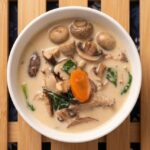
Tom Kha Soup The Authentic Coconut, Lemongrass, and Mushroom Thai Soup
Ingredients
- For the Soup:
- 4 dried or fresh shiitake mushrooms if dried, soak in warm water for 20 minutes
- 1 cup additional fresh mushrooms halved (button, cremini, or oyster mushrooms)
- 3 cups water divided
- 1 cup thick full-fat coconut milk Thai Kitchen, Chaokoh, or Aroy-D brands
- 1/2 teaspoon salt
- 4 bottom stalks fresh lemongrass outer leaves removed and stalks crushed
- 2 inches fresh galangal thinly sliced (substitute with 2 inches fresh ginger if unavailable)
- 20 fresh or frozen kaffir lime leaves makrut lime leaves – substitute with 1/2 teaspoon fresh lemon zest if unavailable
- 1 teaspoon granulated white sugar
- Juice of 1 fresh lemon approximately 3 tablespoons
- 2 teaspoons fish sauce Red Boat or Tiparos
- 2 teaspoons light soy sauce Kikkoman or Pearl River Bridge
Instructions
- Prepare the Shiitake Mushrooms:
- If using dried shiitake mushrooms, place in bowl and cover with warm water
- Allow to soak for 20 minutes until fully rehydrated and tender
- Remove mushrooms and gently squeeze out excess liquid
- Slice or halve the rehydrated mushrooms
- Strain soaking liquid through fine-mesh strainer and set aside (can be used to replace some plain water in soup)
- Crush and Prepare the Aromatics:
- Crush lemongrass stalks by laying on cutting board and pressing firmly down length of each stalk with flat side of heavy knife (this breaks fibers and releases essential oils)
- Thinly slice galangal into rounds (no need to peel if skin is smooth and clean)
- If using fresh kaffir lime leaves, tear each leaf slightly along central rib to help release aromatic oils
- Begin the Broth:
- Pour 2 cups water into medium to large saucepan
- Add crushed lemongrass stalks, sliced galangal, and kaffir lime leaves (or lemon zest)
- Bring to boil over medium-high heat
- Reduce to simmer
- Allow aromatics to steep and infuse water for 10-15 minutes (water should become fragrant and take on slightly golden color)
- Add Mushrooms and Remaining Water:
- Add prepared shiitake mushrooms to infused broth
- Add halved fresh mushrooms
- Add remaining 1 cup water (or use reserved shiitake soaking liquid for extra depth)
- Simmer for 5-7 minutes until mushrooms are tender and have released flavor into broth
- Add Coconut Milk and Seasonings:
- Reduce heat to low
- Pour in 1 cup thick coconut milk
- Stir gently to combine
- Add salt, sugar, fish sauce, and light soy sauce
- Stir until seasonings are evenly distributed through broth
- Allow soup to heat through gently for 2-3 minutes
- Avoid boiling after coconut milk is added (vigorous boiling causes separation and grainy texture)
- Add Lemon Juice and Taste:
- Remove pot from heat completely
- Add juice of 1 fresh lemon
- Stir to incorporate
- Taste soup and adjust seasoning:
- – Add more fish sauce for saltiness and umami
- – Add more soy sauce for additional depth
- – Add more sugar if soup tastes too sour
- – Add more lemon juice if needs more brightness
- Remove Aromatics and Serve:
- Using tongs or slotted spoon, locate and remove lemongrass stalks and galangal slices from soup
- Kaffir lime leaves can be left in soup for presentation (edible but most prefer not to eat them)
- Ladle into bowls
- Serve immediately
- Critical Tips:
- Crush lemongrass thoroughly before adding to release essential oils effectively
- Never boil soup after adding coconut milk (causes separation)
- Add lemon juice completely off heat to preserve bright citrus quality
- Use full-fat coconut milk specifically for rich, creamy broth
- Taste and adjust after adding all seasonings
- Use mushroom soaking liquid from dried shiitake in place of plain water for more intense flavor
- Serving Suggestions: Serve in wide, deep bowls with fresh Thai basil leaves and sliced fresh chili. Pair with steamed jasmine rice alongside, or add cooked rice noodles to bowls before ladling soup. For parties, serve in smaller cups as sophisticated first course.