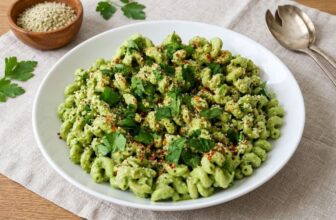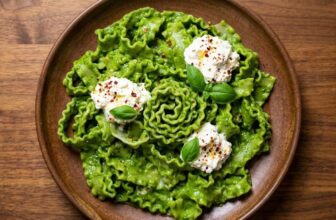
There is a specific kind of weeknight dinner magic that happens when a meal comes together in under 30 minutes, uses ingredients you either already have or can grab at any grocery store, looks genuinely beautiful on the plate, and tastes so good that everyone at the table goes quiet for a moment after the first bite.
This Spinach Pesto Pasta is exactly that kind of meal and once you make it, it becomes the recipe you reach for on every busy evening when you want something that feels special without requiring any kind of heroic kitchen effort.
This is not your standard jarred pesto situation. This is a fresh, vibrant, bright green spinach pesto made by blending fresh baby spinach with Parmesan cheese, almonds, garlic, olive oil, fresh lime juice, salt, and pepper into a creamy, intensely flavored sauce that coats every strand of linguine in a way that is simultaneously light and deeply satisfying.
It is nuttier than traditional basil pesto thanks to the almonds. It is brighter and more vivid in color thanks to the spinach. And it has a subtle citrus freshness from the lime that makes every bite feel alive in a way that most pasta sauces simply do not.
If you have a blender or food processor and a pot to boil pasta in, you can make this dinner. Let’s get into it.
Why Spinach Pesto Beats Store-Bought Every Single Time
Traditional pesto is made with fresh basil and when basil is at its peak in the summer, there is nothing better.
But fresh basil can be expensive, difficult to find year round, and wilts almost immediately after purchase. Fresh baby spinach, on the other hand, is available at every grocery store in America in every season, is reliably inexpensive, stays fresh in the refrigerator for a week, and blends into a pesto that is arguably more versatile, more nutritious, and more interesting than the standard basil version.
Spinach brings a mild, slightly earthy, subtly sweet flavor that works as a blank canvas for the stronger flavors in the pesto the sharp, salty Parmesan, the toasty nuttiness of the almonds, the pungent depth of raw garlic, and the bright acidity of fresh lime juice.
Each of these elements is doing something important in the sauce, and together they create a flavor that is complex, balanced, and genuinely crave worthy.
The almonds are a deliberate and excellent choice here. Traditional pesto uses pine nuts which are delicious but expensive and not always easy to find.
Almonds are widely available, affordable, and add a slightly more robust, earthier nuttiness than pine nuts that pairs beautifully with the spinach.
Toasting the almonds briefly in a dry pan before blending is optional but highly recommended it deepens their flavor significantly and adds a warmth to the pesto that raw almonds cannot match.
And the lime rather than the traditional lemon is the quiet star of this recipe. Lime juice has a slightly more tropical, floral acidity than lemon that adds a distinctly fresh, bright note to the pesto that lifts every other flavor in the sauce and keeps the whole dish from feeling heavy or rich.
Ingredients
For the Spinach Pesto:
- 2 to 3 cups fresh baby spinach, loosely packed (approximately 2 large handfuls — regular spinach works too, stems removed)
- ½ cup freshly grated Parmesan cheese (grate it fresh if possible — pre-grated Parmesan in canisters has a dryer texture that doesn’t blend as smoothly)
- ¼ cup raw almonds (whole or slivered — lightly toasted for best flavor)
- 3 tablespoons extra virgin olive oil (plus more for drizzling to serve)
- 2 cloves fresh garlic, peeled
- Juice of 1 fresh lime (approximately 2 tablespoons)
- Salt to taste
- Black pepper freshly ground to taste
For the pasta:
- 12 oz dried linguine (or your preferred long pasta — spaghetti, fettuccine, or bucatini all work beautifully)
- Generously salted pasta cooking water — reserve at least ½ cup before draining
- Extra Parmesan for serving
- Extra drizzle of olive oil for finishing
Why These Specific Ingredients Work Together
Baby spinach: Mild enough to let the other flavors shine, packed with iron, folate, and vitamins A, C, and K. It blends smoothly and produces a consistently vivid green color that makes the finished pasta look as good as it tastes.
Parmesan: The salt, umami, and sharpness of Parmesan is what gives this pesto its savory backbone. Use Parmigiano-Reggiano if your budget allows — the difference in flavor compared to domestic Parmesan is noticeable and significant in a simple sauce like this.
Almonds: Nutty, slightly sweet, and creamy when blended. They give the pesto a body and richness that makes it cling to pasta beautifully. A light toast in a dry pan for 3 to 4 minutes deepens their flavor considerably.
Olive oil: The fat that carries all the other flavors and creates the smooth, creamy emulsified texture of the pesto. Use a good quality extra virgin olive oil — its flavor is a primary component of the finished sauce.
Garlic: Raw garlic adds a pungent, sharp heat to the pesto that mellows as it sits. Start with two cloves and adjust to your preference — garlic lovers can go up to three or four.
Fresh lime juice: Brightness, acidity, and a subtle tropical freshness that differentiates this pesto from every other version. Do not substitute with bottled lime juice — the flavor difference is significant.
Linguine: The flat, slightly wider surface of linguine holds this creamy pesto sauce better than round pasta shapes. Cook it to al dente — firm to the bite — for the best texture contrast with the creamy sauce.
Step by Step Instructions
Step 1 Toast the almonds
Place the almonds in a small dry skillet over medium heat. Toast, stirring frequently, for 3 to 4 minutes until fragrant and lightly golden.
Watch carefully almonds go from perfectly toasted to burnt very quickly. Transfer to a plate immediately and allow to cool completely before blending.
Step 2 Cook the linguine
Bring a large pot of water to a rolling boil and season generously with salt the water should taste pleasantly salty, like mild seawater.
Add the linguine and cook according to package directions until al dente typically 9 to 11 minutes. Before draining, use a measuring cup to scoop out at least ½ cup of the starchy pasta cooking water and set aside. Drain the pasta and set aside.
Step 3 Make the spinach pesto
While the pasta cooks, make the pesto. Add the fresh baby spinach, cooled toasted almonds, freshly grated Parmesan, peeled garlic cloves, fresh lime juice, olive oil, salt, and black pepper to a blender or food processor.
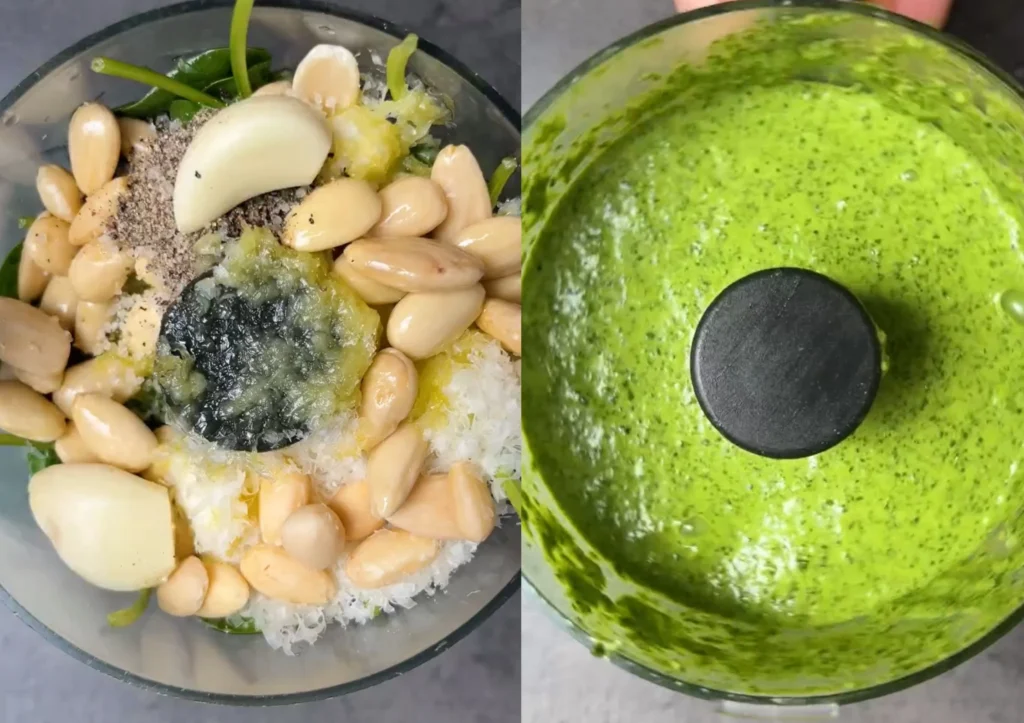
Blend on high speed until smooth and creamy stopping to scrape down the sides as needed. The pesto should be thick, vibrant green, and completely uniform.
Taste and adjust seasoning add more salt, more lime juice, or more garlic to your preference. If the pesto seems too thick, add a tablespoon of olive oil and blend again.
Step 4 Combine pasta and pesto
Transfer the drained linguine to a large bowl or back into the warm pasta pot. Add the spinach pesto and toss well to coat every strand evenly.
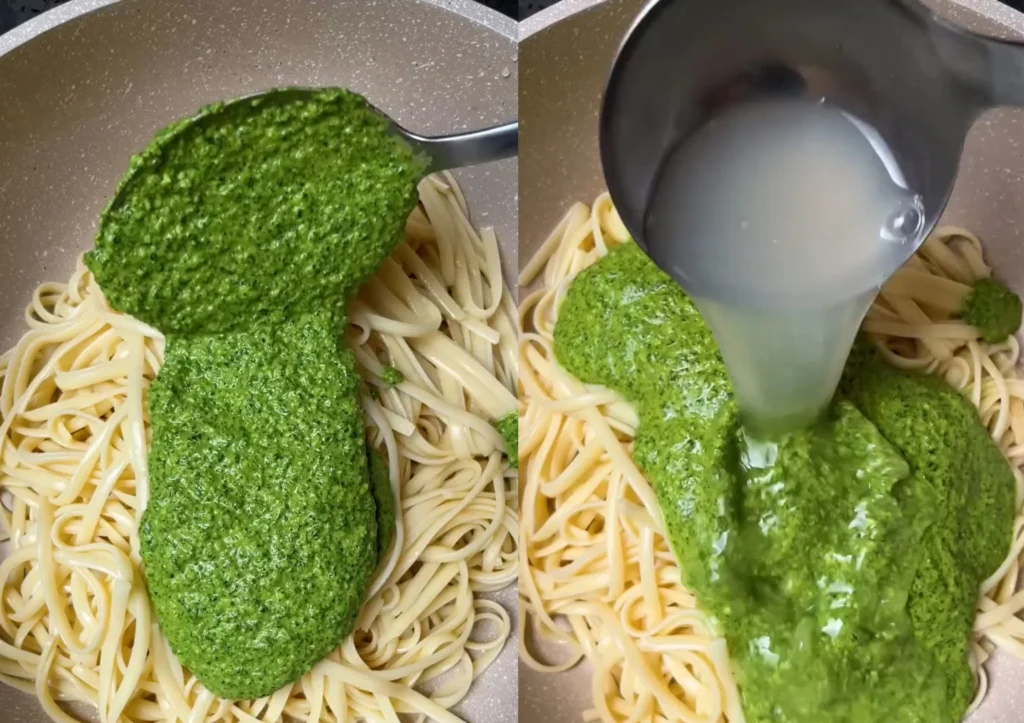
Add the reserved pasta cooking water a splash at a time the starchy water helps the pesto emulsify and cling to the pasta beautifully, creating a silky, glossy sauce rather than a dry, clumpy one.
Add enough water to reach a loose, creamy consistency that coats the pasta without pooling at the bottom of the bowl.
Step 5 Serve and finish
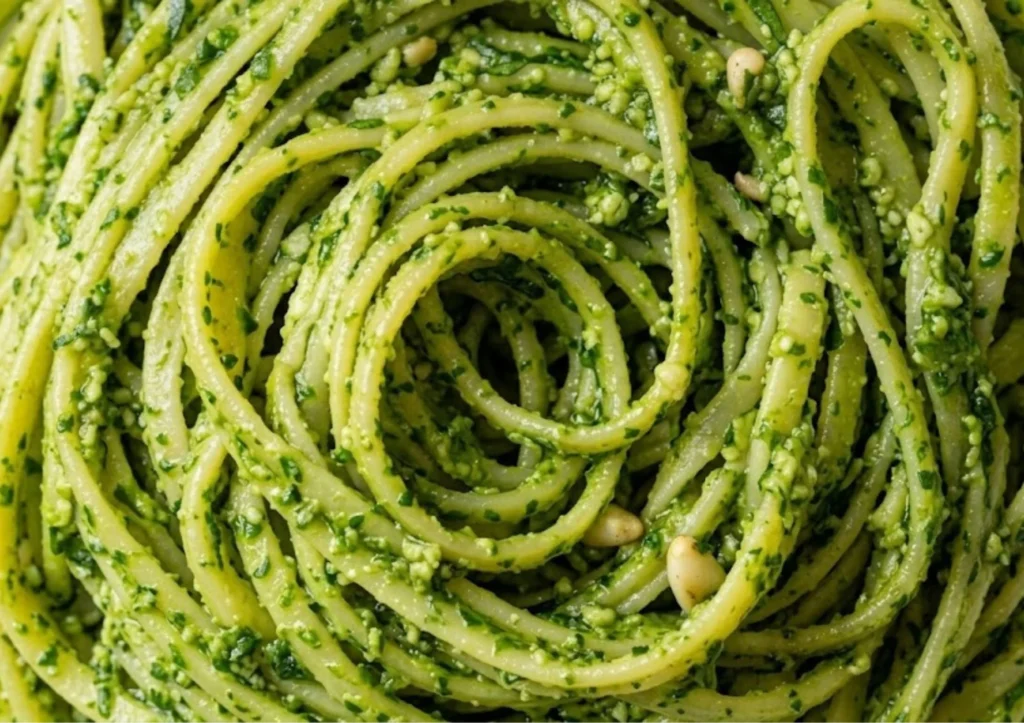
Divide among serving bowls. Finish each portion with an extra drizzle of good quality olive oil, a generous shower of freshly grated Parmesan, a few extra grinds of black pepper, and a small wedge of fresh lime on the side for squeezing. Serve immediately while warm.
Tips for Perfect Spinach Pesto Pasta Every Time
Salt your pasta water generously — this is the only opportunity to season the pasta itself, and under-salted pasta makes the entire dish taste flat regardless of how good the sauce is.
Always reserve pasta cooking water before draining — the starchy water is the secret to a silky, emulsified pesto sauce that clings beautifully to every strand of pasta.
Toast the almonds before blending — this single extra step adds significant depth of flavor to the finished pesto and is worth the 4 minutes it takes.
Blend the pesto until completely smooth for the creamiest, most evenly flavored sauce — a slightly coarser texture is fine if you prefer it but smooth pesto coats pasta more evenly.
Taste and adjust the pesto before adding to pasta — this is a fresh sauce with no cooking to mellow the flavors, so seasoning needs to be exactly right before it hits the pasta.
Add pasta water gradually — start with a few tablespoons and add more as needed to reach the perfect creamy, coating consistency.
Grate Parmesan fresh for the best flavor and smoothest blend — pre-grated Parmesan contains anti-caking agents that affect both texture and flavor.
Serving Ideas
Serve this Spinach Pesto Pasta as a complete weeknight dinner alongside a simple arugula salad dressed with olive oil and lemon.
Add grilled chicken breast or pan seared shrimp on top for a more substantial protein forward meal. Roasted cherry tomatoes scattered over the top add a burst of sweetness and acidity that pairs beautifully with the nutty, garlicky pesto.
Crusty garlic bread on the side is never a wrong decision. For a summer dinner party, serve at room temperature as a pasta salad the spinach pesto holds beautifully at room temperature and tastes excellent cold or warm.
Spinach Pesto Pasta The Bright, Creamy, Weeknight Pasta
Ingredients
- For the Spinach Pesto:
- 2 –3 cups fresh baby spinach loosely packed approximately 2 large handfuls — regular spinach with stems removed works too
- ½ cup freshly grated Parmesan cheese grate fresh for best flavor and smoothest blend — Parmigiano-Reggiano recommended
- ¼ cup raw almonds whole or slivered lightly toasted for best flavor
- 3 tablespoons extra virgin olive oil plus more for finishing
- 2 cloves fresh garlic peeled adjust to preference — up to 4 cloves for garlic lovers
- Juice of 1 fresh lime approximately 2 tablespoons — do not substitute with bottled lime juice
- Salt to taste
- Freshly ground black pepper to taste
- For the Pasta:
- 12 oz dried linguine or spaghetti, fettuccine, or bucatini
- Generously salted pasta cooking water — reserve minimum ½ cup before draining
- For Serving:
- Extra freshly grated Parmesan
- Extra drizzle of good quality extra virgin olive oil
- Fresh lime wedges for squeezing
- Freshly ground black pepper
Instructions
- Place almonds in a small dry skillet over medium heat and toast stirring frequently for 3–4 minutes until fragrant and lightly golden — watch carefully as almonds burn quickly.
- Transfer toasted almonds to a plate immediately and allow to cool completely before blending.
- Bring a large pot of water to a rolling boil and season generously with salt until it tastes pleasantly salty like mild seawater.
- Add linguine and cook according to package directions until al dente — typically 9–11 minutes.
- Before draining scoop out at least ½ cup of starchy pasta cooking water with a measuring cup and set aside — do not skip this step.
- Drain pasta and set aside.
- While pasta cooks add fresh baby spinach, cooled toasted almonds, freshly grated Parmesan, peeled garlic cloves, fresh lime juice, olive oil, salt, and black pepper to a blender or food processor.
- Blend on high speed until completely smooth and creamy — stop to scrape down sides as needed.
- Taste pesto and adjust seasoning — add more salt, lime juice, or garlic to preference.
- If pesto is too thick add one tablespoon of olive oil and blend again until desired consistency is reached.
- Transfer drained linguine to a large bowl or back into the warm pasta pot.
- Add spinach pesto and toss well to coat every strand evenly.
- Add reserved pasta cooking water a few tablespoons at a time tossing continuously until sauce is silky glossy and coats pasta beautifully without pooling at the bottom.
- Divide among serving bowls immediately.
- Finish each portion with an extra drizzle of olive oil, generous shower of freshly grated Parmesan, fresh grinds of black pepper, and a lime wedge on the side for squeezing.
- Serve immediately while warm.
Notes
Salt pasta water generously — this is the only opportunity to season the pasta itself and under-salted pasta makes the entire dish taste flat regardless of sauce quality.
Always reserve pasta cooking water before draining — starchy water is the secret to a silky emulsified pesto sauce that clings beautifully to every strand.
Toast almonds before blending — this single extra step adds significant depth of flavor and warmth to the finished pesto.
Blend pesto until completely smooth for the creamiest most evenly flavored sauce that coats pasta best.
Taste and adjust pesto seasoning before adding to pasta — this fresh sauce has no cooking to mellow flavors so seasoning must be exactly right beforehand.
Add pasta water gradually starting with a few tablespoons — add only enough to reach perfect creamy coating consistency.
Grate Parmesan fresh for best flavor and smoothest blend — pre-grated Parmesan contains anti-caking agents that affect both texture and flavor.
For vegan or dairy-free version substitute Parmesan with equal amount of nutritional yeast and add an extra tablespoon of olive oil.
Any nut can substitute almonds in equal amounts — pine nuts (traditional), walnuts, cashews, or pecans all work beautifully — toast all varieties before blending.
Pesto stores in an airtight jar with plastic wrap pressed against surface in refrigerator for up to 3 days.
Freeze pesto in ice cube tray then transfer frozen cubes to zip-lock bag for up to 2 months — thaw individual cubes as needed.
Store leftover pasta in airtight container in refrigerator for up to 2 days.
Reheat gently in skillet over low heat with a splash of water or olive oil stirring continuously — or serve cold as pasta salad.
Optional serving additions: grilled chicken breast, pan-seared shrimp, or roasted cherry tomatoes scattered over the top.
Absolutely. Pine nuts are the traditional pesto choice and work beautifully here. Walnuts add a slightly more bitter, earthy flavor that pairs well with spinach. Cashews produce an exceptionally creamy, mild pesto that is especially good if you prefer a less intense nuttiness. Pecans add a slightly sweet, buttery quality. All of these can be substituted in equal amounts — toast whichever nut you choose for best flavor.
Yes — spinach pesto stores beautifully. Transfer to an airtight jar, press a layer of plastic wrap directly against the surface of the pesto to prevent oxidation and browning, and refrigerate for up to 3 days. The pesto may darken slightly on the surface — simply stir to reveal the vivid green underneath. For longer storage, freeze in an ice cube tray, then transfer frozen pesto cubes to a zip-lock bag and freeze for up to 2 months. Thaw individual cubes as needed.
Yes — substitute the Parmesan with an equal amount of nutritional yeast for a dairy-free pesto with a similar savory, cheesy quality. Add an extra tablespoon of olive oil to compensate for the creaminess that Parmesan provides. The rest of the recipe is already completely plant-based.
Long pasta shapes that have surface area for the sauce to cling to work best — linguine, spaghetti, fettuccine, and bucatini are all excellent choices. Short pasta shapes like penne, rigatoni, or fusilli also work well — the pesto gets trapped in the ridges and tubes for intense flavor in every bite. Avoid very delicate pasta shapes like angel hair — they can clump together with a thick pesto sauce.
Pesto oxidizes and darkens when exposed to air — this is a natural enzymatic process and doesn’t affect flavor. To minimize browning, press plastic wrap directly against the surface of any stored pesto, add a thin layer of olive oil on top before refrigerating, and use fresh spinach rather than older wilting leaves. Blanching the spinach briefly in boiling water and shocking in ice water before blending also helps preserve the vivid green color longer — though this step is entirely optional.
Fresh baby spinach is strongly recommended for the best flavor, color, and texture in the pesto. Frozen spinach contains significantly more water than fresh and must be thawed and squeezed completely dry before blending — any excess moisture makes the pesto watery and diluted. If using frozen, thaw completely, squeeze in a clean kitchen towel until completely dry, then blend as directed. The color will be slightly less vibrant but the flavor will still be good.
Store leftover pasta in an airtight container in the refrigerator for up to 2 days. Reheat gently in a skillet over low heat with a splash of water or olive oil to loosen the sauce — stir continuously to prevent sticking. Alternatively, serve cold as a pasta salad — spinach pesto pasta is genuinely delicious at room temperature and makes an excellent next-day lunch straight from the refrigerator.