
There is a moment every summer when the heat makes cooking feel like a punishment and eating anything heavy feels genuinely unreasonable.
This is the meal you make for that moment and every other moment when you want something that is genuinely satisfying, genuinely packed with protein and nutrients, genuinely fresh and vibrant and beautiful to look at, and genuinely low in carbohydrates without feeling like a deprivation meal in any way whatsoever.
These Low Carb, High Protein Summer Rolls deliver on every single one of those requirements simultaneously, and they do it with a combination of ingredients and a peanut dipping sauce so good that you will find yourself making extra sauce just to have more of it.
The rolls themselves skip the standard rice paper wrapper entirely which is where most summer roll carbohydrates come from and replace it with something that works even better for a high protein, low carb approach.
Inside, you get crisp shredded cabbage, sweet fresh mango, julienned carrot, cool cucumber, fragrant fresh basil, and pan cooked tofu seasoned with salt and pepper all wrapped into a clean, fresh, genuinely satisfying roll that feels light without leaving you hungry an hour later.
The peanut dipping sauce made with peanut butter, soy sauce, lemon juice, rice wine vinegar, honey, sesame oil, minced garlic, minced ginger, and chili flakes is the component that ties everything together and elevates this from a simple fresh vegetable roll into something that tastes genuinely restaurant quality.
Why These Summer Rolls Are Different From Standard Versions
Traditional fresh summer rolls use rice paper wrappers thin, translucent sheets made from rice flour and water that add a pleasant chewiness and a characteristic gummy texture to each roll.
Rice paper is not particularly high in carbohydrates relative to bread or pasta, but it is predominantly starch with minimal protein or nutritional contribution beyond carbohydrates.
This recipe achieves the roll structure through the filling itself rather than relying on a wrapper for cohesion which means the carbohydrate content comes entirely from the vegetables and mango, which are accompanied by fiber, vitamins, minerals, and antioxidants rather than just starch.
The tofu contributes a meaningful protein contribution approximately 8 to 10 grams per 100 grams depending on the firmness making this a genuinely protein forward lunch option when combined with the peanut butter in the dipping sauce, which adds additional plant-based protein and healthy fats.
The mango is the surprise element that makes these rolls genuinely exciting rather than just nutritionally responsible.
Sweet, slightly tropical, and juicy, fresh mango adds a flavor dimension to the roll that most savory fresh rolls do not have it contrasts with the peanut sauce in the most wonderful way, the sweetness playing against the garlic, ginger, and chili in the sauce and making every dipped bite taste more complex and more satisfying than you expect from such a simple combination of ingredients.
The Peanut Dipping Sauce The Real Reason You Will Make This Recipe Again
It would be inaccurate to describe the peanut dipping sauce in this recipe as just a dipping sauce. It is genuinely one of the best things you can do with a tablespoon of peanut butter in under five minutes.
Peanut butter, soy sauce, fresh lemon juice, rice wine vinegar, honey, sesame oil, minced garlic, minced ginger, and chili flakes whisked together into a thick, glossy, deeply savory, slightly sweet, slightly spicy, nutty sauce that has depth and complexity from the sesame oil and ginger and a bright citrus note from the lemon that keeps the richness of the peanut butter from ever feeling heavy.
The garlic and ginger in this sauce are the flavor backbone minced fine enough to distribute evenly through the sauce rather than appearing in occasional sharp bites, they add a warm, aromatic intensity that makes the sauce taste significantly more complex than its simple ingredient list suggests.
The chili flakes add heat that builds slowly through the meal rather than hitting you in the first bite warm and lingering rather than sharp and immediate.
This sauce is good enough to use on noodles, on salads, as a marinade for chicken or tofu, or eaten directly from a spoon and you will almost certainly find yourself making it for applications beyond these summer rolls within the first week of discovering it.
Ingredients
For the Summer Roll Filling:
- ½ cup green cabbage, very thinly shredded
- ½ cup fresh mango, julienned or thinly sliced (Ataulfo or honey mangoes for best sweetness — available at most major supermarkets from spring through summer)
- ½ cup carrot, peeled and julienned into thin matchsticks
- ½ cup cucumber, julienned or thinly sliced (English or Persian cucumbers work best — less watery than standard cucumbers)
- 5 to 6 fresh basil leaves or fresh cilantro leaves (or a combination of both)
- 3.5 oz firm or extra firm tofu (approximately 100 grams — press thoroughly before cooking to remove excess moisture)
- Salt and black pepper to taste
- A small amount of neutral oil for cooking the tofu (vegetable oil or avocado oil)
For the Peanut Dipping Sauce:
- 1 tablespoon creamy natural peanut butter (no added sugar — just peanuts and salt)
- 2 tablespoons soy sauce (Kikkoman low-sodium recommended)
- 1 tablespoon fresh lemon juice (always fresh-squeezed — never bottled)
- 1 tablespoon rice wine vinegar (available in the Asian foods aisle of most major supermarkets)
- 1 tablespoon honey or dark brown sugar (honey adds a floral complexity — dark brown sugar adds a molasses undertone similar to jaggery)
- 1 teaspoon sesame oil
- 1 teaspoon fresh garlic, finely minced
- 1 teaspoon fresh ginger, finely minced
- 1 teaspoon red chili flakes (adjust to heat preference)
Step by Step Instructions
Step 1 Press and prepare the tofu
Press the firm tofu for at least 15 minutes before cooking wrap in a clean kitchen towel or several layers of paper towels and place a heavy pan on top.
The more moisture you remove, the better the tofu will brown and season during cooking. After pressing, cut into small cubes or thin slices that will fit comfortably inside the rolls. Season with salt and black pepper on all sides.
Step 2 Cook the tofu
Heat a small amount of neutral oil in a non stick skillet over medium high heat. Add the seasoned tofu pieces and cook for 3 to 4 minutes per side until golden brown and slightly crispy on the exterior.
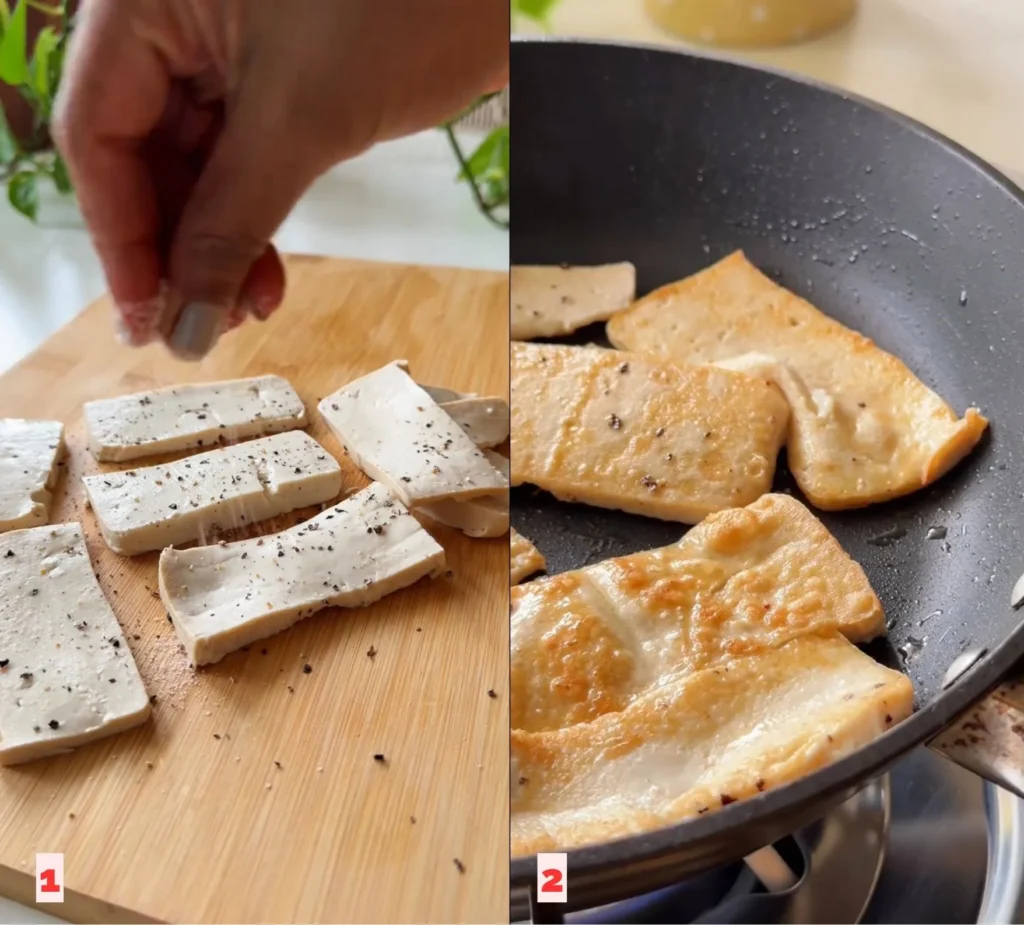
The tofu should have a firm, slightly chewy exterior that holds up inside the roll without falling apart. Remove from heat and allow to cool slightly before assembling.
Step 3 Prepare all vegetables
While the tofu cooks, prepare all the vegetable fillings. Shred the cabbage very thinly the thinner the shreds, the more pleasant the texture inside the roll.
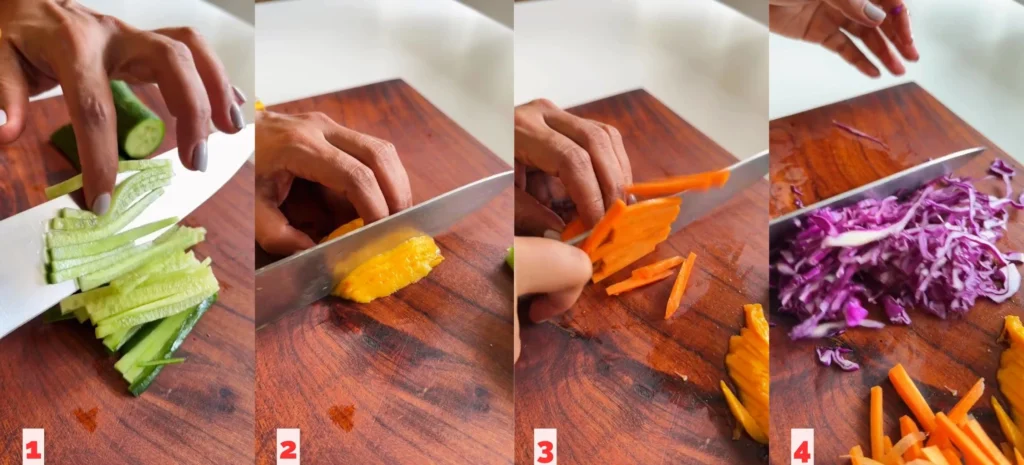
Julienne the carrot into thin matchstick strips using a sharp knife or a julienne peeler. Julienne or thinly slice the cucumber.
Slice or julienne the fresh mango. Wash and dry the basil or cilantro leaves. Arrange all fillings in an organized station.
Step 4 Make the peanut dipping sauce
In a small bowl, combine the peanut butter, soy sauce, fresh lemon juice, rice wine vinegar, honey, sesame oil, minced garlic, minced ginger, and chili flakes.
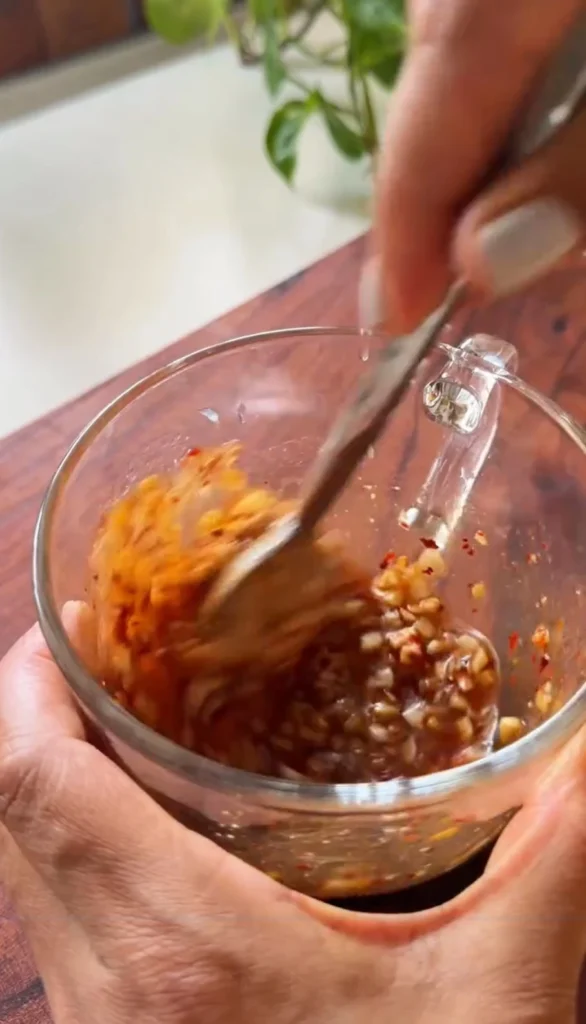
Whisk vigorously until completely combined and smooth the peanut butter should be fully emulsified into the sauce with no visible lumps or separation.
Taste and adjust add more soy sauce for saltiness, more lemon for brightness, more honey for sweetness, or more chili flakes for heat. Set aside.
Step 5 Assemble the summer rolls
Lay a few of the larger cabbage leaves flat as the base wrapper if you are making low carb wrapper free rolls, or arrange the filling components into a tight, organized pile directly on the plate to roll into the chosen wrapper.
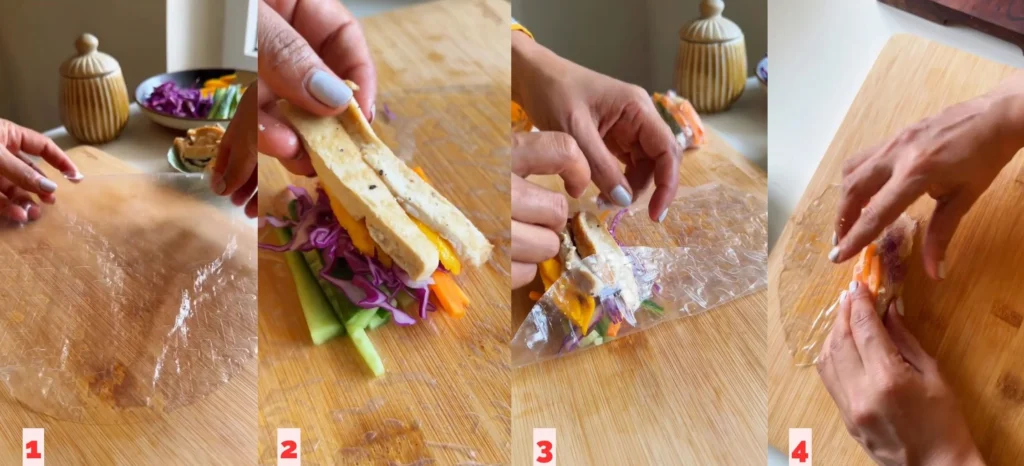
Layer the cabbage shreds first as a base. Add the mango slices, julienned carrot, cucumber strips, a few fresh basil or cilantro leaves, and the cooked tofu pieces. Roll tightly and firmly the tighter the roll, the better it holds together when dipped.
Step 6 Serve with dipping sauce
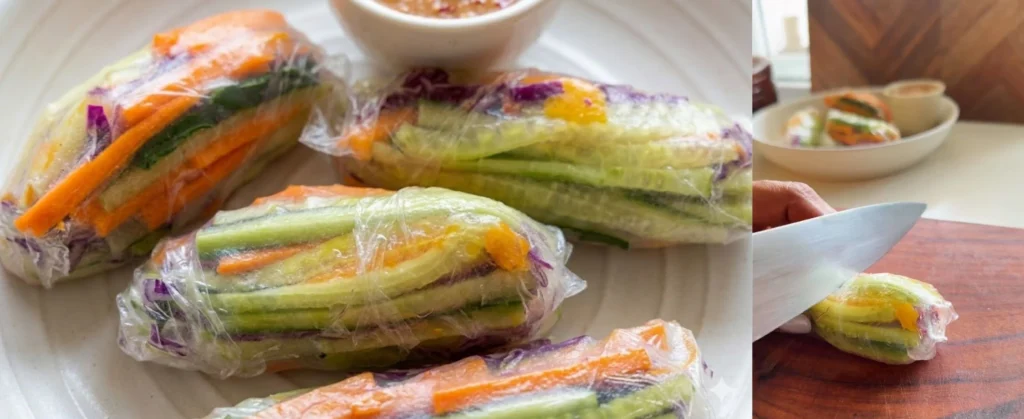
Arrange the finished rolls on a serving plate alongside the peanut dipping sauce in a small bowl. Serve immediately for the best texture and freshest flavor.
Tips for Perfect Low Carb Summer Rolls Every Time
Press the tofu thoroughly before cooking wet tofu steams rather than browning in the pan and produces a soft, pale result rather than the golden, slightly crispy exterior that makes the tofu genuinely delicious inside the roll.
Cut all vegetables to similar lengths for the most uniform, easiest to roll assembly mismatched lengths create uneven rolls that are difficult to bite through cleanly.
Keep filling portions modest overfilling makes rolling nearly impossible and produces a roll that falls apart when picked up or dipped.
Make the peanut sauce first and allow it to sit for at least 5 minutes before serving the flavors develop and come together significantly in even a short resting period.
Serve the rolls immediately after assembly the fresh vegetables release moisture over time and the rolls become wet and lose their structure if left assembled for more than 30 minutes.
Use a mix of basil and cilantro if you enjoy both the combination adds more aromatic complexity than either herb alone.
Serving Ideas
Serve these summer rolls on a long, flat serving plate with the peanut dipping sauce in a small bowl at the end the presentation is clean, simple, and genuinely attractive.
For a lunch spread, add a simple miso soup alongside. For a party appetizer, make smaller, bite-sized rolls and serve with the peanut sauce in individual small cups for dipping.
For meal prep, keep all components separate and roll fresh just before eating the filling components store well individually in the refrigerator for up to 2 days and the peanut sauce keeps refrigerated for up to 5 days.
Yes cooked shrimp, grilled chicken breast sliced thin, or edamame all work beautifully in place of tofu for different protein options. For a completely plant-based version, tempeh is an excellent alternative to tofu with a slightly nuttier, more textured flavor. All of these substitutions work with the same peanut dipping sauce.
Yes PB2 or similar powdered peanut butter can substitute for regular peanut butter in the sauce. Mix according to package directions to create a paste consistency before adding the other sauce ingredients. The sauce will be slightly less rich but still very flavorful and significantly lower in fat.
Yes the peanut sauce keeps well in a sealed jar in the refrigerator for up to 5 days. The flavors develop and improve over the first 24 hours as the garlic and ginger infuse fully into the sauce. Stir or shake well before serving as the sauce can separate slightly during storage.
The filling and tofu are naturally gluten-free. To make the sauce gluten-free, substitute the soy sauce with tamari or coconut aminos in the same quantity both produce an identical flavor result without any gluten content. All other sauce ingredients are naturally gluten-free.
Apple cider vinegar is the most accessible substitute and produces a very similar result with a slightly more pronounced apple note. Regular white vinegar works but is sharper use slightly less than the full tablespoon. White wine vinegar is another good substitute with a mild, clean acidity.
Pat the mango pieces dry with a paper towel after cutting this removes any excess surface moisture that would transfer to the other filling ingredients. Use ripe but firm mango rather than very soft, overripe mango firmer mango holds its shape better inside the roll and releases less moisture.
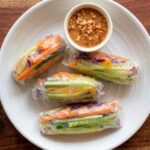
Low Carb, High Protein Summer Rolls The Fresh, Light, Tofu Filled Rolls With a Peanut Dipping Sauce
Ingredients
- For the Summer Roll Filling:
- ½ cup green cabbage very thinly shredded thinner shreds create more pleasant texture inside the roll
- ½ cup fresh mango julienned or thinly sliced Ataulfo or honey mangoes for best sweetness — pat dry with paper towel after cutting to remove excess surface moisture
- ½ cup carrot peeled and julienned into thin matchsticks
- ½ cup cucumber julienned or thinly sliced English or Persian cucumbers work best — less watery than standard cucumbers
- 5 –6 fresh basil leaves or fresh cilantro leaves or a combination of both for more aromatic complexity
- 3.5 oz firm or extra firm tofu approximately 100 grams — must be pressed thoroughly before cooking
- Salt and black pepper to taste
- Small amount of neutral cooking oil for tofu vegetable oil or avocado oil
- For the Peanut Dipping Sauce:
- 1 tablespoon creamy natural peanut butter no added sugar — just peanuts and salt
- 2 tablespoons soy sauce Kikkoman low-sodium recommended
- 1 tablespoon fresh lemon juice — always fresh-squeezed never bottled
- 1 tablespoon rice wine vinegar available in Asian foods aisle of most major supermarkets — apple cider vinegar substitutes directly
- 1 tablespoon honey or dark brown sugar honey adds floral complexity — dark brown sugar adds molasses undertone
- 1 teaspoon sesame oil
- 1 teaspoon fresh garlic finely minced
- 1 teaspoon fresh ginger finely minced
- 1 teaspoon red chili flakes adjusted to heat preference
Instructions
- Press tofu for minimum 15 minutes before cooking — wrap in clean kitchen towel or several layers of paper towels and place a heavy pan on top — the more moisture removed the better the tofu browns and seasons.
- Make peanut dipping sauce first so it has time to rest and develop — in a small bowl combine peanut butter, soy sauce, fresh lemon juice, rice wine vinegar, honey, sesame oil, minced garlic, minced ginger, and red chili flakes.
- Whisk vigorously until completely combined and smooth with peanut butter fully emulsified and no visible lumps or separation remaining.
- Taste sauce and adjust — more soy sauce for saltiness, more lemon for brightness, more honey for sweetness, more chili flakes for heat — set aside to rest minimum 5 minutes while preparing remaining components.
- After pressing cut tofu into small cubes or thin slices sized to fit comfortably inside the rolls — season with salt and black pepper on all sides.
- Heat a small amount of neutral oil in a non-stick skillet over medium-high heat until shimmering.
- Add seasoned tofu pieces and cook for 3–4 minutes per side without moving until golden brown and slightly crispy on the exterior.
- Remove cooked tofu from heat and allow to cool slightly before assembling.
- While tofu cooks prepare all vegetable fillings — shred cabbage very thinly, julienne carrot into thin matchstick strips, julienne or thinly slice cucumber, slice or julienne fresh mango and pat dry with paper towel, wash and dry basil or cilantro leaves.
- Cut all vegetables to similar lengths for the most uniform easiest-to-roll assembly — mismatched lengths create uneven rolls that are difficult to bite through cleanly.
- Arrange all prepared filling components in an organized station within easy reach before beginning to assemble.
- To assemble lay cabbage shreds flat as a base layer.
- Add mango slices, julienned carrot, cucumber strips, fresh basil or cilantro leaves, and cooled cooked tofu pieces on top of the cabbage base — keep filling portions modest as overfilling makes rolling impossible and produces rolls that fall apart when picked up.
- Roll tightly and firmly from the bottom — the tighter the roll the better it holds together when dipped.
- Repeat with remaining filling components until all rolls are assembled.
- Arrange finished rolls on a serving plate alongside the peanut dipping sauce in a small bowl.
- Serve immediately for the best texture and freshest flavor.
Notes
Press tofu thoroughly before cooking — wet tofu steams rather than browning in the pan and produces a soft pale result rather than the golden slightly crispy exterior that makes it genuinely delicious inside the roll.
Cut all vegetables to similar lengths — mismatched lengths create uneven rolls that are difficult to bite through cleanly.
Keep filling portions modest — overfilling makes rolling nearly impossible and produces rolls that fall apart when picked up or dipped.
Always make peanut sauce first and allow it to rest at least 5 minutes before serving — flavors develop and come together significantly even in a short resting period.
Serve rolls immediately after assembly — fresh vegetables release moisture over time and rolls become wet and lose structure if left assembled more than 30 minutes.
Pat mango pieces dry with paper towel after cutting to remove excess surface moisture that would transfer to other filling ingredients.
Use ripe but firm mango — very soft overripe mango releases too much moisture and falls apart inside the roll.
Use a combination of basil and cilantro if you enjoy both — the combination adds more aromatic complexity than either herb alone.
For gluten-free version substitute soy sauce with tamari or coconut aminos in same quantity — all other ingredients naturally gluten-free.
Peanut sauce keeps well in a sealed jar in refrigerator for up to 5 days — flavors improve over first 24 hours — stir or shake well before serving as sauce can separate during storage.
Protein substitutes for tofu: cooked shrimp, grilled chicken breast sliced thin, edamame, or tempeh — all work beautifully with the same peanut dipping sauce.
PB2 or similar powdered peanut butter can substitute for regular peanut butter — mix to paste consistency before adding other sauce ingredients — sauce will be slightly less rich but still very flavorful.
For meal prep keep all components separate and roll fresh just before eating — filling components store well individually in refrigerator for up to 2 days.
Rice wine vinegar substitute: apple cider vinegar in same quantity (slightly more pronounced apple note), white wine vinegar (mild clean acidity), or regular white vinegar in slightly smaller quantity (sharper).
For party appetizer format make smaller bite-sized rolls and serve peanut sauce in individual small cups for dipping.


