
There are deviled eggs. Classic, creamy, slightly tangy, universally loved at every potluck and holiday table from coast to coast one of the most reliable crowd pleasing appetizers in all of American home cooking.
And then there are these. Pink deviled eggs. The same perfectly seasoned, creamy mustard mayo pickle filling that makes classic deviled eggs so irresistible, but housed inside egg whites that have been soaked in beet brine until they are a vivid, jewel toned magenta pink that makes every single person at the table stop, look, and immediately reach for one before any other appetizer on the spread.
The color is entirely natural. There is no food coloring, no artificial dye, no specialty ingredient beyond the kind of beets you can find in a can at any supermarket in America.
The egg whites are simply soaked in beet liquid either from a can of beets or from freshly cooked beets for long enough to absorb the vivid betalain pigments that beets contain, and the result is a pink so deep and so saturated it looks almost professionally produced.
The interior of the egg white stays paler than the exterior, creating a beautiful color gradient that is visible when the egg is cut and filled.
The filling itself is exactly as good as you want a deviled egg filling to be creamy from the mayo, sharp and tangy from the mustard and pickle juice, properly seasoned with salt and pepper, and finished with an optional dusting of paprika that adds color contrast and a very gentle smoky note. Simple. Classic. Perfect.
Why Beet Staining Works So Well on Deviled Eggs
The technique of staining hard boiled egg whites with beet liquid is not new it has been used in various forms across different food traditions for years but it has become genuinely popular in American home kitchens because it is one of those techniques that looks significantly more impressive than the effort required to produce it.
Beets contain water soluble pigments called betalains specifically the red-violet variety called betacyanins that are among the most intensely colored natural pigments available in a standard kitchen.
When peeled hard boiled egg whites are submerged in beet liquid, these pigments penetrate the outer layers of the egg white and stain it from the outside inward. The longer the soak, the deeper the color penetrates.
The egg white itself is a porous protein structure that absorbs the pigment readily particularly after cooking, which opens up the protein matrix and makes it more receptive to liquid absorption.
The exterior of the egg white will always be the most deeply colored, with the pigment concentration decreasing toward the center which is what creates the beautiful gradient visible in each filled egg half.
For deviled eggs specifically, this beet staining technique is particularly brilliant because the yolk is removed and used for the filling which means the staining only needs to work on the egg white, which it does extremely effectively.
The creamy yellow filling piped into the vivid pink white creates a color contrast that is genuinely striking on a serving platter.
Ingredients
For the Pink Egg Whites:
- 6 large eggs, hard-boiled and peeled
- Beet liquid for soaking — use the liquid from one 15 oz can of sliced or whole beets (the simplest and most accessible option — available at every major supermarket in the canned vegetable aisle), or make fresh beet brine by simmering 2 to 3 medium beets in 2 cups of water with 1 tablespoon of white vinegar until the water turns deep red
- Enough water to fully submerge the eggs if additional liquid is needed
For the Deviled Egg Filling:
- 1 teaspoon yellow mustard or Dijon mustard (French’s Yellow Mustard or Grey Poupon Dijon are the most widely available American brands)
- 1 teaspoon pickle juice (the brine from any jar of dill pickles — Vlasic or Claussen are widely available American brands — this is the secret ingredient that gives deviled eggs their characteristic tang)
- 3 tablespoons good quality mayonnaise (Hellmann’s or Duke’s are the classic American brands — full-fat mayonnaise produces the richest, creamiest filling)
- Salt and black pepper to taste
- A pinch of paprika for serving — optional (smoked paprika adds a gentle smoky depth — sweet paprika adds color without additional flavor)
Why Pickle Juice Is the Most Important Ingredient in the Filling
Most deviled egg recipes call for white vinegar or apple cider vinegar as the acidic component in the filling. Pickle juice is a significantly better choice and once you understand why, you will never go back to plain vinegar.
Pickle juice is not just vinegar it is vinegar that has been seasoned with dill, garlic, salt, and other spices during the pickling process.
This means every teaspoon of pickle juice brings with it a complex, savory, slightly herby flavor that plain vinegar simply cannot replicate.
The result is a deviled egg filling that tastes more layered, more interesting, and more genuinely satisfying than a plain vinegar version and the pickle flavor itself is subtle enough to be unidentifiable as pickle juice by people who eat it, even though it is clearly doing something that makes the filling taste better than standard versions.
This is one of those small substitutions that costs nothing you already have pickle juice every time you have a jar of pickles in the refrigerator and produces a meaningfully better result every time.
Step by Step Instructions
Step 1 Hard boil the eggs
Place the 6 eggs in a single layer in a saucepan and cover with cold water by at least one inch. Bring to a full boil over high heat, then reduce to a gentle boil and cook for exactly 10 minutes for fully set, dry yolks that are ideal for creamy deviled egg filling.
Immediately transfer to a bowl of cold water or an ice bath and allow to cool completely at least 15 minutes. The ice bath stops the cooking immediately and makes the eggs significantly easier to peel cleanly.
Step 2 Peel the eggs carefully
Peel all 6 eggs as carefully as possible, keeping the egg whites as smooth and intact as you can. Any rough spots or tears in the surface of the white will be more visible after the beet staining a smooth, intact surface absorbs color most evenly and beautifully.
Place the peeled eggs in a single layer in a container just large enough to hold them.
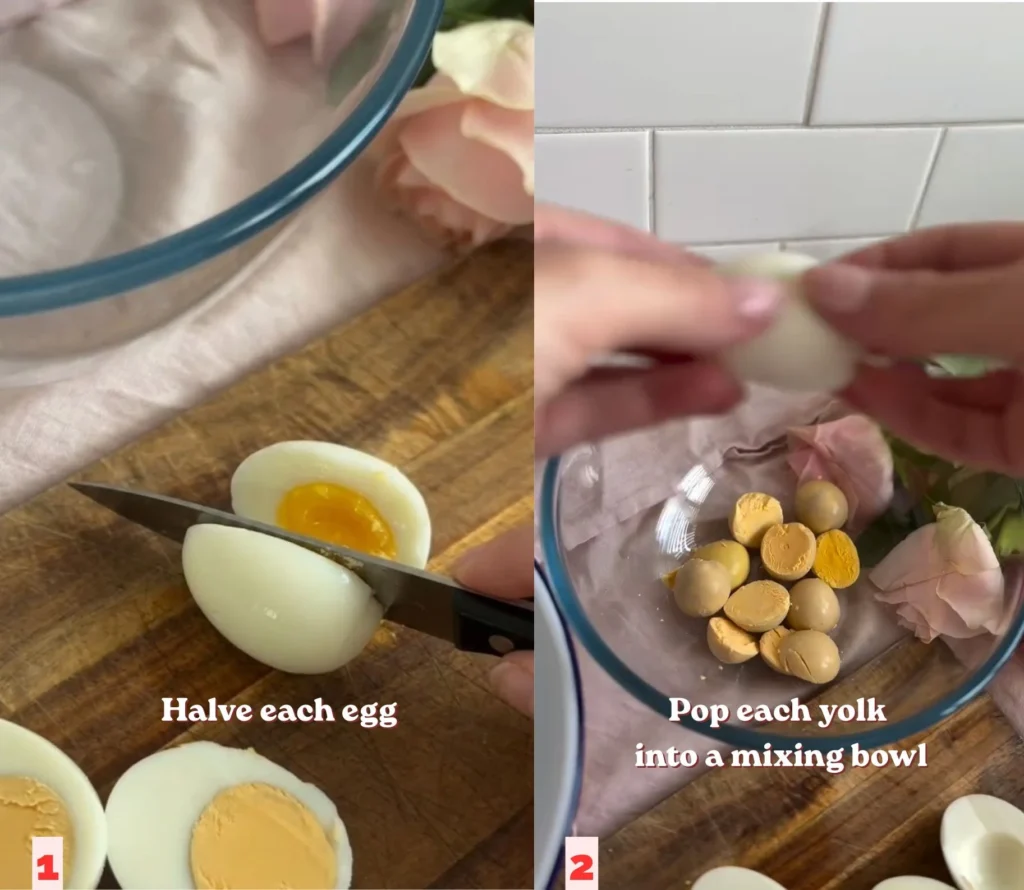
Halve each egg lengthwise with a sharp, clean knife wipe the knife blade between cuts for the cleanest, most precise edges.
Carefully pop each yolk into a mixing bowl, keeping the pink egg white halves intact and set aside on a serving plate.
Step 3 Soak in beet liquid
Pour the beet liquid over the peeled eggs the liquid should completely submerge all the eggs. If the beet liquid from the can is not sufficient, add a small amount of water to bring the level up enough to cover.
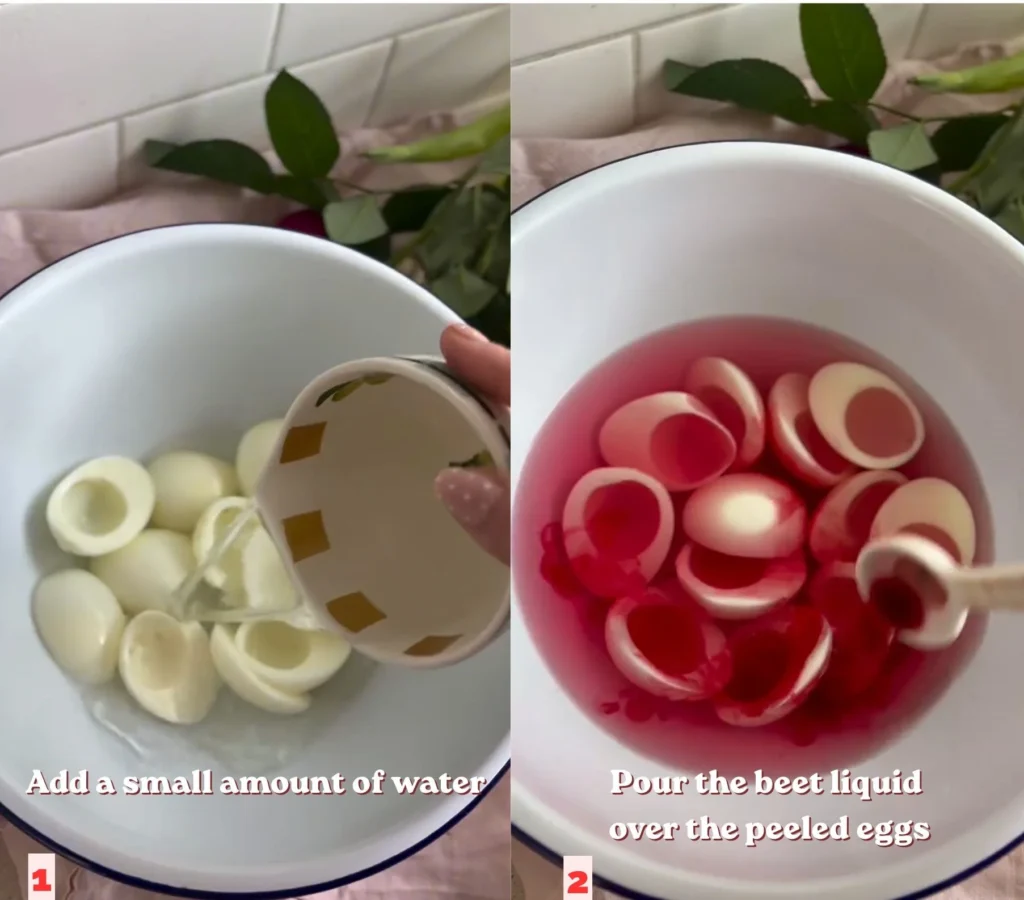
Cover the container and refrigerate. For a light pink color, soak for 2 to 4 hours. For a deep, vivid magenta, soak overnight 8 to 12 hours.
Check the color development periodically and remove when you are happy with the depth of color. The color will be slightly lighter in the finished egg than it appears while wet.
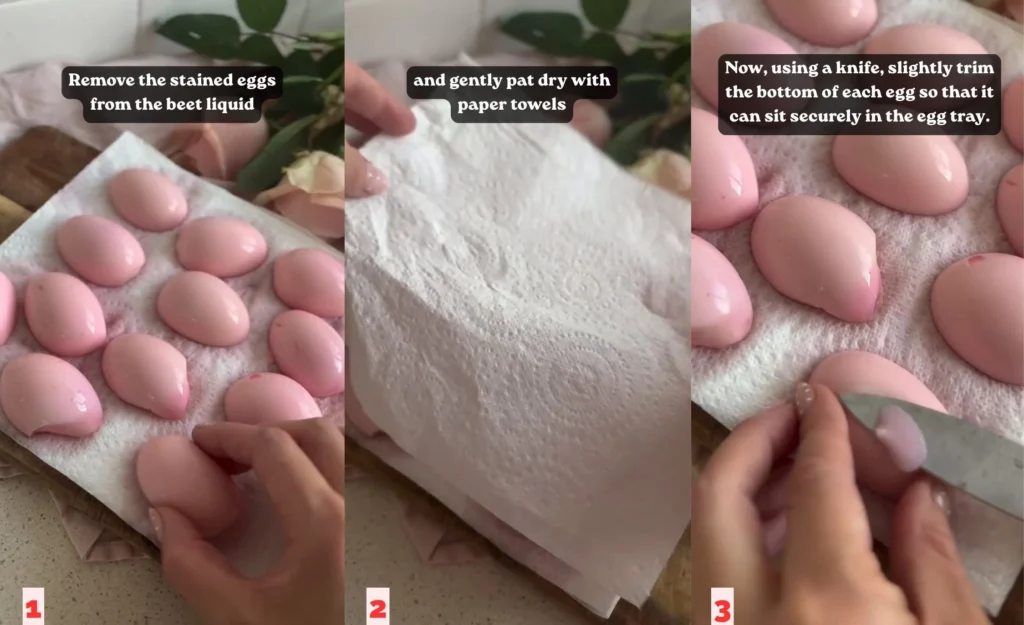
Remove the stained eggs from the beet liquid and gently pat dry with paper towels. Now, using a knife, slightly trim the bottom of each egg so that it can sit securely in the egg tray.
Step 4 Make the filling
To the bowl of egg yolks, add the mustard, pickle juice, and mayonnaise. Mash everything together with a fork until completely smooth and creamy no visible yolk crumbles should remain.
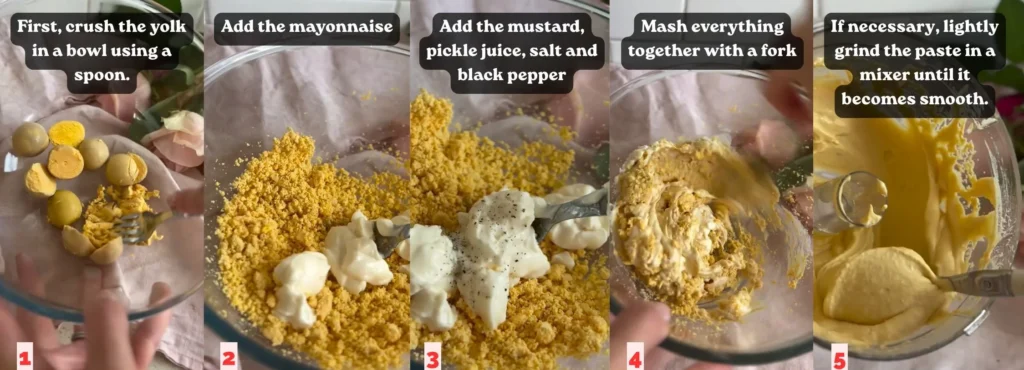
Season with salt and black pepper to taste. The filling should be smooth, slightly glossy, and just firm enough to hold its shape when piped or spooned if it feels too thick, add a very small additional amount of mayonnaise, one teaspoon at a time.
Step 5 Fill the egg white halves
Transfer the filling to a piping bag fitted with a star or round tip for a clean, professional looking swirl, or simply use a small spoon for a more rustic home style presentation. Fill each pink egg white half generously with the yolk mixture.
Step 7 Chill and garnish
Place the filled eggs in the refrigerator and chill for at least 30 minutes before serving chilling firms the filling and allows the flavors to develop and meld.
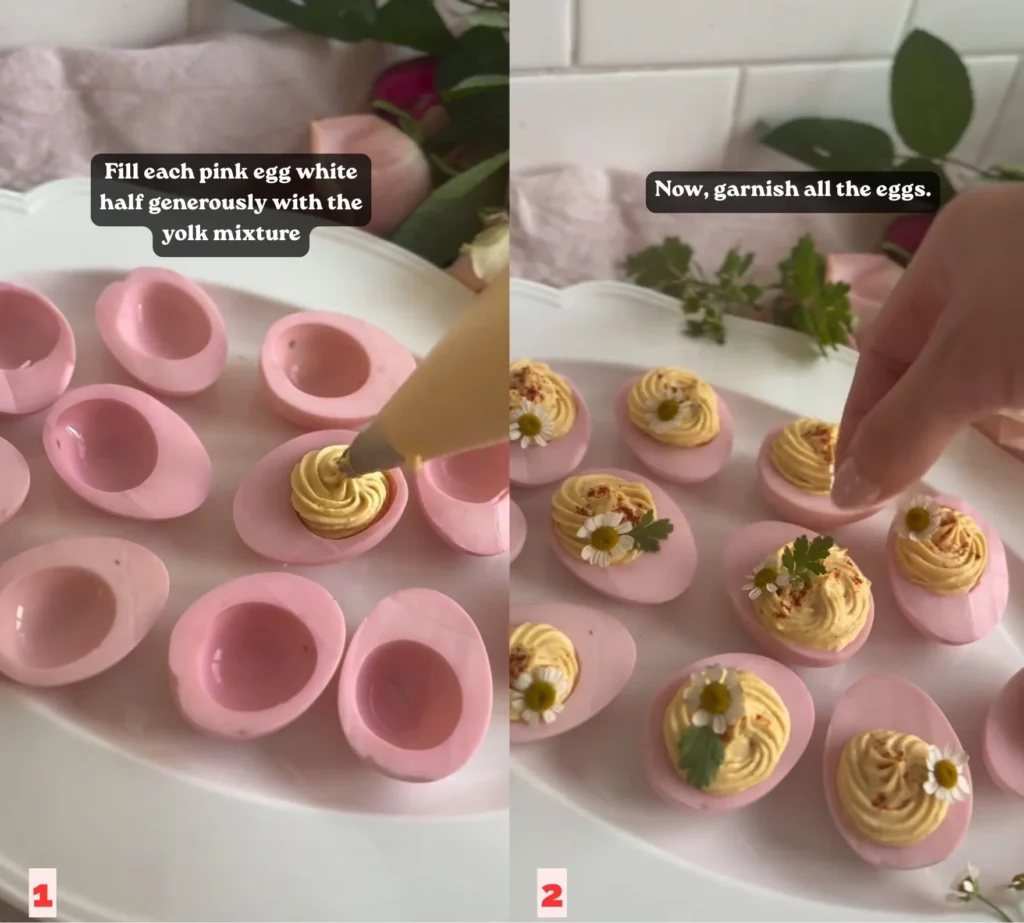
Just before serving, dust lightly with paprika for color contrast and a gentle aromatic finish. Serve cold directly from the refrigerator.
Tips for Perfect Pink Deviled Eggs Every Time
Use eggs that are at least a week old for peeling — very fresh eggs have a tighter protein bond between the shell membrane and the egg white, making them significantly harder to peel cleanly. Slightly older eggs peel much more easily.
Cool the eggs completely in an ice bath before peeling — warm eggs tear and stick to the shell far more than properly chilled eggs.
Pat the beet stained eggs completely dry before halving — any remaining beet liquid on the surface will transfer to the cutting board and filling, tinting the creamy yellow filling pink at the edges.
Keep the filling as smooth as possible — run the fork mashed mixture through a fine mesh strainer for an exceptionally smooth, restaurant quality filling.
Chill before serving — this is not optional. Deviled eggs served at room temperature have a softer, less appetizing filling texture and a less pleasant flavor than properly chilled versions.
The beet liquid can be reused — after soaking the eggs, the beet liquid retains its color and can be strained and refrigerated for a second batch.
Serving Ideas
Arrange these pink deviled eggs on a white or light colored serving platter for maximum visual impact the vivid magenta against white is genuinely stunning and photographs beautifully.
For a holiday or special occasion presentation, add a small fresh herb garnish a dill frond, a tiny parsley leaf, or a thin slice of radish on top of each filled egg.
Serve as a standalone appetizer at parties, alongside a charcuterie board, or as part of a holiday appetizer spread for Easter, Mother’s Day, Valentine’s Day, or any occasion where pink is appropriate and impressive. For a more elaborate presentation, scatter a few edible flowers around the platter.
The depth of color depends entirely on soaking time. Two to four hours in the refrigerator produces a light, blush pink that is pretty and subtle. Eight to twelve hours overnight produces the deepest, most saturated magenta that is most visually dramatic. Check at intervals and remove when you are satisfied with the color. The color will appear slightly lighter once the egg is dried and halved than it looks while submerged in the beet liquid.
Yes fresh beet juice or fresh beet brine produces an even more vibrant, more intensely colored result than canned beet liquid. Juice 2 to 3 medium beets through a juicer, or simmer roughly chopped beets in water with a tablespoon of white vinegar for 20 minutes, strain the liquid, and use as the soaking brine. Fresh beet liquid produces a slightly more vivid color and a very subtle beet flavor in the outer layer of the egg white.
The exterior of the egg white absorbs a very subtle beet flavor along with the color present as a very faint earthiness if you are specifically looking for it, but not identifiable as beet flavor to most people eating the egg. The dominant flavor in every bite is the creamy, tangy, savory deviled egg filling the beet influence on flavor is minimal and most people are genuinely surprised to learn that beets are responsible for the color when they taste the finished egg.
Yes these are ideal make-ahead appetizers. Soak the eggs overnight in the refrigerator. Halve and fill the next day. Store filled eggs covered in the refrigerator for up to 24 hours before serving add the paprika garnish immediately before serving rather than in advance. The filling may develop a very slight crust on the surface if stored for more than a few hours a quick pass with a spoon smooths this out immediately before serving.
Full-fat mayonnaise produces the richest, most satisfying filling. Hellmann’s Real Mayonnaise is the most widely used American brand and produces excellent results. Duke’s Mayonnaise particularly popular in Southern American cooking is slightly tangier and many deviled egg enthusiasts consider it the superior choice for deviled egg filling specifically. Avoid light or fat-free mayonnaise these contain more water and produce a thinner, less creamy, less satisfying filling that does not hold its shape as well when piped or spooned.
Absolutely a small spoon produces a slightly more rustic, home-style presentation that is completely appropriate and genuinely charming. Alternatively, use a zip-lock bag with a small corner snipped off as a quick, no-equipment piping bag substitute that produces a cleaner result than a spoon with minimal additional effort.

Pink Deviled Eggs The Naturally Beet-Stained, Creamy, Classic Filled Party Appetizer
Ingredients
- For the Pink Egg Whites:
- 6 large eggs hard-boiled and peeled
- Beet liquid for soaking — liquid from one 15 oz can of sliced or whole beets simplest most accessible option — available at every major supermarket in the canned vegetable aisle OR fresh beet brine made by simmering 2–3 medium beets in 2 cups water with 1 tablespoon white vinegar until water turns deep red
- Additional water if needed to fully submerge all eggs
- For the Deviled Egg Filling:
- 1 teaspoon yellow mustard or Dijon mustard French’s Yellow Mustard or Grey Poupon Dijon widely available American brands
- 1 teaspoon pickle juice — brine from any jar of dill pickles Vlasic or Claussen widely available — this is the ingredient that gives the filling its characteristic layered tang
- 3 tablespoons full-fat mayonnaise Hellmann’s or Duke’s classic American brands — full-fat only for richest creamiest filling
- Salt and black pepper to taste
- For Garnish:
- A pinch of paprika — optional smoked paprika for gentle smoky depth or sweet paprika for color without additional flavor
Instructions
- Place 6 eggs in a single layer in a saucepan and cover with cold water by at least 1 inch.
- Bring to a full boil over high heat then reduce to a gentle boil and cook for exactly 10 minutes for fully set dry yolks ideal for creamy deviled egg filling.
- Immediately transfer cooked eggs to a bowl of cold water or ice bath and cool completely for minimum 15 minutes — ice bath stops cooking immediately and makes eggs significantly easier to peel cleanly.
- Peel all 6 eggs as carefully as possible keeping egg whites as smooth and intact as possible — any rough spots or tears will be more visible after beet staining — smooth intact surface absorbs color most evenly.
- Place peeled eggs in a single layer in a container just large enough to hold them all.
- Pour beet liquid over the peeled eggs making sure liquid completely submerges all eggs — add a small amount of water if needed to bring level up enough to cover completely.
- Cover container and refrigerate — for light blush pink soak 2–4 hours — for deep vivid magenta soak overnight 8–12 hours — check color periodically and remove when satisfied.
- Remove stained eggs from beet liquid and gently pat completely dry with paper towels — any remaining beet liquid on surface will transfer to filling and tint it pink.
- Halve each egg lengthwise with a sharp clean knife — wipe blade between each cut for cleanest most precise edges.
- Carefully pop each yolk into a mixing bowl keeping pink egg white halves intact — set white halves aside on serving plate.
- Add mustard, pickle juice, and mayonnaise to the bowl of egg yolks.
- Mash everything together with a fork until completely smooth and creamy with no visible yolk crumbles remaining — run through a fine-mesh strainer for exceptionally smooth restaurant-quality filling.
- Season with salt and black pepper to taste — filling should be smooth slightly glossy and just firm enough to hold its shape when piped or spooned.
- If filling feels too thick add a very small additional amount of mayonnaise one teaspoon at a time until desired consistency is reached.
- Transfer filling to a piping bag with a star or round tip for clean professional swirl — or use a small spoon for rustic home-style presentation — or use a zip-lock bag with small corner snipped off as a quick substitute.
- Fill each pink egg white half generously with yolk mixture.
- Place filled eggs in refrigerator and chill for minimum 30 minutes before serving — chilling firms the filling and allows flavors to develop and meld.
- Just before serving dust lightly with paprika for color contrast and gentle aromatic finish — add paprika only immediately before serving never before storage.
- Serve cold directly from refrigerator.


