There are dips you buy at the grocery store and dips you make yourself, and once you make this homemade beetroot hummus, you will never go back to the store bought version.
It is creamy, earthy, slightly sweet, and finished with a deep magenta color that makes every plate it touches look like it came straight out of a food magazine. And the best part it takes almost no hands-on effort. The oven does most of the work.
This is the kind of recipe that works for everything. Spread it thick on sourdough toast, scoop it up with pita chips, spoon it into grain bowls, or use it as a base for a gorgeous weekend brunch plate.
It is versatile, made from real whole ingredients, and genuinely packed with nutrients that your body benefits from in a very real way.
Why Beetroot Hummus Deserves a Spot in Your Kitchen
Regular hummus is already a solid choice. But when you roast beets and blend them directly into the base, you get something that goes far beyond the standard version in both flavor and nutrition.
Beets are one of the most nutrient dense root vegetables available. They are high in folate, manganese, potassium, and iron.
They contain nitrates that the body converts into nitric oxide, a compound that supports healthy blood pressure and blood flow.
Their natural sweetness deepens significantly when roasted, which brings a warmth to the hummus that balances the earthiness of the chickpeas and the sharpness of the lemon.
Chickpeas bring plant-based protein, fiber, and a starchy creaminess that gives hummus its signature thick, smooth texture. One can of drained chickpeas provides a solid nutritional foundation for the whole batch.
Tahini made from ground sesame seeds adds healthy fats, calcium, and a nutty richness that ties the whole dip together. It is a classic hummus ingredient for good reason.
Roasted garlic is the ingredient that separates a good hummus from a great one. Roasting the garlic cloves alongside the beets mellows their sharpness into something sweet, buttery, and deeply savory.
The recipe calls for removing the garlic from the oven after about 20 minutes before the beets are done so they do not burn and turn bitter.
Ground cumin adds a warm, slightly smoky undertone that you might not be able to name if you did not know it was there, but you would definitely notice if it were missing.
Olive oil and fresh lemon juice round everything out the oil adds body and smoothness while the lemon brings brightness and a clean finish that keeps the dip from feeling too heavy.
The Ingredients You Will Need
2 fresh beets, 1 can of chickpeas (drained), 3 to 4 garlic cloves (skin left on for roasting), 3 tablespoons of olive oil plus a little extra for roasting, 2 tablespoons of runny tahini, the juice of half a small lemon, half a teaspoon of ground cumin, and 1 teaspoon of sea salt.
For serving: sourdough toast, sliced avocado, dukkah (a Middle Eastern spice and nut blend available at specialty grocery stores and online), and chopped fresh parsley.
How to Make It
Step one:
Roast the beets and garlic. Preheat your oven to 400°F. Chop the beets into quarters and place them on a parchment-lined baking sheet along with the garlic cloves skins still on.
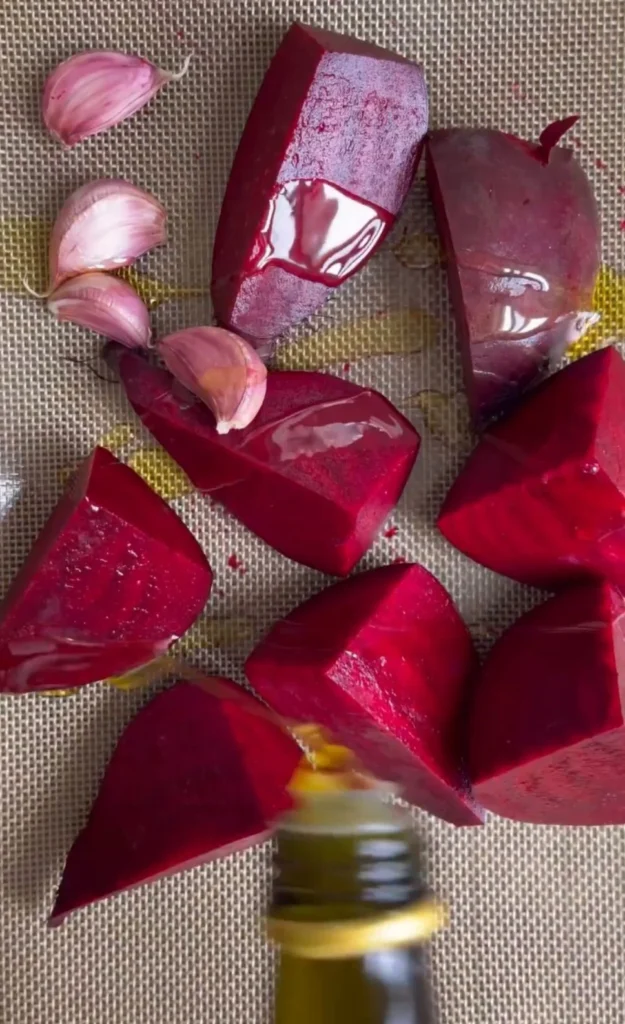
Drizzle everything generously with olive oil and roast for 30 to 40 minutes until the beets are completely soft when pierced with a fork.
Here is the most important part of this whole recipe: pull the garlic out of the oven at the 20-minute mark.
At that point, the cloves will be soft, fragrant, and perfectly golden inside. Remove the skins and set the roasted garlic aside.
If you leave the garlic in for the full roasting time alongside the beets, it will overcook and turn acrid so set a timer specifically for the garlic.
Step two:
Cool everything down. Once the beets are done, remove them from the oven and allow them to cool completely before blending.
Blending hot ingredients in a food processor or blender can cause steam pressure to build letting them cool first makes the whole process safer and also gives you a smoother final texture.
Step three:

Blend. Add the cooled roasted beets, drained chickpeas, roasted garlic, 3 tablespoons of olive oil, tahini, lemon juice, ground cumin, and sea salt to a food processor or high-powered blender.
Blend until completely smooth, stopping to scrape down the sides as needed. Taste and adjust more lemon for brightness, more salt to bring out the flavors, a splash of water if you want a looser consistency.
Step four:
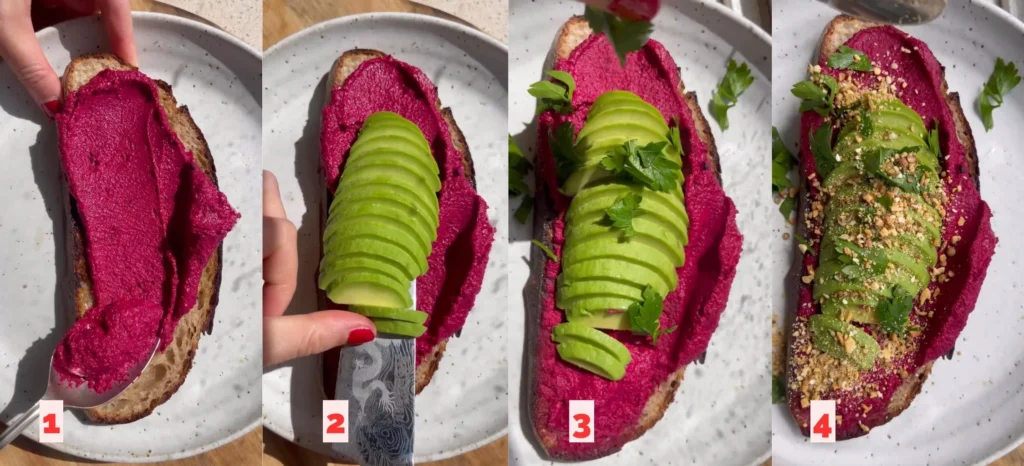
Serve. Spoon the hummus onto toasted sourdough bread, top with sliced avocado, a sprinkle of dukkah, and freshly chopped parsley.
It is also excellent served in a bowl with a drizzle of good olive oil over the top alongside pita, fresh vegetables, or crackers.
Tips for the Best Results
Make sure the beets are completely soft before pulling them from the oven. Undercooked beets will leave lumps in the hummus no matter how long you blend them.
Use runny tahini, not a brand that has seized up and gone thick at the bottom of the jar. Stir it well before measuring.
Peel the beets after roasting, not before the skins slip right off once they are cooked, which saves time and reduces mess.
If you want an extra smooth hummus, peel the chickpeas by pinching the skins off before blending. It takes a few extra minutes but makes a noticeable difference in texture.
Yes. Canned or vacuum-packed cooked beets work as a shortcut. Skip the roasting step and blend them directly. The flavor will be slightly milder since you lose the depth that comes from roasting, but the result is still very good.
Dukkah is a blend of toasted nuts, seeds, and spices typically hazelnuts or pistachios, sesame seeds, coriander, and cumin. It has a coarse, crumbly texture and a warm, nutty flavor. Look for it at Whole Foods, specialty food stores, or order it online. If you cannot find it, a sprinkle of toasted pine nuts and a pinch of cumin makes a solid substitute.
Stored in an airtight container, this beetroot hummus stays fresh in the refrigerator for up to five days. Stir it before serving if it has been sitting, as it may separate slightly.
Yes. Beetroot hummus freezes well. Store it in a freezer-safe container for up to three months. Thaw overnight in the refrigerator and stir well before serving.
The most likely cause is undercooked beets or chickpeas that were not blended long enough. Make sure the beets are completely tender before blending, and run the food processor for a full two to three minutes for the smoothest result.
You can, but tahini is a key part of both the flavor and creaminess. If you are out of tahini, a tablespoon of natural almond butter or sunflower seed butter can step in as a substitute with a slightly different but still pleasant flavor.
Yes on both counts. The hummus itself is completely plant-based and naturally gluten-free. Just make sure to serve it on gluten-free bread or crackers if that is a dietary requirement.
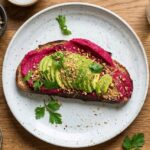
Homemade Beetroot Hummus The Dip That Looks as Good as It Tastes
Ingredients
- 2 fresh beets quartered
- 1 can chickpeas 15 oz, drained
- 4 garlic cloves skin on
- 3 tablespoons olive oil for blending
- 1 tablespoons olive oil for roasting
- 2 tablespoons runny tahini
- 0.5 small lemon juiced
- 0.5 teaspoons ground cumin
- 1 teaspoons sea salt
Instructions
- Roast beets & garlic: Preheat oven to 400°F. Place quartered 2 fresh beets, quartered and 4 garlic cloves, skin on (skins on) on a parchment-lined baking sheet. Drizzle with 1 tablespoons olive oil (for roasting) and roast for 30–35 minutes
- until beets are fork-tender.
- Remove garlic early: At the 20-minute mark, pull out the 4 garlic cloves, skin on. Peel off the skins and set the roasted cloves aside. Return beets to finish roasting.
- Cool completely: Remove beets from the oven and allow everything to cool completely before blending. Do not skip this step.
- Blend: Add cooled 2 fresh beets, quartered, 1 can chickpeas (15 oz), drained, roasted 4 garlic cloves, skin on, 3 tablespoons olive oil (for blending), 2 tablespoons runny tahini, juice of 0.5 small lemon, juiced, 0.5 teaspoons ground cumin, and 1 teaspoons sea salt to a food processor. Blend 2–3 minutes until completely smooth. Scrape down sides as needed. Add a splash of water for a looser consistency.
- Taste & adjust: Taste the hummus and adjust — more lemon for brightness, more salt to bring out the flavors, or a little more tahini for extra richness.
- Serve: Serve on toasted sourdough with sliced avocado, a sprinkle of dukkah, and chopped fresh parsley. Or serve in a bowl with a drizzle of olive oil alongside pita, crackers, or fresh vegetables.