
There are food projects that are purely practical. There are food projects that are purely beautiful. And then in that rare, wonderful overlap there are food projects that are both simultaneously, to such a satisfying degree that making them feels less like cooking and more like creating something genuinely special.
Rainbow Egg Pickles are exactly that kind of project. Hard boiled eggs submerged in naturally colored pickling liquids vibrant beet juice for deep magenta, turmeric water for golden yellow, purple cabbage juice for violet blue, spinach or matcha for soft green each jar a different jewel color, each egg emerging from its brine uniquely tinted and deeply flavored with a tangy, slightly sweet, spice infused pickling liquid that makes every bite genuinely interesting.
The visual impact when you open a refrigerator and see a row of these jars each one a different vivid color, the eggs glowing through the glass like stained glass windows is the kind of thing that stops people mid sentence.
And the practical impact a ready supply of perfectly seasoned, protein packed, genuinely delicious pickled eggs that last for days in the refrigerator makes this one of the most rewarding food projects you can undertake on a weekend afternoon with minimal effort and maximum payoff.
Why Natural Vegetable Juices Make Better Pickling Colors Than Artificial Dyes
The beauty of this recipe is that every color comes from real food real vegetables, real spices, real plant pigments that happen to produce some of the most vibrant, most saturated natural colors available in a home kitchen.
This is not food coloring from a bottle. This is beet juice doing what beet juice has always been capable of doing when given the opportunity.
Each natural colorant brings its own flavor personality to the pickling liquid alongside its color contribution, which means each color of egg in your rainbow collection has a slightly different flavor profile not just a different visual appearance.
Beet juice produces the most dramatic, most deeply saturated color of the group a vivid magenta-red that penetrates the egg white completely after a sufficient soak, leaving a striking fuchsia exterior with a clean white interior.
Beet pickled eggs have a subtly earthy, slightly sweet quality from the beet juice that complements the vinegar tang beautifully.
Turmeric produces a brilliant golden-yellow color and brings its characteristic warm, slightly peppery, deeply aromatic flavor to the pickling liquid.
Turmeric pickled eggs are among the most striking visually the saturated yellow gold color photographs beautifully and the flavor has a warmth that makes them especially good with sharp cheese or on a charcuterie board.
Purple cabbage juice produces a color that is one of the most pH-sensitive natural dyes available appearing blue purple in neutral conditions but shifting dramatically toward pink-red in more acidic brine.
The specific color of your purple cabbage pickled eggs will depend on the acidity level of your particular brine ratio, which makes each batch slightly different and genuinely interesting.
Spinach, matcha, or fresh herb based liquids produce softer greens that are more subtle in their color impact but bring fresh, grassy, herbal notes to the pickling liquid that make for a distinctly different eating experience.
Ingredients
The Base Pickling Formula (for each color jar):
- Hard-boiled eggs, peeled — as many as fit your jars (typically 4 to 6 eggs per pint jar)
- White vinegar or apple cider vinegar (white vinegar produces cleaner, brighter colors — apple cider vinegar adds a slightly more complex, mellow tang)
- Water
- Granulated white sugar (balances the acidity and helps the pickling liquid soak into the egg white more evenly)
- Salt
- Whole spices of your choice — black peppercorns, whole cloves, coriander seeds, bay leaves, mustard seeds, dried red pepper flakes, or fresh garlic cloves all work beautifully
For the Natural Colorants:
- Deep pink-magenta: Fresh beet juice (juice 1 to 2 medium beets, or use store-bought beet juice — available at Whole Foods, Trader Joe’s, or any juice bar)
- Golden yellow: Ground turmeric powder (1 to 2 teaspoons per jar of liquid — Frontier Co-op or Simply Organic are widely available American brands)
- Purple-blue: Purple cabbage juice (blend or juice approximately ¼ of a small head of purple cabbage with water, then strain)
- Soft green: Fresh spinach juice, matcha powder, or fresh herb-infused water (blend spinach with water and strain, or dissolve 1 teaspoon of culinary grade matcha powder in the pickling liquid)
- Deep red-orange: Red onion combined with beet for a different red spectrum, or carrot juice for a warm orange tone
Step by Step Instructions
Step 1 Hard boil and peel the eggs
Place eggs in a single layer in a saucepan and cover with cold water by at least an inch. Bring to a full boil over high heat, then reduce to a gentle boil and cook for 8 to 10 minutes for fully set yolks.
Transfer immediately to a bowl of ice water and cool for at least 15 minutes this stops the cooking and makes peeling dramatically easier.
Peel all eggs carefully, trying to keep the white surface as smooth as possible any surface tears or rough spots will affect how evenly the color absorbs.
Step 2 Make the natural vegetable juices or prepare the turmeric
For beet juice: juice fresh beets through a juicer or blender, strain through a fine mesh strainer, and set aside.
For purple cabbage: roughly chop ¼ of a small head of purple cabbage, blend with ½ cup water, and strain through a fine mesh strainer.
For spinach: blend a large handful of fresh spinach with ½ cup water and strain. For turmeric: simply add the ground turmeric powder directly to the pickling liquid it dissolves completely and colors the brine immediately.
Step 3 Mix the pickling liquid for each color
For each jar, combine the natural vegetable juice or turmeric with sugar, white vinegar, and water in a ratio that produces a balanced sweet-tangy pickling brine.
A good starting ratio is: ½ cup natural juice or turmeric water, ½ cup white vinegar, ¼ cup water, 1 tablespoon sugar, and 1 teaspoon salt whisk together until the sugar and salt are completely dissolved.
Taste the brine it should be noticeably tangy from the vinegar, slightly sweet from the sugar, and deeply colored from the natural juice. Adjust the ratio to your taste preference.
Step 4 Add spices to each jar
Place your chosen whole spices in the bottom of each clean glass jar before adding the eggs. Whole black peppercorns go well with every color.
Whole cloves pair beautifully with beet pickled eggs. Fresh garlic cloves and coriander seeds work well with turmeric eggs.
Dried red pepper flakes add a subtle heat that pairs well with the purple cabbage brine. Bay leaves add a herbal note that works across all colors.
Step 5 Submerge eggs in pickling liquid
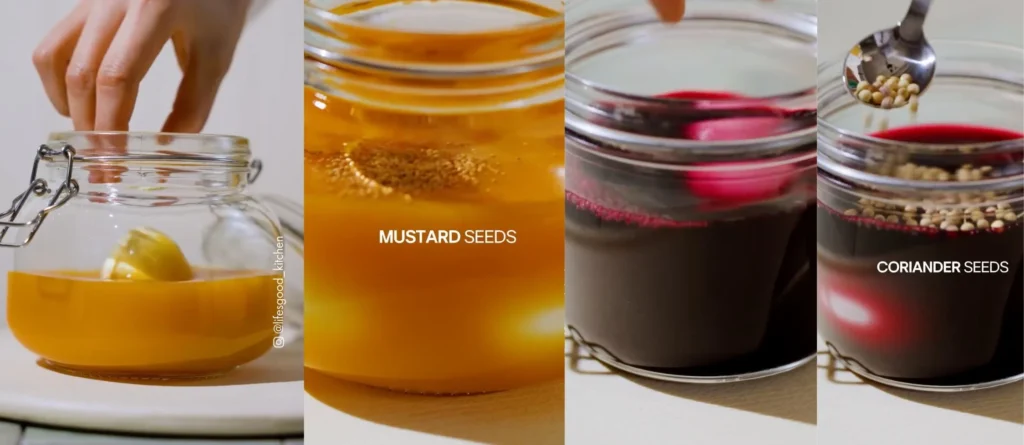
Place the peeled hard-boiled eggs into each jar. Pour the prepared pickling liquid over the eggs, making sure every egg is completely submerged in the brine.
If the eggs float slightly, place a small piece of parchment paper or a clean small zip lock bag filled with water directly on the surface of the brine to weigh the eggs down and keep them fully submerged throughout the soaking period.
Step 6 Refrigerate for at least half a day
Seal the jars with lids and place in the refrigerator for a minimum of 12 hours half a day. For the deepest, most saturated color penetration and the most fully developed pickling flavor, soak for 24 to 48 hours.
The longer the eggs soak, the more thoroughly the color and flavor penetrate through the egg white.
Check the color development at 12 hours, 24 hours, and 48 hours to see how the color deepens over time it is genuinely fascinating to watch the transformation happen.
Step 7 Serve your rainbow
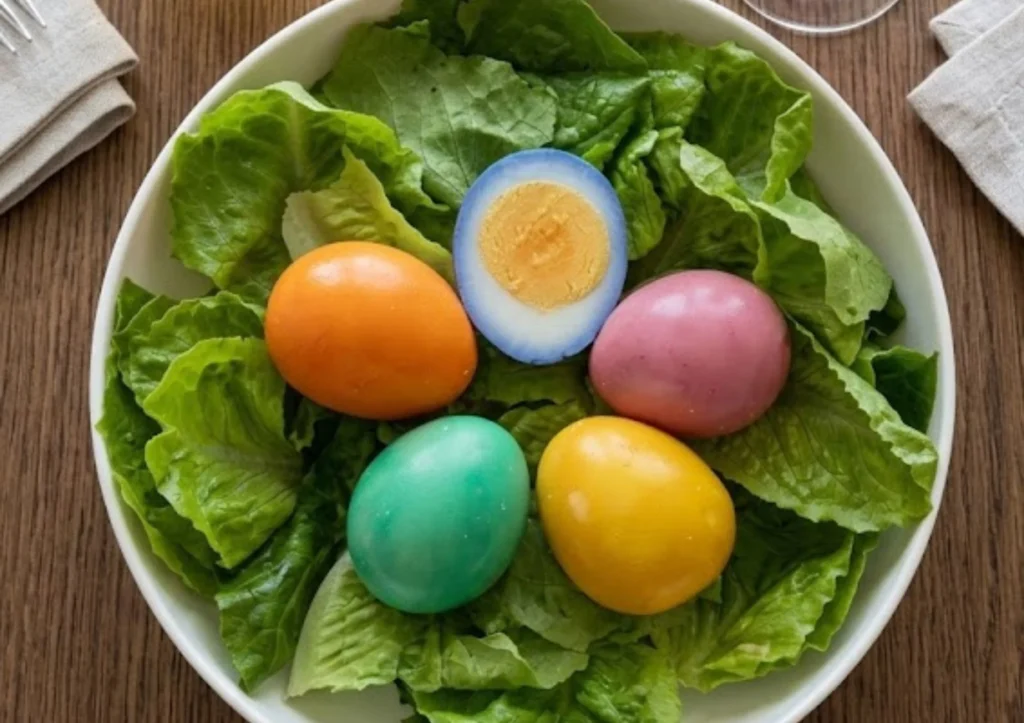
Remove the eggs from their jars and slice in half to reveal the color gradient from the deeply stained exterior to the clean white interior around the bright yellow yolk.
Arrange on a serving plate in rainbow order for the most visually striking presentation. Season with flaky sea salt and a light drizzle of good olive oil for a simple but beautiful presentation that lets the natural colors be the star.
Tips for Perfect Rainbow Pickled Eggs Every Time
Make sure eggs are completely submerged throughout the entire soaking period — any surface exposed to air will not color evenly and will have pale, patchy spots.
Peel eggs carefully and keep the white surface as smooth as possible — rough spots and tears absorb color unevenly and create visual imperfections in the finished egg.
Use white vinegar for the cleanest, most vivid color results — apple cider vinegar adds warmth and complexity to the flavor but slightly mutes the natural vegetable colors.
The beet and turmeric colorants produce the most vibrant, most saturated results and are the easiest and most reliable for beginners — start with these two for your first batch.
Turmeric will stain everything it touches — use a dedicated bowl or jar, wear gloves when handling turmeric brine, and rinse surfaces immediately after contact to prevent permanent staining.
Always store pickled eggs refrigerated — never at room temperature — and consume within one week for food safety and best flavor.
Serving Ideas
Slice the rainbow pickled eggs in half and arrange on a platter in order of color for a genuinely spectacular appetizer or brunch presentation.
Serve alongside a simple green salad, charcuterie, or as part of a protein forward snack spread. Use sliced pickled eggs as a colorful topping for grain bowls, ramen, or avocado toast. Pack whole pickled eggs in meal prep containers for high protein, ready to eat snacks throughout the week.
For a party presentation, arrange all colors on a slate board or wooden serving platter with small herb garnishes between the colors for a rainbow effect that photographs beautifully and consistently draws compliments.
Properly pickled and stored eggs keep well in the refrigerator for up to one week when stored in sealed glass jars fully submerged in their pickling brine. For best texture and flavor, consume within the first 3 to 5 days. Always refrigerate never store pickled eggs at room temperature.
The most common causes are insufficient natural colorant concentration in the brine increase the amount of vegetable juice or turmeric powder and soak longer or eggs that are not fully submerged. Make sure every egg is completely covered by the brine and that the jar lid is sealed to prevent evaporation reducing the brine level during the soak.
Yes the pickling brine can be used for one additional batch of eggs after the first. The color and flavor will be slightly less intense in the second batch as the brine has been partially diluted and the colorant concentration reduced. Add a small additional amount of natural juice or turmeric to refresh the color before the second use.
The pickling brine colors the egg white from the outside in the yolk is protected by the egg white and remains its natural yellow color in most preparations. In eggs soaked for very extended periods beyond 48 to 72 hours very faint color can begin to reach the outer layer of the yolk, but the yolk center remains yellow throughout any standard soaking time.
Store-bought beet juice works perfectly and saves significant preparation time look for pure, 100% beet juice with no added ingredients at Whole Foods, Trader Joe’s, Walmart, or any grocery store that carries cold-pressed juices. The color intensity from store-bought beet juice is comparable to fresh-juiced beets and produces equally vibrant magenta-pink pickled eggs.
Always consult a healthcare provider for specific dietary guidance during pregnancy. Generally, fully cooked hard-boiled eggs that have been properly refrigerated throughout the pickling process are considered safe, but the vinegar content and refrigerator storage are important safety factors never pickle or store eggs at room temperature, and always make sure the eggs are hard-boiled completely through with fully set yolks before pickling.

Rainbow Egg Pickles The Naturally Colored, Tangy, Beautiful Pickled Eggs
Ingredients
- Base Pickling Formula per jar/color
- 4-6 hard-boiled eggs peeled
- ½ cup white vinegar or apple cider vinegar
- ½ cup water
- 1 tablespoon granulated white sugar
- 1 teaspoon salt
- Whole spices black peppercorns, cloves, coriander seeds, bay leaves, mustard seeds, or garlic cloves
- Natural Colorants choose 4-5 colors for rainbow effect
- Deep Pink-Magenta: Fresh beet juice from 1-2 medium beets or store-bought
- Golden Yellow: 1-2 teaspoons ground turmeric powder
- Purple-Blue: Purple cabbage juice ¼ small head, blended with water and strained
- Soft Green: Fresh spinach juice or 1 teaspoon matcha powder
- Red-Orange: Carrot juice or red onion with beet juice
Instructions
- Step 1: Prepare Hard-Boiled Eggs
- Place eggs in single layer in saucepan
- Cover with cold water by 1 inch
- Bring to full boil over high heat
- Reduce to gentle boil and cook 8-10 minutes
- Transfer immediately to ice water bath
- Cool for 15 minutes
- Peel carefully, keeping whites smooth
- Step 2: Make Natural Colorants
- Beet juice: Juice fresh beets or use store-bought, strain
- Purple cabbage: Chop ¼ head, blend with ½ cup water, strain
- Spinach: Blend handful with ½ cup water, strain
- Turmeric: Add powder directly to pickling liquid
- Matcha: Dissolve powder in pickling liquid
- Step 3: Mix Pickling Liquid
- Combine in each jar:
- ½ cup natural juice or turmeric water
- ½ cup white vinegar
- ¼ cup water
- 1 tablespoon sugar
- 1 teaspoon salt
- Whisk until sugar and salt dissolve completely
- Taste and adjust for tangy-sweet balance
- Step 4: Add Spices
- Place whole spices in bottom of clean glass jars
- Black peppercorns work with all colors
- Cloves pair well with beet eggs
- Garlic and coriander work with turmeric
- Red pepper flakes complement purple cabbage
- Bay leaves add herbal notes to any color
- Step 5: Assemble Jars
- Place peeled eggs in jars
- Pour pickling liquid over eggs
- Make sure eggs are completely submerged
- If eggs float, weigh down with parchment paper or small water-filled bag
- Step 6: Refrigerate
- Seal jars with lids
- Refrigerate minimum 12 hours for light color
- For deep color, refrigerate 24-48 hours
- Check color development at intervals
- Longer soaking = deeper color and flavor
- Step 7: Serve
- Remove eggs from jars
- Slice in half to show color gradient
- Arrange in rainbow order on serving plate
- Season with flaky sea salt
- Drizzle with olive oil if desired
Storage Instructions
- Store in refrigerator at all times
- Never leave at room temperature
- Consume within 1 week for best quality and safety
- Keep eggs submerged in brine until serving
Tips for Success
- Completely submerge eggs throughout soaking to prevent patchy color
- Peel eggs carefully for smooth surface and even color absorption
- Use white vinegar for brightest, most vivid colors
- Beet and turmeric produce most vibrant results
- Turmeric stains surfaces – use gloves and clean immediately
- Always refrigerate pickled eggs for food safety
Serving Suggestions
- Slice and arrange on platter in rainbow order for appetizers
- Serve with green salad or charcuterie board
- Use as colorful topping for grain bowls or ramen
- Add to avocado toast for protein boost
- Pack whole eggs for meal prep snacks
- Display on slate board or wooden platter for parties
Flavor Profiles by Color
- Beet (Magenta): Subtly earthy, slightly sweet
- Turmeric (Golden): Warm, slightly peppery, aromatic
- Purple Cabbage (Violet): Mild, tangy, color changes with pH
- Spinach/Matcha (Green): Fresh, grassy, herbal
- Carrot (Orange): Sweet, mild vegetable flavor


