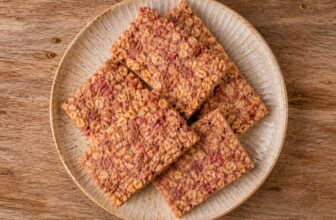
There are meals that look impressive on the table. There are meals that are genuinely good for you. And then in that wonderful overlap where both things happen at once there are these High Protein Red Cabbage Rolls.
Vibrant purple red cabbage leaves wrapped around a deeply savory, ginger forward filling of soy granules, carrots, bell peppers, and green onions, seasoned with soy sauce and packed with plant-based protein finished with sesame seeds, fresh parsley, chili flakes, and a drizzle of sweet chili sauce that ties everything together into one of the most satisfying, most visually striking plant based meals you can put on a dinner table in under 45 minutes.
These are not your grandmother’s bland stuffed cabbage rolls. The filling is bold, fragrant, and genuinely interesting the ginger and garlic providing a warm, aromatic backbone, the soy granules delivering a meaty, satisfying texture that is convincing enough to please meat eaters and filling enough to satisfy anyone looking for a genuinely high protein plant-based dinner.
The red cabbage leaves add a natural, dramatic color that makes this dish look almost too beautiful to eat and yet eating it is the entire point.
Why Soy Granules Are the Protein Hero of This Recipe
Most Americans are familiar with tofu and tempeh as plant based protein sources, but soy granules also called textured vegetable protein (TVP) or textured soy protein are significantly less familiar despite being one of the most nutritionally impressive and culinarily versatile plant proteins available.
Soy granules are made from defatted soy flour that has been processed and dried into small, irregular granules.
Dry, they look like coarse breadcrumbs. Soaked in hot vegetable stock, they absorb liquid and expand into a texture that is remarkably similar to ground meat chewy, slightly dense, and with a neutral enough flavor that it takes on the seasoning of whatever it is cooked with.
A 100 gram serving of dry soy granules delivers approximately 50 grams of protein making it one of the most protein dense foods available at any price point.
For this recipe, soaking the soy granules in hot vegetable stock rather than plain water does two important things.
It fully hydrates the granules to the right texture, and it infuses them with savory, vegetable flavor before they even hit the pan.
By the time the soaked granules are stir-fried with ginger, garlic, carrots, peppers, and green onions and finished with soy sauce, they are deeply flavored, satisfyingly chewy, and utterly convincing as a meat-free filling.
Soy granules are available at Whole Foods, natural food stores, and online look for them under the names TVP (textured vegetable protein), soy granules, or soy mince. Bob’s Red Mill is a widely available American brand.
Why Red Cabbage Instead of Green
Traditional stuffed cabbage rolls use green cabbage and for good reason. Green cabbage leaves are large, pliable, and easy to separate and roll.
But red cabbage brings two significant additional advantages that make it worth the slight extra effort to work with.
First, the visual impact is extraordinary. The deep purple-red of the cooked cabbage leaves against the golden brown filling, the white sesame seeds, and the green parsley creates a genuinely stunning color contrast that makes this dish look restaurant quality.
Second, red cabbage is nutritionally superior to green cabbage it contains significantly higher levels of antioxidants, particularly anthocyanins, the same pigments responsible for its vivid color, which are associated with anti inflammatory and heart-protective benefits.
The slight firmness of red cabbage after brief cooking is actually an advantage in this recipe it holds its shape better during rolling and does not become limp or waterlogged as quickly as green cabbage can.
Ingredients
For the Cabbage Rolls (makes 10 rolls):
- 1 large red cabbage
- 1.5 inch piece fresh ginger, peeled and finely grated or minced (approximately 4 cm)
- 3 cloves fresh garlic, minced
- 2 medium carrots, peeled and finely diced or grated
- 2 bell peppers, any color, finely diced (red and yellow produce the most colorful filling)
- 2 green onions (scallions), thinly sliced
- 3.5 oz dry soy granules — also called TVP or textured vegetable protein (approximately 100 grams — Bob’s Red Mill is a widely available American brand)
- Hot vegetable stock for soaking (enough to cover the soy granules — approximately 1 cup)
- 3.5 tablespoons soy sauce (approximately 50 ml — Kikkoman low-sodium recommended)
- Neutral cooking oil for stir-frying
For Toppings:
- White sesame seeds
- Fresh flat-leaf parsley, roughly chopped
- Red chili flakes
For the Dipping Sauce:
- Sweet chili sauce (Mae Ploy or Frank’s Sweet Chili Sauce are widely available at most American supermarkets)
Step by Step Instructions
Step 1 Prepare the cabbage leaves
Using a sharp knife, cut the hard, woody stalk off the base of the red cabbage removing the core makes it significantly easier to separate the leaves after cooking.
Place the whole cored cabbage in a large pot of boiling water. Cook for approximately 5 minutes until the outer leaves begin to loosen and separate from the head.
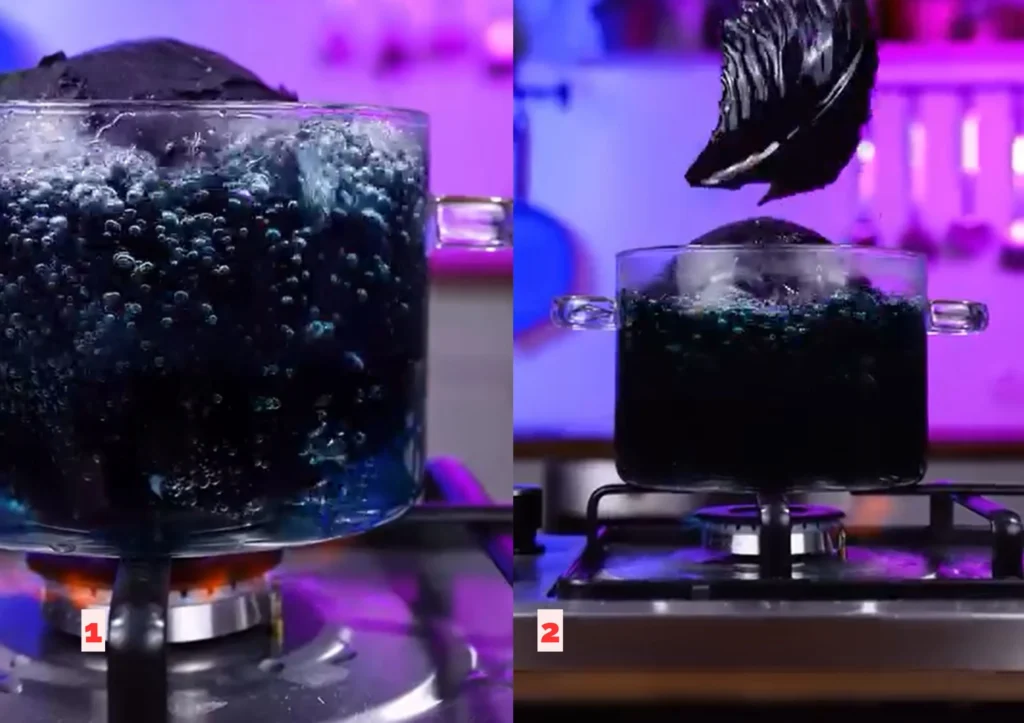
Remove the cabbage from the water carefully and peel away the loosened outer leaves one by one they should release easily and hold their shape without tearing.
Return the remaining cabbage head to the boiling water if the inner leaves need more cooking time to loosen. You need 10 large, intact leaves for this recipe.
Set the separated leaves aside on a clean surface and allow to cool until comfortable to handle.
Step 2 Soak the soy granules
Place the dry soy granules in a heatproof bowl. Pour enough hot vegetable stock over them to fully submerge approximately 1 cup.
Allow to soak for 10 minutes until the granules have absorbed the stock, swelled, and become soft and slightly chewy in texture. After soaking, drain any excess liquid through a fine mesh strainer and set the hydrated granules aside.
Step 3 Stir fry the filling
Heat a thin layer of neutral cooking oil in a large skillet or wok over medium high heat. Add the minced garlic and grated ginger first stir-fry for 30 to 45 seconds until fragrant and just beginning to turn golden.
Add the finely diced carrots and bell peppers and cook for 2 to 3 minutes, stirring frequently, until the vegetables have softened slightly.
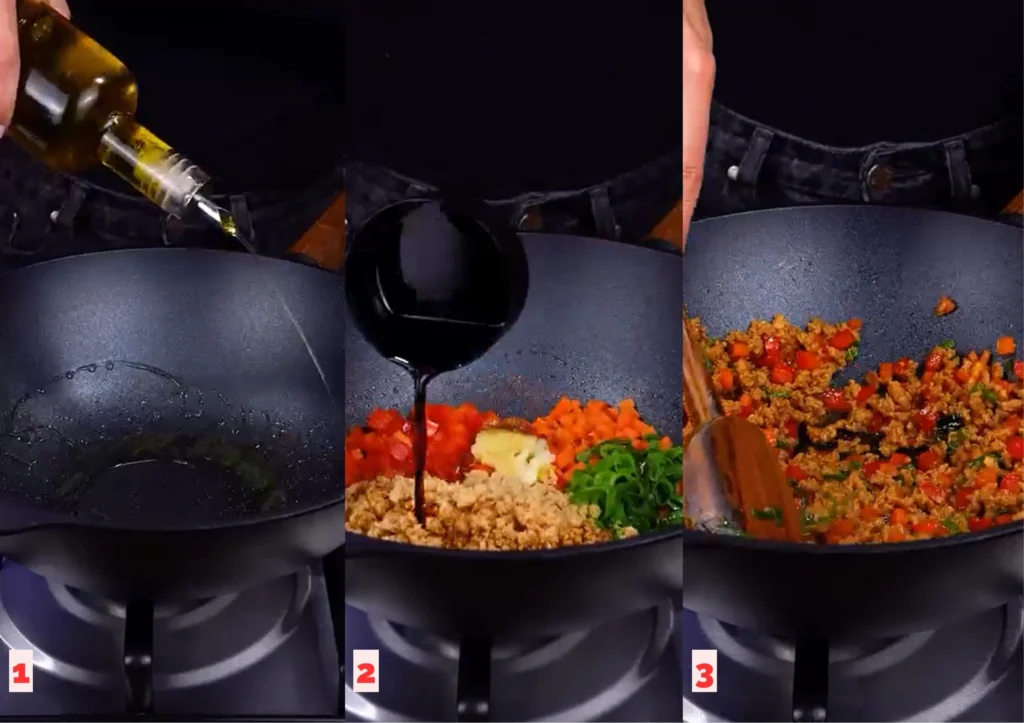
Add the sliced green onions and the drained soaked soy granules. Stir everything together and cook for another 2 minutes until the filling is heated through and the flavors have started to come together.
Pour the soy sauce over the filling and stir to combine the soy sauce will deglaze any caramelized bits from the bottom of the pan and create a savory, glossy coating on the filling.
Cook for a final 1 to 2 minutes until any excess liquid has evaporated and the filling is fragrant and well seasoned. Remove from heat and allow to cool slightly before rolling.
Step 4 Fill and roll the cabbage leaves
Lay a prepared red cabbage leaf flat on a clean surface with the concave side facing upward. Place a generous spoonful of the filling approximately 3 to 4 tablespoons near the base of the leaf.
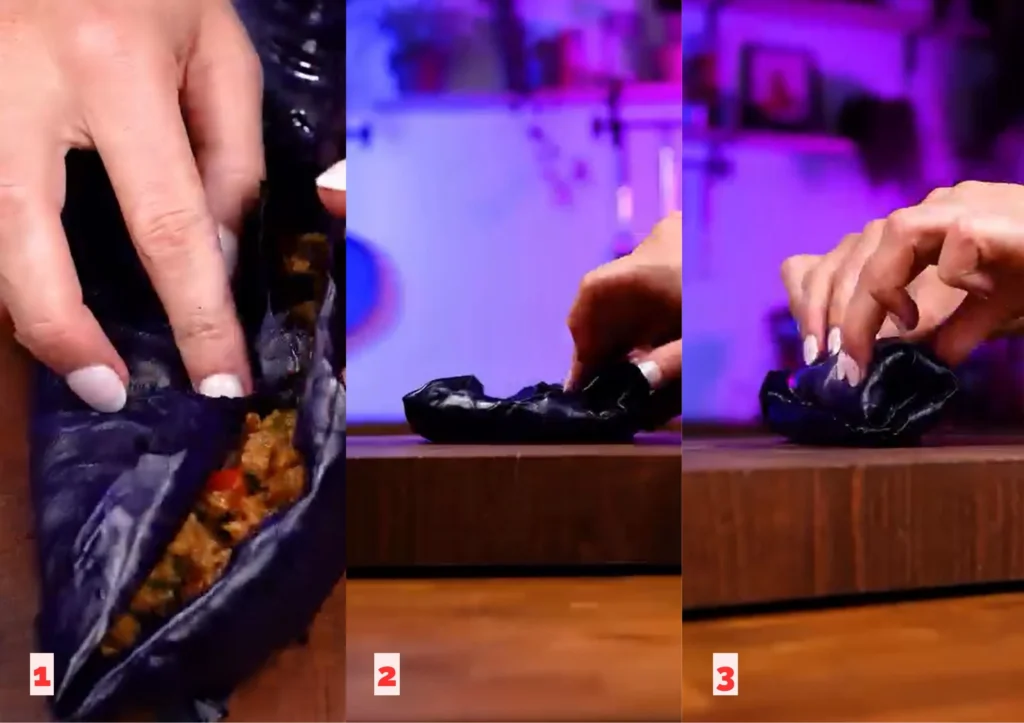
Fold the base of the leaf up and over the filling. Fold both side edges inward toward the center, pressing gently to hold the shape.
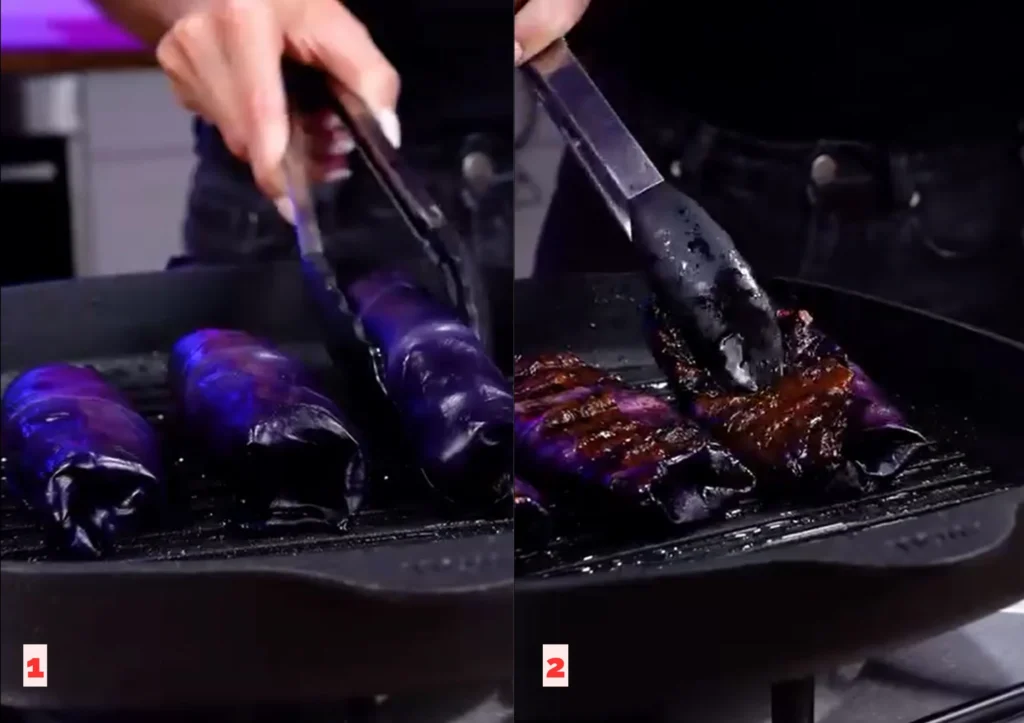
Roll the leaf forward firmly, tucking the filling in as you go, until you reach the top of the leaf and have a compact, tightly rolled parcel. Lightly roast these rolls on the pan. Place seam-side down on a serving plate. Repeat with all remaining leaves and filling.
Step 5 Add toppings and serve
Arrange the finished rolls on a serving plate or platter. Scatter white sesame seeds generously over the tops.
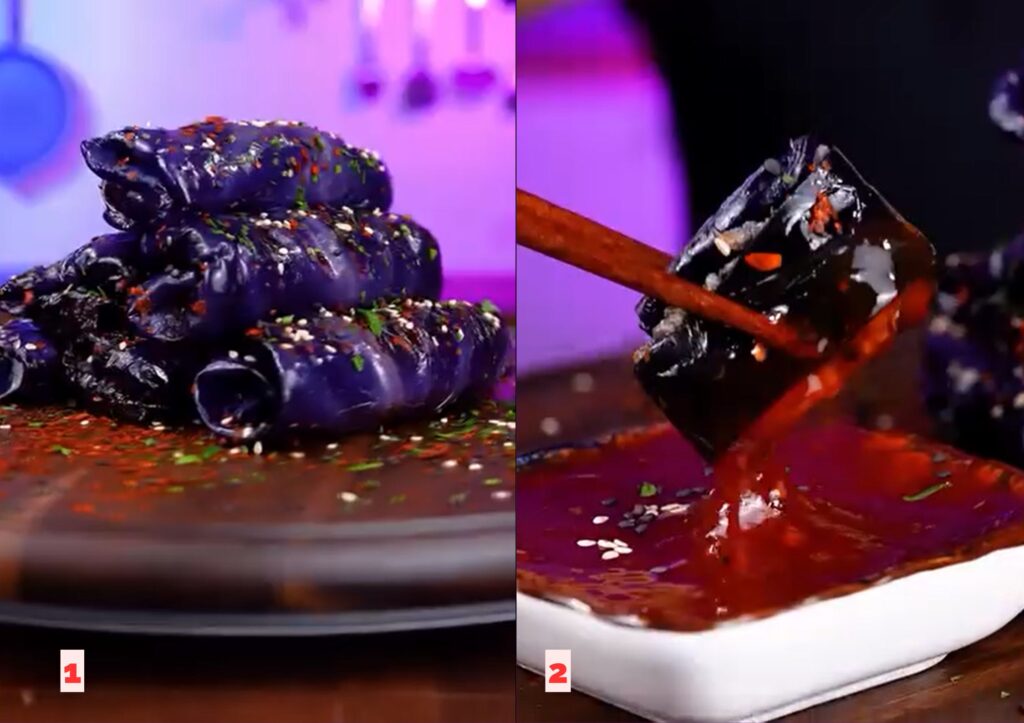
Add a generous amount of roughly chopped fresh flat leaf parsley. Finish with a pinch of red chili flakes for color and heat. Serve immediately with sweet chili dipping sauce alongside.
Tips for Perfect Red Cabbage Rolls Every Time
Do not overcook the cabbage during the initial boiling — 5 minutes is enough to loosen the outer leaves while keeping them firm enough to roll without tearing. Overcooked leaves become too limp and fragile to hold the filling during rolling.
Drain the soy granules thoroughly after soaking — excess moisture in the filling makes the cabbage rolls wet and difficult to eat and can cause the leaves to become soggy.
Allow the filling to cool slightly before rolling — hot filling makes the cabbage leaves even more pliable and difficult to work with, and the steam can soften the leaves too much to hold their shape.
Roll firmly and tightly — a loose roll falls apart when picked up or dipped. Apply consistent pressure throughout the rolling process.
Place finished rolls seam-side down immediately — this prevents them from unrolling before serving.
Taste and adjust the filling seasoning before rolling — the soy sauce level should be prominent and savory. Add more soy sauce if the filling tastes flat.
Serving Ideas
Arrange these rolls on a large, flat serving plate in a single layer for maximum visual impact the deep purple red of the cabbage against the white sesame seeds and green parsley is genuinely beautiful.
Place the sweet chili dipping sauce in a small bowl alongside for individual dipping. Serve as a main course with steamed jasmine rice or glass noodles on the side for a complete, satisfying meal.
These also work beautifully as an appetizer at dinner parties slice each roll in half diagonally before serving to reveal the colorful filling inside and make them easier to eat in one or two bites.
For meal prep, prepare a full batch, store in an airtight container in the refrigerator for up to 3 days, and reheat gently in a covered skillet with a splash of water or enjoy cold as a packed lunch.
High Protein Red Cabbage Rolls The Stunning, Plant-Based Stuffed Cabbage Recipe
Ingredients
- For the Cabbage Rolls:
- 1 large red cabbage core removed
- 1.5 inch piece fresh ginger peeled and finely grated or minced approximately 4 cm
- 3 cloves fresh garlic minced
- 2 medium carrots peeled and finely diced or grated
- 2 bell peppers any color finely diced red and yellow produce most colorful filling
- 2 green onions scallions thinly sliced
- 3.5 oz dry soy granules — also called TVP or textured vegetable protein approximately 100 grams — Bob’s Red Mill widely available American brand
- Approximately 1 cup hot vegetable stock for soaking soy granules — enough to fully submerge
- 3.5 tablespoons soy sauce approximately 50 ml — Kikkoman low-sodium recommended
- Neutral cooking oil for stir-frying
- For Toppings:
- White sesame seeds
- Fresh flat-leaf parsley roughly chopped
- Red chili flakes
- For the Dipping Sauce:
- Sweet chili sauce Mae Ploy or Frank’s Sweet Chili Sauce — available at most American supermarkets
Instructions
- Using a sharp knife cut the hard woody stalk and core off the base of the red cabbage — removing the core makes separating leaves significantly easier after cooking.
- Place the whole cored cabbage in a large pot of boiling water and cook for approximately 5 minutes until outer leaves begin to loosen and separate — do not overcook as leaves become too limp and fragile to roll.
- Remove cabbage carefully from water and peel away loosened outer leaves one by one — they should release easily and hold their shape without tearing — return remaining cabbage head to boiling water if inner leaves need more time to loosen.
- Set 10 large intact separated leaves aside on a clean surface and allow to cool until comfortable to handle.
- Place dry soy granules in a heatproof bowl and pour enough hot vegetable stock over them to fully submerge — approximately 1 cup.
- Allow soy granules to soak for 10 minutes until they have absorbed the stock swelled and become soft and slightly chewy in texture.
- Drain any excess liquid through a fine-mesh strainer and set hydrated granules aside.
- Heat a thin layer of neutral cooking oil in a large skillet or wok over medium-high heat.
- Add minced garlic and grated ginger and stir-fry for 30–45 seconds until fragrant and just beginning to turn golden — watch carefully as garlic burns quickly.
- Add finely diced carrots and bell peppers and cook for 2–3 minutes stirring frequently until vegetables have softened slightly.
- Add sliced green onions and drained soaked soy granules — stir everything together and cook for another 2 minutes until filling is heated through and flavors have started to come together.
- Pour soy sauce over the filling and stir to combine — soy sauce will deglaze any caramelized bits from the bottom of the pan and create a savory glossy coating on the filling.
- Cook for a final 1–2 minutes until any excess liquid has evaporated and filling is fragrant and well-seasoned.
- Taste filling and adjust soy sauce seasoning if needed — filling should be prominently savory.
- Remove from heat and allow filling to cool slightly before rolling — hot filling makes cabbage leaves too pliable and difficult to work with.
- Lay one prepared red cabbage leaf flat on a clean surface with concave side facing upward.
- Place approximately 3–4 tablespoons of filling near the base of the leaf — do not overfill.
- Fold the base of the leaf up and over the filling.
- Fold both side edges inward toward the center pressing gently to hold shape.
- Roll the leaf forward firmly tucking filling in as you go until reaching the top of the leaf — roll should be compact and tight.
- Place finished roll seam-side down immediately on serving plate to prevent unrolling.
- Repeat with all remaining leaves and filling until all 10 rolls are assembled.
- Scatter white sesame seeds generously over the tops of all finished rolls.
- Add roughly chopped fresh flat-leaf parsley over the rolls.
- Finish with a pinch of red chili flakes for color and heat.
- Serve immediately with sweet chili dipping sauce alongside.
Notes
Do not overcook cabbage during initial boiling — 5 minutes is enough to loosen outer leaves while keeping them firm enough to roll without tearing.
Drain soy granules thoroughly after soaking — excess moisture in filling makes rolls wet and causes leaves to become soggy.
Allow filling to cool slightly before rolling — hot filling makes cabbage leaves too soft to hold their shape properly during rolling.
Roll firmly and tightly throughout the entire rolling process — a loose roll falls apart when picked up or dipped.
Place finished rolls seam-side down immediately after rolling to prevent unrolling before serving.
Taste and adjust filling seasoning before rolling — soy sauce level should be prominent and savory throughout.
For gluten-free version substitute soy sauce with tamari or coconut aminos in same quantity and confirm vegetable stock is certified gluten-free.
Soy granule substitutes in equal amounts: finely crumbled firm tofu, cooked and drained brown or green lentils, cooked quinoa mixed with finely chopped vegetables, or cooked ground turkey or chicken for non-vegan version.
Green cabbage substitutes for red cabbage — more pliable and easier to separate with minimal flavor difference though significantly less visual impact.
For appetizer presentation slice each roll in half diagonally before serving to reveal colorful filling inside and make easier to eat in one or two bites.
Filling can be made up to 48 hours ahead and stored in airtight container in refrigerator.
Cabbage leaves can be cooked and separated up to 24 hours ahead and stored wrapped in damp paper towels in refrigerator.
Store finished rolls in airtight container in refrigerator for up to 3 days.
Reheat gently in covered skillet over medium-low heat with small splash of water for 3–4 minutes or microwave covered for 1–2 minutes.
These rolls taste good cold directly from refrigerator making them an excellent packed lunch option.
For meal prep prepare full batch store in airtight container and reheat as needed throughout the week.
Textured vegetable protein, also called TVP or soy granules, is available at Whole Foods in the bulk bins or packaged section, at natural food stores, at some Walmart and Target locations, and readily on Amazon. Bob’s Red Mill is the most widely available American brand and is stocked at most major grocery chains. It is also available at many Indian grocery stores under the name soy chunks or soy granules.
Yes green cabbage leaves are more widely available, slightly more pliable, and easier to separate. They produce cabbage rolls with a softer texture after cooking and a more traditional stuffed cabbage appearance. The flavor difference is minimal. The visual impact is significantly less dramatic than red cabbage, but the dish is equally delicious.
Yes finely crumbled firm tofu works well and produces a softer, more delicate filling. Cooked and drained brown or green lentils are an excellent high-protein substitute with an earthier flavor. Cooked quinoa mixed with finely chopped vegetables produces a lighter, less meaty filling. For a non-vegan version, cooked ground turkey or ground chicken can be substituted in equal amounts.
Yes the filling can be made up to 48 hours ahead and stored in an airtight container in the refrigerator. The cabbage leaves can be cooked and separated up to 24 hours ahead and stored wrapped in damp paper towels in the refrigerator. Assemble and roll just before serving for the freshest appearance and texture, or assemble up to a few hours ahead and refrigerate covered until ready to serve.
The soy granules and most other filling ingredients are naturally gluten-free, but soy sauce contains wheat. To make these completely gluten-free, substitute the soy sauce with tamari or coconut aminos in the same quantity both produce an identical flavor result without any gluten. Also confirm that your vegetable stock is certified gluten-free.
Store finished rolls in an airtight container in the refrigerator for up to 3 days. Reheat gently in a covered skillet over medium-low heat with a small splash of water for 3 to 4 minutes until warmed through, or microwave covered for 1 to 2 minutes. These rolls also taste good cold directly from the refrigerator, making them an excellent packed lunch option.