If you’re looking for a recipe that combines the soul warming comfort of a fluffy baked potato with the satisfying chew of a freshly griddled flatbread, look no further.
This Cheesy Potato Flatbread is a culinary revelation that bridges the gap between a side dish and a main event.
Unlike traditional yeast based breads that require hours of proofing and kneading, this potato-based dough is fast, forgiving, and incredibly versatile. By using mashed potatoes as the primary “flour,” you create a crumb that is naturally more moist and tender than any wheat based bread could ever hope to be.
When you add a generous helping of gooey mozzarella and a hint of garlic, you get a flatbread that is essentially a “stuffed baked potato” in a portable, foldable form.
The “Potato Dough” Difference
Why use potatoes in bread? It’s all about the starch.
The Moisture Lock: Potatoes are packed with water and starch, which keeps the dough hydrated. This means your flatbread stays soft and pliable even after it cools down no more “cardboard” leftovers!
The Texture: The addition of an egg and a little bit of flour turns the mash into a workable dough that is surprisingly light.
The Flavor Profile: While wheat flour is neutral, potato dough has a natural, earthy sweetness that is amplified when it hits a hot, buttered skillet.
Ingredients
This recipe makes 8 large flatbreads, perfect for a family dinner or meal prep for the week.
Potatoes: 6 medium-to-large potatoes (Russet or Yukon Gold work best for their starch content).
Mozzarella Cheese: 1 cup, shredded (for that classic “cheese pull”).
All-Purpose Flour: 1 ½ cups (adjust slightly if your potatoes are very moist).
Egg: 1 large (acts as the binder).
Fresh Parsley: A pinch, finely chopped (adds a pop of color and freshness).
Salt: 1 teaspoon.
Garlic Powder: 1 teaspoon (for that irresistible savory aroma).
Butter: For greasing the pan and brushing the finished stack.
Step by Step Cooking Method
1. The Perfect Mash
Start by boiling your potatoes in salted water until they are fork-tender. Peel them while they are still warm (be careful of the steam!) and place them in a large mixing bowl. Mash them thoroughly until no lumps remain.
Pro Tip: For an even silkier dough, use a potato ricer. The smoother the mash, the easier the dough will be to roll out.
2. Build the Dough
While the potatoes are still warm but not scorching, add the shredded mozzarella, egg, chopped parsley, salt, and garlic powder. Gradually incorporate the 1 ½ cups of flour.
3. The Knead
Knead the mixture by hand until it forms a soft, cohesive ball of dough. It should be slightly tacky but should not stick aggressively to your hands. If it’s too sticky, add another tablespoon of flour.
4. Portion and Roll
Divide your dough into 8 equal pieces. Roll each piece into a smooth ball. Dust your countertop with a little extra flour and use a rolling pin to flatten each ball into a thin, even circle (about 1/4 inch thick).
5. The Griddle
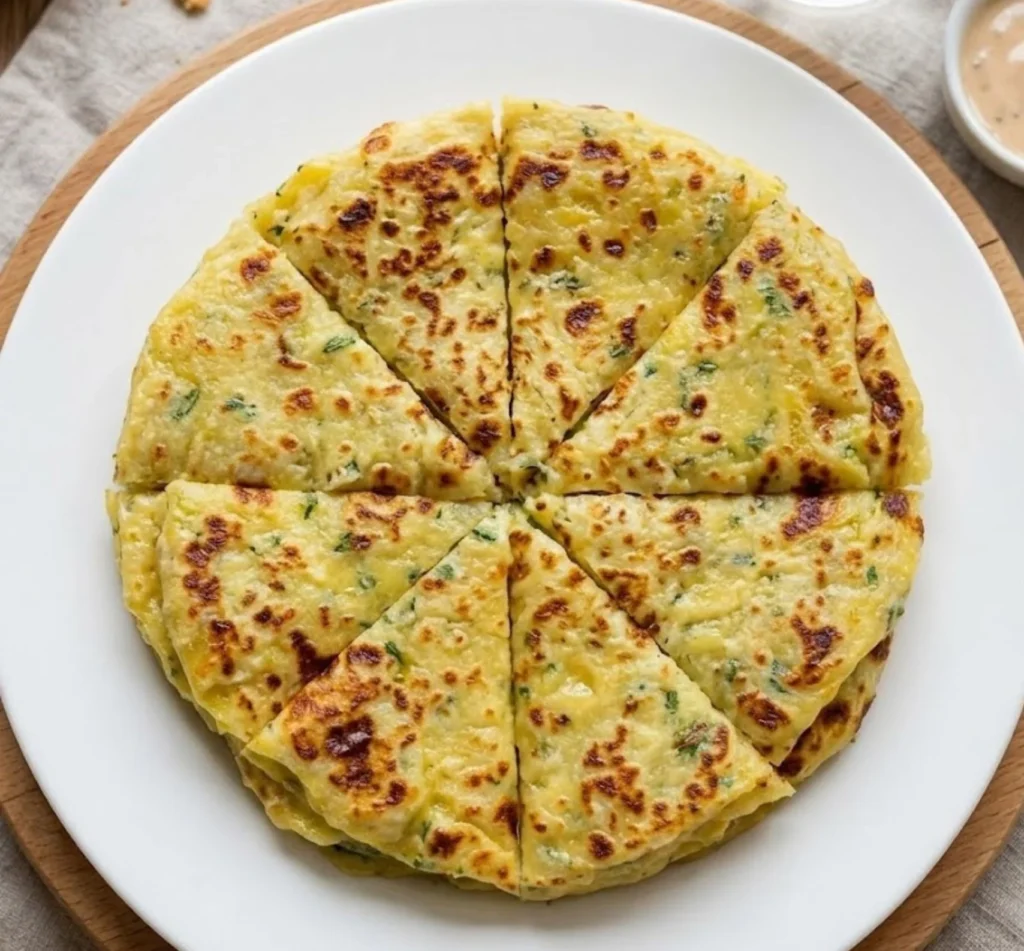
Heat a non-stick skillet or a cast-iron griddle over medium heat. You don’t need much oil; a light brush of butter is enough. Cook each flatbread for about 2–3 minutes per side. You are looking for beautiful golden-brown “leopard spots” to form.
6. The Stack & Serve
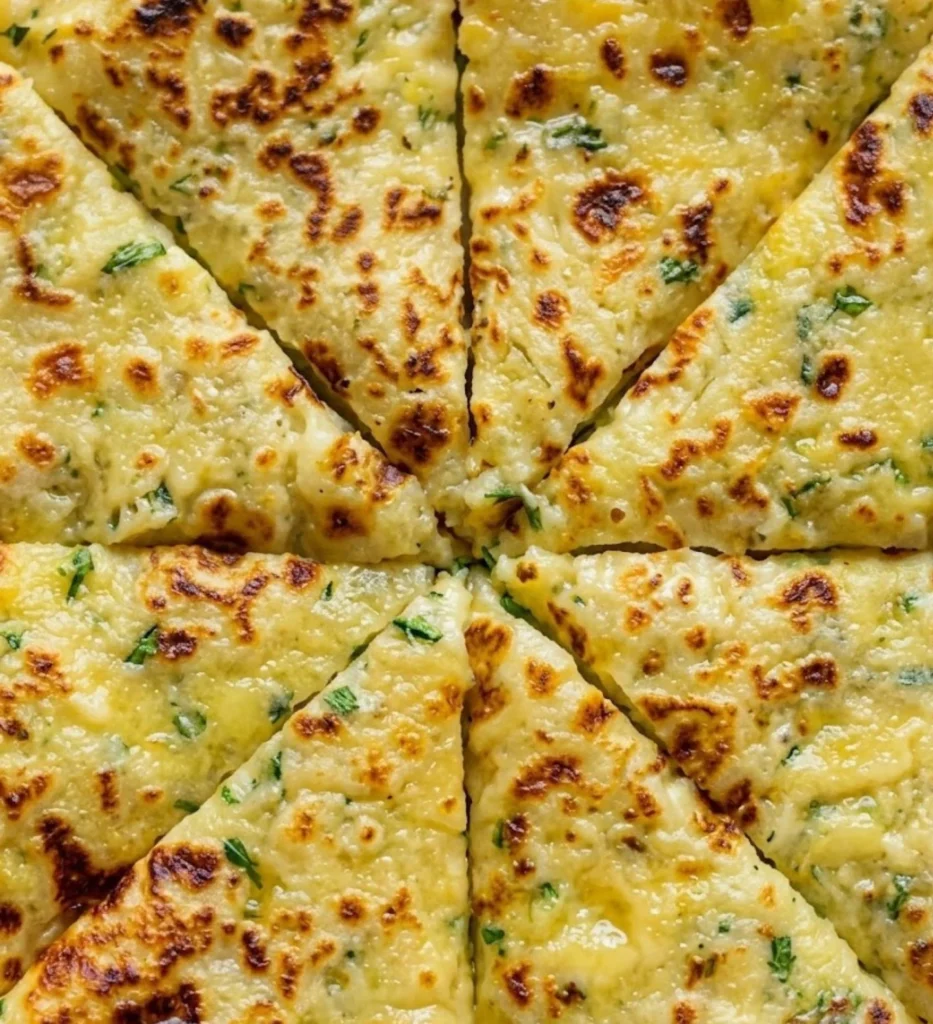
As each flatbread comes off the pan, brush it generously with butter and stack it on a plate. This “stacking” method allows the steam to keep the bread ultra-soft. Once you’ve finished the stack, cut them into wedges like a pizza and serve immediately.
Master the Art of Soft & Cheesy Potato Flatbread
Ingredients
- The Dough Base:
- 6 Medium Potatoes Boiled and peeled
- 1 Large Egg Room temperature
- 1 ½ cups All-Purpose Flour plus extra for dusting
- Flavor & Texture:
- 1 cup Shredded Mozzarella Cheese
- 1 tsp Garlic Powder
- 1 tsp Salt
- A pinch of Fresh Parsley finely chopped
- For the Finish:
- 2 tbsp Butter Melted, for greasing and brushing
Instructions
- The Base Mash
- Process: Place boiled potatoes in a large bowl. Mash them until completely smooth and free of lumps.
- Flavor: Add the shredded mozzarella, garlic powder, salt, and fresh parsley to the warm mash.
- Form the Potato Dough
- Bind: Add the egg and gradually incorporate the flour.
- Knead: Knead by hand until a soft, cohesive dough forms. It should be pliable and hold together without being excessively sticky.
- Portion and Roll
- Divide: Cut the dough into 8 equal pieces and roll them into smooth balls.
- Flatten: On a floured surface, use a rolling pin to roll each ball into a thin circle (approx. 1/4 inch thick).
- The Pan-Sear
- Heat: Lightly grease a non-stick skillet or griddle with butter over medium heat.
- Cook: Fry each flatbread for 2–3 minutes per side.
- Identify: Look for golden-brown “leopard spots” to appear on both surfaces.
- Stack and Slice
- Layer: As they come off the heat, brush each piece with butter and stack them on top of each other.
- Serve: Cut the stack into wedges like a pizza and serve while the cheese inside is still melty.
Yes, but be careful! Leftover mash often contains butter, milk, or cream, which can make the dough too wet. If using leftovers, start with less flour and only add more as needed until the dough is workable.
Because potatoes do most of the heavy lifting here, you can easily substitute the all-purpose flour for a 1:1 gluten-free baking blend. The egg and the starch in the potatoes will provide enough structure to keep the bread from falling apart.
Potato dough is naturally stickier than flour dough. Keep your surface and your rolling pin well-floured. You can also try rolling the dough between two sheets of parchment paper if you’re having a lot of trouble.
These are best eaten fresh, but they store beautifully in a zip-top bag in the fridge for 3 days. To reheat, just pop them in a toaster or back on a dry skillet for 60 seconds.
Pro Tip
For the softest results, stack the hot flatbreads immediately. The steam trapped between the layers acts as a natural softener, ensuring the bread remains flexible and tender rather than crisping up like a cracker.