There is a specific magic to street style Chow Mein the kind served from a steaming wok at a corner stand, packed with crunchy vegetables, tangled noodles, and those savory, protein packed soy nuggets that soak up every drop of sauce.
While many of us try to recreate this at home, it often falls short. It’s either too mushy, lacking that “smoky” wok breath, or the soy nuggets feel like afterthoughts rather than the star of the show.
Today, we are diving deep into the secrets of making a High Protein Street-Style Veggie Chow Mein. This isn’t just a recipe; it’s a technique driven guide to ensuring your noodles stay springy, your vegetables remain crisp, and your soy nuggets are flavor bombs.
Whether you’re looking for a healthy weeknight dinner or a nostalgic street food fix.
The Protein Powerhouse: Why Soy Nuggets?
In a vegetarian diet, finding a “complete” protein source that actually tastes good in a stir fry can be a challenge.
Enter Soy Nuggets (often found as Soy Chunks or Textured Vegetable Protein in the US). These are nutritional titans:
High Protein Content: They contain roughly 52% protein that’s significantly more than milk or many legumes.
Complete Protein: They provide all nine essential amino acids required for muscle repair and growth.
The “Flavor Sponge” Effect: Unlike tofu, which can sometimes be bland if not pressed, soy nuggets have a porous structure that acts like a sponge for soy sauce, chili, and garlic.
Ingredients Guide
We’ve updated these names so you can easily find everything at your local Kroger, Whole Foods, or Safeway.
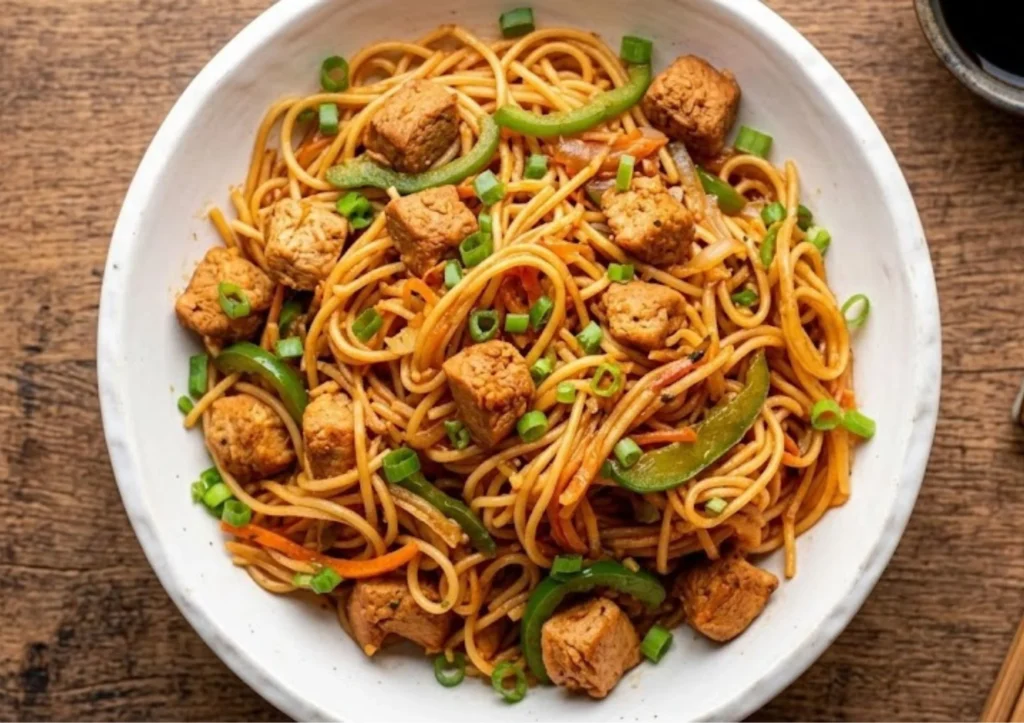
1. The Protein & Noodles:
Soy Nuggets (Soy Chunks): 1 cup (about 50-60g). Look for “Textured Soy Protein” in the health food or international aisle.
Dried Wheat Noodles: 7 oz (200g). Standard Lo Mein or Chow Mein noodles work perfectly.
Neutral Oil: 3 tablespoons (Avocado, Grapeseed, or Canola).
2. The Vegetable Medley (The “Matchstick” Cut):
Carrot: 1 medium, cut into thin matchsticks (Julienned).
Green Bell Pepper: 1 medium, thinly sliced.
Green Cabbage: 2 cups, shredded thinly.
Yellow Onion: 1 medium, thinly sliced.
Spring Onions (Scallions): 3-4, whites and greens separated and chopped.
Fresh Cilantro: A handful, finely chopped.
3. The Aromatic Base:
Garlic: 15-20 cloves, finely minced (don’t hold back!).
Fresh Ginger: 1-inch piece, finely minced.
Green Chilies: 2 (Serrano or Thai chilies), finely chopped.
4. The Street-Style Sauce:
Dark Soy Sauce: 1 teaspoon (for deep color and umami).
Red Chili Sauce: 2 teaspoons (Sriracha or a garlic-chili paste).
Tomato Ketchup: 2 teaspoons (the secret to that balanced street-style tang).
White Vinegar: 1/2 teaspoon.
White Pepper Powder: 1 pinch (essential for that authentic “zippy” flavor).
Garam Masala: 1 pinch (the “Desi” secret that adds warmth).
Salt: To taste.
Mastering the Technique: Step by Step
Step 1: The “Flavor-Infused” Soy Nugget Prep
Most people just boil soy nuggets in plain water. To make them truly “street-style,” we need to flavor the water:
Boil a pot of water and add a splash of soy sauce, a little minced ginger, green chili, and a pinch of salt and sugar.
Add the soy nuggets and boil for 5 minutes until they are doubled in size and soft.
Drain and rinse with cold water. Crucial step: Lightly squeeze the nuggets to remove excess water. This leaves space inside the nugget to soak up the actual stir-fry sauces later.
Step 2: The “Perfect Bite” Noodle Method
The biggest mistake in home Chow Mein is overcooking the noodles. Follow this “Rehydration Method”:
Bring a large pot of water to a rolling boil. Add a large pinch of salt.
Add the noodles. Stir for 1-2 minutes just until they lose their rigid shape and untangle.
Turn off the heat immediately. Cover the pot with a lid and let the noodles sit in the hot water for 3-4 minutes.
Test them: they should have a “springy” snap and a slight bite (al dente).
Drain and rinse with cold water to stop the cooking. Toss with 1 teaspoon of oil to prevent sticking.
Step 3: The High-Heat Wok Toss
In street cooking, everything happens fast and on high heat.
Heat a wok or large heavy skillet until it’s smoking hot. Add the oil.
Throw in the minced ginger, garlic, and green chilies. Sauté for only 30 seconds you want them fragrant, not burnt.
Add the sliced onions and sauté until they just start to soften.
Add the carrots, cabbage, and bell peppers. Stir-fry on high heat for 60-90 seconds. You want them to “blister” but stay crunchy.
Add the prepared soy nuggets and toss for another minute.
Step 4: The Sauce & Finish
Add the dark soy sauce, chili sauce, ketchup, vinegar, white pepper, and salt.
Add that secret pinch of Garam Masala.
Toss in the cooked noodles, the whites of the spring onions, and the fresh cilantro.
Using tongs or two spatulas, toss everything vigorously on high heat for 2 minutes. The sauces should coat the noodles evenly, and the soy nuggets should look juicy and dark.
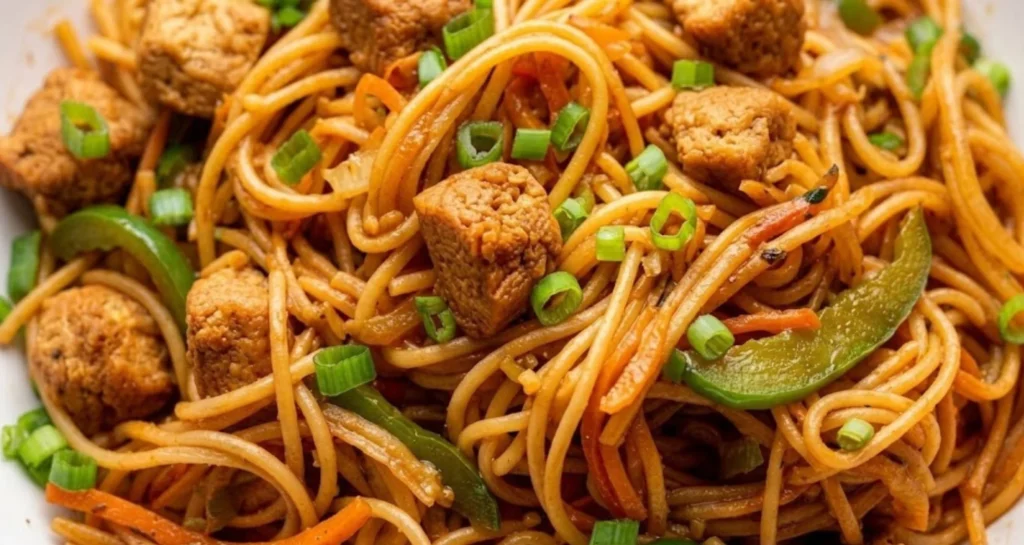
Turn off the heat and garnish with the green tops of the spring onions.
High Protein Street Style Veggie Chow Mein: The Ultimate Homemade Guide
Ingredients
- The Protein & Noodles:
- 1 cup Soy Nuggets Soy Chunks/TVP
- 7 oz 200g Dried Wheat Noodles (Lo Mein or Chow Mein style)
- 3 tbsp Neutral Oil Avocado or Canola
- The Fresh Produce Julienned/Matchstick Cut:
- 1 medium Carrot 1 medium Yellow Onion, 1 medium Green Bell Pepper
- 2 cups Shredded Green Cabbage
- 3 –4 Spring Onions whites and greens separated
- Handful of Fresh Cilantro chopped
- Aromatics: 15–20 Garlic cloves minced, 1-inch Ginger (minced), 2 Green Chilies (chopped)
- The Street-Style Sauce:
- 1 tsp Dark Soy Sauce
- 2 tsp Red Chili Sauce Sriracha or Chili Paste
- 2 tsp Tomato Ketchup
- 1/2 tsp White Vinegar
- 1 pinch each: White Pepper Powder Garam Masala, and Salt to taste
Instructions
- Flavor the Soy Nuggets: Boil water with a splash of soy sauce, minced ginger, and chili. Add soy nuggets and cook for 5 minutes. Drain, rinse with cold water, and give them a light squeeze to remove excess liquid.
- The Rehydration Noodle Method: Bring a pot of salted water to a rolling boil. Add noodles and stir for 1–2 minutes until untangled. Turn off heat, cover with a lid, and let sit for 3–4 minutes until al dente.
- Cool & Oil: Drain noodles and toss them in the air to release steam. Coat lightly with 1 tsp of oil to prevent sticking.
- High-Heat Searing: Heat a wok or large skillet until smoking. Add oil and sauté minced garlic, ginger, and green chilies for 30 seconds.
- The Veggie Toss: Add sliced onions and cook for 30 seconds. Add carrots, cabbage, and bell peppers. Stir-fry on maximum heat for 90 seconds to maintain crunch.
- Infuse the Protein: Add the prepared soy nuggets to the vegetables and toss for 1 minute to sear the edges.
- The Sauce Glaze: Stir in the soy sauce, chili sauce, ketchup, vinegar, white pepper, salt, and the secret pinch of garam masala.
- The Final Fold: Add the noodles, spring onion whites, and cilantro. Toss vigorously for 2 minutes on high heat until the noodles are glazed and the soy nuggets have absorbed the sauces.
- Garnish: Top with spring onion greens and serve immediately while steaming hot.
It’s likely in the squeezing. If you don’t squeeze them after boiling, they remain full of plain water and can’t absorb the sauce. If you squeeze them too hard, they can become dry. A “light squeeze” is perfect.
Absolutely! Snap peas, broccoli florets, or bok choy are great additions. Just remember to cut them thinly so they cook at the same speed as the noodles.
It’s a staple of “Desi-Chinese” street food. It provides a specific balance of sugar, vinegar, and tomato solids that helps thicken the sauce and glaze the noodles without making it taste like “pasta sauce.”
Use the widest skillet you have. The more surface area the ingredients have to touch the hot metal, the better the “wok hei” (breath of the wok) flavor will be.
These noodles store well in the fridge for up to 2 days. Reheat them in a pan with a tiny splash of water to loosen the noodles back up.
Pro Tips for Success
Prep Everything First: Stir-frying happens in minutes. Have all your veggies cut and sauces measured before you turn on the stove.
The “Steam Release” Flip: When you drain your noodles, toss them in the air a few times. This releases the trapped steam and prevents them from becoming gummy while they sit.
Don’t Overcrowd: If you’re doubling the recipe, cook it in two batches. Overcrowding the pan lowers the temperature, causing the veggies to steam instead of sear.
Pro Tip
For the most authentic flavor, ensure your skillet is smoking hot before adding the vegetables. This creates “Wok Hei” (breath of the wok), giving the noodles that signature charred, smoky street-style aroma without overcooking the veggies.